
 Products
 Bars
Bars
 Beads & Spheres
 Bolts & Nuts
 Crucibles
 Discs
Discs
 Fibers & Fabrics
 Films
Films
 Flake
Flake
 Foams
Foams
 Foil
Foil
 Granules
 Honeycombs
 Ink
Ink
 Laminate
 Lumps
Lumps
 Meshes
 Metallised Film
 Plate
Plate
 Powders
 Rod
Rod
 Single Crystals
 Sputtering Target
 Tubes
Tubes
 Washer
 Wires
Wires
 Converters & Calculators
 Write for Us



Sapphire, Ruby, and Alumina Substrates, How to Choose

No oxide-based substrate in modern materials science has influenced technology more than sapphire, ruby, and alumina. At first glance, they all belong to the same family: aluminum oxide (Al₂O₃). Yet their structures, costs, optical properties, and functional usage position them for extremely different applications.
Why Sapphire Reigns Supreme in Led Manufacturing
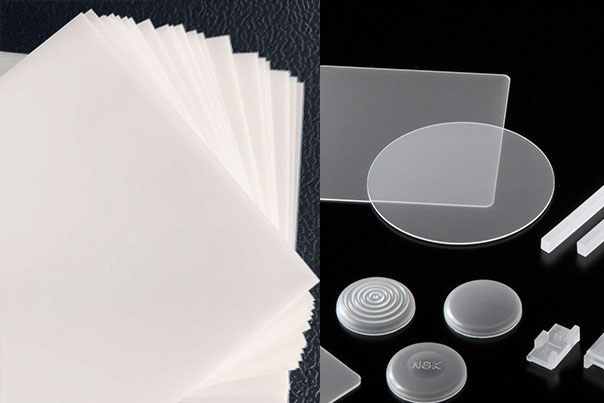
Sapphire is the single-crystal form of aluminum oxide. Pure, it is colorless and transparent, with excellent hardness (Mohs 9) and chemical inertness. These make sapphire an ideal substrate for light-emitting diodes (LEDs).
1. Crystal Structure for Epitaxy
The process of making LEDs involves the deposition of gallium nitride (GaN) films through epitaxy. Epitaxy works only if the substrate is capable of accommodating a crystalline form that is similar or at least comparable to the one being deposited. A single-crystal sapphire lattice acts as this template to create high-purity GaN films with lower defects.
2. Optical Transparency
LEDs must emit light output efficiently. Sapphire is clear across a wide wavelength range from ultraviolet to infrared, with minimal absorption of photons. This directly pays off in terms of higher brightness and efficiency.
3. High-Temperature Stability
Epitaxial growth happens at high temperatures greater than 1000°C. Sapphire's stability and form are not lost when such temperatures are reached, making it priceless in LED manufacturing.
Aside from LEDs, sapphire substrates are also employed for laser windows, optical components, and covers protecting consumer electronics. Their relatively high price, though, makes their application in areas where cheaper substitutes could work limited.
Why Alumina Ceramics Are The Go-To Choice For Electronic Circuits
Whereas sapphire is single-crystal, alumina substrates are polycrystalline ceramics. Created through sintering Al₂O₃ powders, alumina substrates lack the ordered lattice that sapphire possesses but compensate for it with low cost, excellent mechanical strength, and highly developed production processes.
1. Low Cost for Large-Scale Production
Alumina substrates cost significantly less to make than single-crystal sapphire. This makes them practical for large-area applications such as electronic circuit boards.
2. Electrical Insulation
Among the advantages of alumina is that it can be an electrical insulator. This is a requirement in circuit substrates since they must keep electrical paths separated to prevent short circuits and interference.
3. Thermal Conductivity
More modern electronic devices, especially power modules, generate a significant amount of heat. Alumina substrates dissipate heat effectively from active devices, minimizing the possibility of overheating. Though materials like aluminum nitride (AlN) possess even better thermal conductivity, alumina offers the best compromise between performance and economics.
4. Mature Processing
Alumina ceramics are easy to cut, drill, and print with conductive layers, enabling mass production of thick-film circuits, microwave devices, and power electronics.
That is why alumina has emerged as the go-to substrate for electronic circuits, power modules, and heat spreaders in industries from consumer electronics to automotive systems.
Why Ruby Remains A Cornerstone Of Solid-State Laser Technology
Ruby is basically sapphire with a difference: it is a single-crystal form of Al₂O₃ doped with trace amounts of chromium ions (Cr³⁺). The ions not only give ruby its red color but also make it optically active in a unique way.
1. Optical Activity due to Chromium Doping
The Cr³⁺ ions in ruby absorb energy and emit it as light at a specific wavelength. When undergoing optical pumping, this serves to produce a intense and coherent red laser beam of wavelength 694 nm.
2. Strong Mechanical and Chemical Properties
Ruby shares the mechanical hardness and chemical stability of sapphire to provide that it will be able to endure the harsh environments required in the operation of lasers.
3. Specialized Application
The optical properties of ruby make it extremely useful in solid-state lasers, which were the first successful lasers ever made. But the same chromium doping that makes ruby useful in lasers makes ruby useless for LEDs, which require transparency, and for electronic circuits, where cost and ease of manufacture in large quantities are more important than optical activity.
Thus, the role of ruby is very specialized: it shines in laser technology, optical sensing, and precision instruments, but not semiconductor manufacture or mass-market electronics.
How to Choose
Sapphire has mastery over LED technology, where crystal structure and transparency are of key importance. Alumina has mastery of electronic circuits and power modules, where insulation and cost are at a premium. Ruby, whose optical activity is stimulated by chromium, is especially well-adapted to lasers and scientific optical devices.
The choice mainly depends on whether your project values clarity, insulation, or laser performance. For more alumina substrates, please check Stanford Advanced Materials (SAM). If you are still unsure, just send us your project details and we’ll help recommend the right solution.
 Chin Trento