
 Products
 Bars
Bars
 Beads & Spheres
 Bolts & Nuts
 Crucibles
 Discs
Discs
 Fibers & Fabrics
 Films
Films
 Flake
Flake
 Foams
Foams
 Foil
Foil
 Granules
 Honeycombs
 Ink
Ink
 Laminate
 Lumps
Lumps
 Meshes
 Metallised Film
 Plate
Plate
 Powders
 Rod
Rod
 Single Crystals
 Sputtering Target
 Tubes
Tubes
 Washer
 Wires
Wires
 Converters & Calculators
 Write for Us



Selecting Optical Windows: Calcium Fluoride and Its Competitors

Introduction
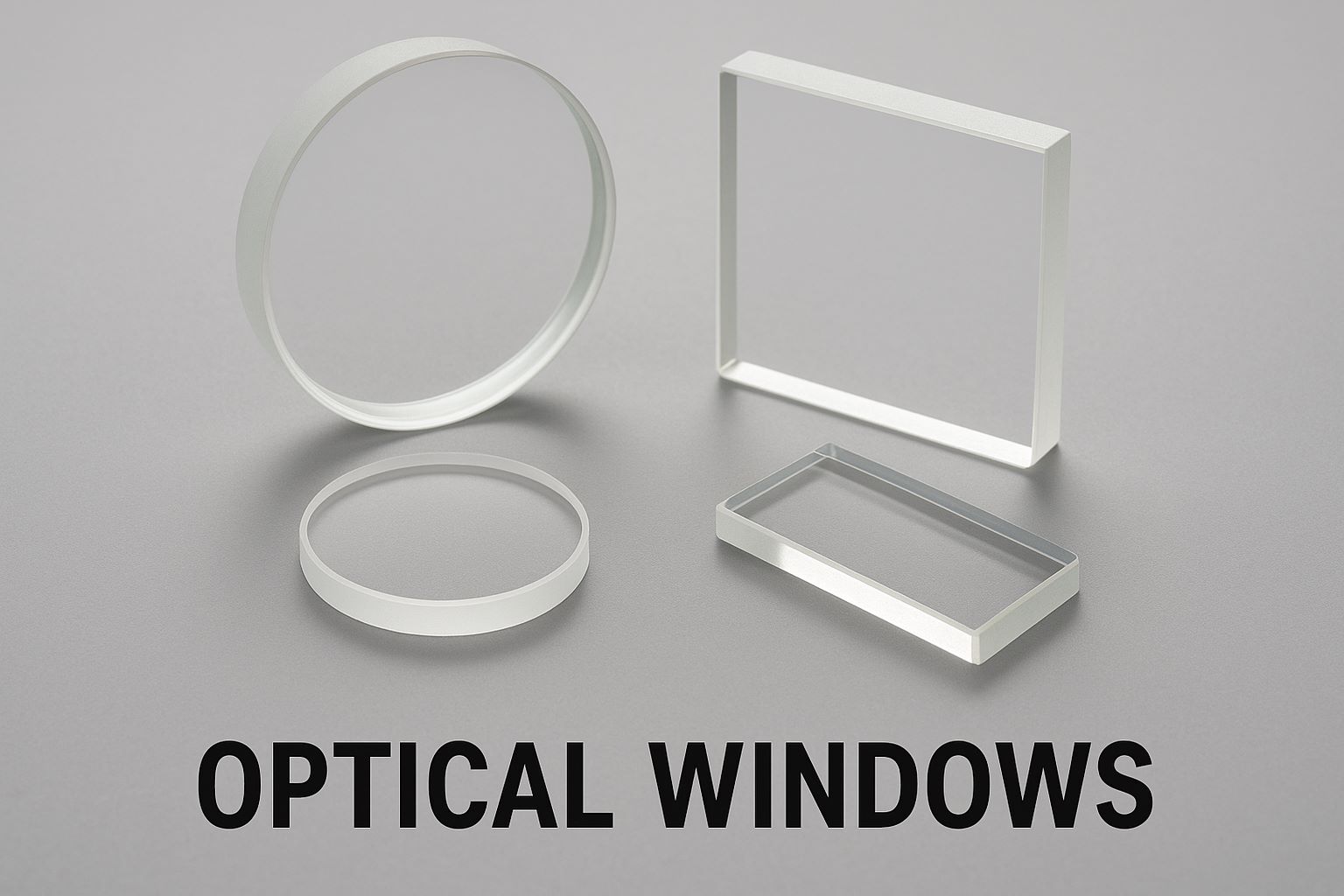
Optical windows are used in many devices. They let light pass through while protecting sensitive parts. Many instruments, from cameras to lasers, rely on these windows. One common material is Calcium Fluoride.
Properties of Calcium Fluoride
Calcium Fluoride is a well-known crystal. It is used for its excellent light transmission. It is transparent from deep ultraviolet wavelengths of around 130 nanometers to infrared wavelengths near 9 micrometers. That makes it useful for many optical applications. Its low refractive index, about 1.43 in the visible range, helps reduce reflection losses. Calcium Fluoride is also known for its thermal stability. It handles moderate heat changes without significant changes in its optical properties. These features have made it a staple in lenses and prisms used in high-performance optical systems.
In common cases like semiconductor lithography or laser systems, Calcium Fluoride windows are prized for their low dispersion. They maintain beam quality even through complex optical paths. It is often chosen where low signal loss is essential.
Further reading: Common Fluoride Materials in Industrial Applications
Calcium Fluoride versus Fused Silica
Fused Silica is another widely used optical material. It is very strong and resists high temperatures. Its light transmission begins around 180 nanometers in the ultraviolet range and extends well into the near infrared. However, its refractive index is around 1.46, a bit higher than that of Calcium Fluoride. This higher index can cause more light reflections at the surface. Fused Silica is favored in applications that require mechanical strength and durability. In contrast, Calcium Fluoride is picked when minimal dispersion and lower scattering are needed.
For example, when used in laser optics, the lower dispersion of Calcium Fluoride can improve beam quality. In harsh environments, Fused Silica may be preferred due to its robustness. Each material offers clear benefits, depending on the application requirements.
Calcium Fluoride versus Sapphire
Sapphire is a very hard and durable material. It can handle severe scratching and high mechanical loads. Sapphire windows are perfect for extreme conditions. They perform well in both high and low temperatures. The transmission range of Sapphire typically starts in the visible light region. Calcium Fluoride, in comparison, has a broader transmission range. It is better for the ultraviolet and infrared parts of the spectrum. The choice between these two depends on working conditions. When scratch resistance is a priority, Sapphire wins. When a wide wavelength range is needed, Calcium Fluoride may be the best option.
In practice, some laser systems and advanced imaging applications tend to favor Calcium Fluoride for its minimal absorption properties over a broader spectrum.
Further reading: Sapphire, Ruby, and Alumina Substrates, How to Choose
Calcium Fluoride versus Magnesium Fluoride
Magnesium Fluoride is another useful optical material. Its transmission range often spans from about 120 nanometers in the ultraviolet to 7 micrometers in the infrared. Its refractive index is around 1.38, lower than both Calcium Fluoride and Fused Silica. With a lower refractive index, Magnesium Fluoride offers even less reflection and might be ideal when maximum transmission is required. However, Calcium Fluoride provides better resistance to moisture and has superior thermal stability in many conditions.
Both materials have their strengths. Magnesium Fluoride shines with its lower refractive index. Calcium Fluoride establishes its niche with its overall balance of transmission, stability, and low dispersion.
Calcium Fluoride versus Zinc Selenide
Zinc Selenide is vastly different from the previous crystals. It works well in the infrared range. Its transmission typically starts around 0.6 micrometers and goes up to 20 micrometers. This makes it ideal for thermal imaging and infrared spectroscopy. However, Zinc Selenide is not suited for the ultraviolet range. Calcium Fluoride has a much wider operating range. Its ability to transmit ultraviolet light is a distinct advantage when needed. Additionally, Calcium Fluoride offers higher clarity in specific precision applications.
When a system needs to operate across ultraviolet to infrared wavelengths, Calcium Fluoride is often the better choice. Zinc Selenide is reserved for specialized tasks where deep infrared performance is critical.
How to Choose
Choosing the best optical window material depends on several factors. First, check the wavelength requirements. Each material has a specific transmission range. Next, consider the environment. Is the component exposed to high stress or extreme temperatures? Sapphire or Fused Silica might be better in harsh conditions. In clean, stable environments, Calcium Fluoride is very effective.
Also, think about mechanical strength and potential for scratches. Sapphire is one of the hardest materials available. Finally, think about cost and ease of manufacturing. Each material comes with its own price tag and machining challenges. In many cases, a balance between optical performance and durability leads to the final decision.
Frequently Asked Questions
F: What is the wavelength range of Calcium Fluoride?
Q: It transmits from about 130 nanometers in the ultraviolet to around 9
micrometers in the infrared.
F: Why choose Sapphire over Calcium Fluoride?
Q: Sapphire is chosen for its high scratch resistance and mechanical
durability.
F: Which material has the lowest refractive index?
Q: Magnesium Fluoride, with an approximate refractive index of 1.38, has the
lowest value.
 Chin Trento