
 Products
 Bars
Bars
 Beads & Spheres
 Bolts & Nuts
 Crucibles
 Discs
Discs
 Fibers & Fabrics
 Films
Films
 Flake
Flake
 Foams
Foams
 Foil
Foil
 Granules
 Honeycombs
 Ink
Ink
 Laminate
 Lumps
Lumps
 Meshes
 Metallised Film
 Plate
Plate
 Powders
 Rod
Rod
 Single Crystals
 Sputtering Target
 Tubes
Tubes
 Washer
 Wires
Wires
 Converters & Calculators
 Write for Us



Pure K₃AlF₆ vs. KAlF₄ + K₃AlF₆ Blend: Performance Comparison in Aluminum Recovery and Refining Agents

In scrap aluminum recycling and aluminum alloy refining, the main job of a refining agent is to remove oxide films, separate out impurities, and boost metal recovery. Fluoride salts are a key part of these refining agents, and the choice of ingredients directly affects how well the refining works. Two of the most common potassium aluminum fluorides are potassium hexafluoroaluminate (K3AlF6) and potassium tetrafluoroaluminate (KAlF4). In practice, the industrial-grade product—often called potassium aluminum fluoride (PAF)—is usually a mix of KAlF₄ and K3AlF6. So what's the real difference between using pure K3AlF6 versus the blend?
Here's the short answer: for aluminum recovery and refining, the KAlF4 + K3AlF6 blend is generally better than pure K3AlF6. Let's break it down step by step.
1. Surface Tension Control
Pure potassium hexafluoroaluminate does have some surface activity, but because it's a single ingredient, its ability to tweak surface tension is limited. In practice, it might not spread well over the molten aluminum or wet the impurities effectively, which can hurt removal efficiency.
The blended system, on the other hand, benefits from teamwork. potassium tetrafluoroaluminate helps improve the flux's fluidity and spreading ability, while K3AlF6 provides the necessary surface activity. This synergy makes it easier for the refining agent to coat the aluminum surface and wet the impurities, helping them clump together and float out.
2. Oxide Film Removal
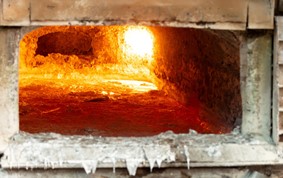
Aluminum easily forms a dense Al₂O₃ oxide layer at high temperatures. This layer blocks metal flow and fusion, and it's a major reason recovery rates drop. So a good refining agent has to be able to break down that oxide film.
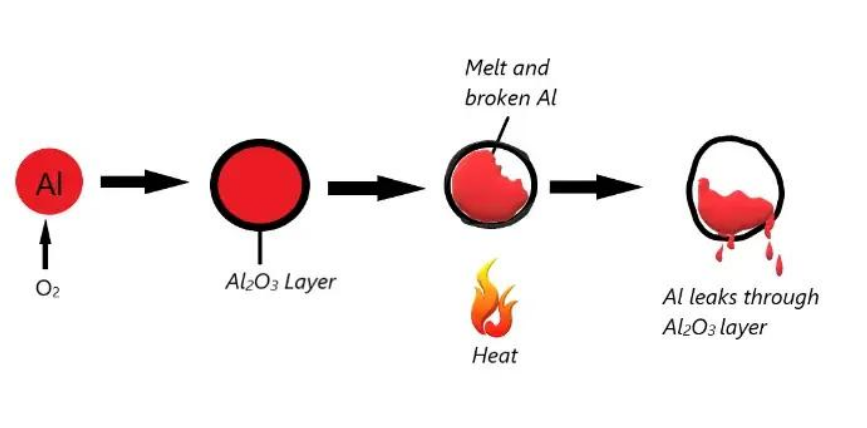
Fig 1. Understanding Aluminum Combustion[1]
Both K3AlF6 and KAlF4 are active fluoroaluminates that do a solid job of attacking the oxide film. At high temperatures, they help crack and peel off the oxide layer, releasing the trapped aluminum so it can pool together.
In real-world use, pure potassium hexafluoroaluminate and the blended system perform similarly when it comes to breaking down oxide films—both meet industrial needs. But the blend, thanks to better fluidity, handles the post-breakdown coalescing of aluminum more consistently, which helps squeeze out a bit more recovery.
3. Impurity Removal Efficiency
In fluoride-based flux systems, elements like magnesium get converted into stable fluorides (like MgF₂) and end up in the slag, effectively removing them. Both pure K3AlF6 and KAlF4 can do this.
But when it comes to removing solid inclusions, wettability and flux fluidity matter more. The KAlF4/K3AlF6 blend generally wets inclusions better, so it can surround them more effectively and carry them away from the molten aluminum as the flux flows.
So for recycling complex aluminum scrap with lots of inclusions, the blended system usually gives you cleaner metal.
4. Thermal Stability and Melting Behavior
Thermal stability determines how consistently the refining agent performs in the hot melt, while melting point directly affects the refining temperature window.
- Pure K3AlF6: Melting point is on the higher side—above 580°C. That means at lower refining temperatures, it might not fully melt, which limits its effectiveness.
- KAlF4: Melts around 560–580°C, slightly lower than K3AlF6.
- KAlF4+ K3AlF6 blend: At certain ratios, these two form a eutectic system, with a melting point that can drop to about 540–560°C.
Bottom line: the blend wins on thermal stability. Its melting point is adjustable and can go lower, giving you a wider processing window.
5. Cost Differences
Cost is always a factor in industrial applications.
- Pure K3AlF6: Getting high-purity K3AlF6 requires tight control over the potassium-to-aluminum ratio (theoretical molar ratio K:Al = 3:1). That's more demanding and expensive.
- KAlF4 + K3AlF6 blend: Industrial-grade PAF is typically sold as a blend—no one bothers to separate them. When you target a K:Al ratio of about 1.2–1.5 during production, you naturally get a mix of KAlF₄ and K₃AlF₆. No extra separation or purification needed. So the blend is cheaper to produce.
Market pricing confirms that industrial-grade potassium aluminum fluoride (PAF) is significantly cheaper than high-purity single-component products.
Quick Comparison Table
|
Aspect |
Pure K3AlF6 |
KAlF₄ + K3AlF6 Blend |
|
Surface tension control |
Limited effect on its own |
Better balance with KF blends |
|
Oxide film removal |
Strong |
Strong |
|
Impurity removal efficiency |
Good for Mg and some inclusions |
Better wetting of inclusions, better flotation |
|
Thermal stability |
Higher melting point (>580°C) |
Can form eutectic (540–580°C), wider window |
|
Cost |
Higher |
Lower |
Summary
Pure K₃AlF₆ vs. KAlF₄ + K₃AlF₆ Blend both work well for oxide film removal, but the blend has the edge in surface tension control, impurity removal efficiency, and thermal stability. And when you factor in cost, the blend is significantly cheaper to produce.
So in practice, don't go out of your way to chase pure K₃AlF₆. Industrial-grade KAlF₄/K₃AlF₆ blend (potassium aluminum fluoride, PAF) is simply better value for money.
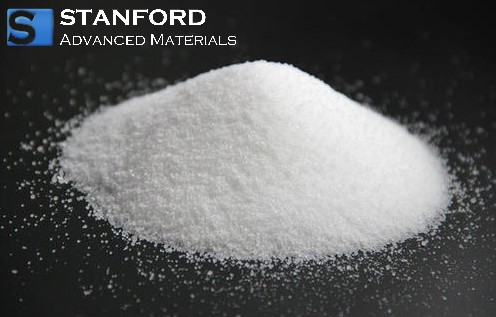
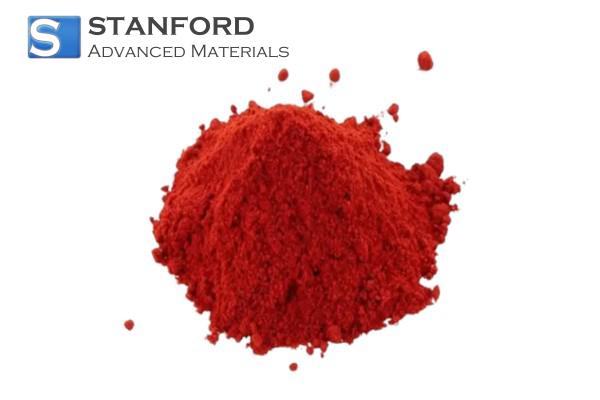
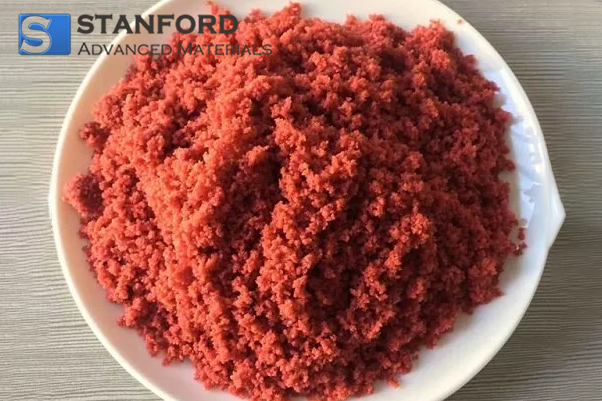
Stanford Advanced Materials (SAM) offers high-purity potassium hexafluoroaluminate powder as well as potassium aluminum fluoride (PAF). For detailed specs and current pricing, contact our sales team: Inquiry to Stanford Advanced Materials
 Chin Trento