
 Products
 Bars
Bars
 Beads & Spheres
 Bolts & Nuts
 Crucibles
 Discs
Discs
 Fibers & Fabrics
 Films
Films
 Flake
Flake
 Foams
Foams
 Foil
Foil
 Granules
 Honeycombs
 Ink
Ink
 Laminate
 Lumps
Lumps
 Meshes
 Metallised Film
 Plate
Plate
 Powders
 Rod
Rod
 Single Crystals
 Sputtering Target
 Tubes
Tubes
 Washer
 Wires
Wires
 Converters & Calculators
 Write for Us



Radiopaque Tantalum Marker Bands Hit Tight ID/OD Tolerances in a Medical Implant Program

Customer Background
A medical device manufacturer in Ireland was working on an implantable assembly that required a small radiopaque marker for imaging visibility and post-placement verification. The marker had to sit cleanly on a mating component without loosening during handling, sterilization, or final assembly. The team was already deep into verification testing, so material inconsistency was not something they could absorb easily.
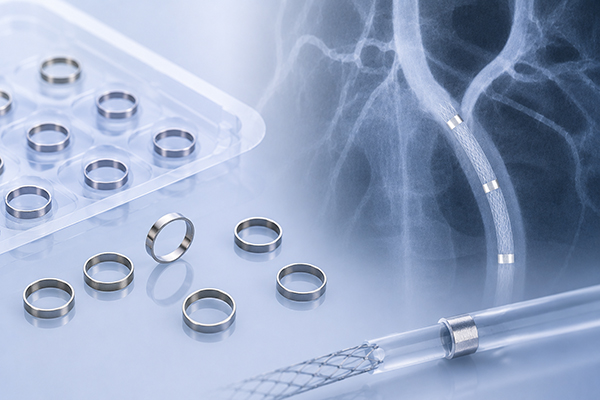
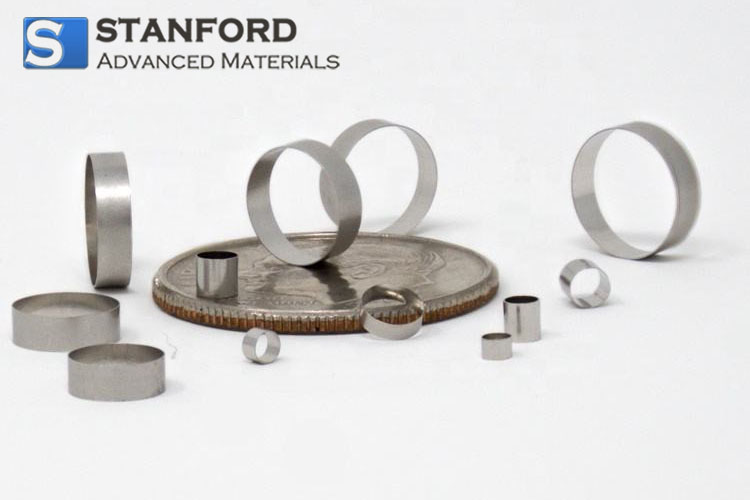
Their target dimensions were narrow: an inner diameter around 0.076-0.077 inches and an outer diameter around 0.085-0.086 inches, leaving only about 0.001 inch of wall thickness to work with. That is a tight window. During initial testing, we noticed the application had very little room for ovality or edge burrs, which can become a problem fast when a band needs to sit flush and remain visible under fluoroscopy.
Challenge
The main issue was not simply making tantalum rings. It was making them repeatably.
The customer needed:
- ID controlled at 0.076-0.077 inches
- OD controlled at 0.085-0.086 inches
- Wall thickness near 0.001 inch
- Clean, burr-free edges for safe assembly
- Radiopaque material certification for medical traceability
- Stable lot-to-lot dimensional consistency
A small deviation could affect fit, image contrast, or device assembly yield. The customer also had a lead-time constraint because their prototype build was scheduled around downstream validation. If the marker bands arrived late or varied from one batch to another, the whole test sequence would slip.
One more concern came up during review: tantalum is dense and very visible under imaging, but the part geometry still has to be managed carefully. Thin-walled sections can distort if tooling pressure is not applied correctly. That suggested the supply route needed more than a standard catalog part.
Why They Chose SAM
They contacted Stanford Advanced Materials (SAM) after reviewing several sources that could supply tantalum, though not necessarily at the dimensions they needed. Our team was able to discuss both the mechanical fit and the imaging function in practical terms, which mattered. The customer did not want a generic statement of availability. They wanted a supplier who understood how a marker band behaves inside a medical assembly.
A few points supported the decision:
- We could provide custom ID/OD control rather than forcing the design to a standard size
- We offered radiopaque certification and lot traceability
- Our supply chain could support the required prototype schedule
- We had experience with advanced materials used in medical and imaging-related parts
Our team found that early dimensional questions were especially important here. Small disagreements on tolerance stack-up can create weeks of rework later, so we clarified acceptable variation before production started.
Solution Provided
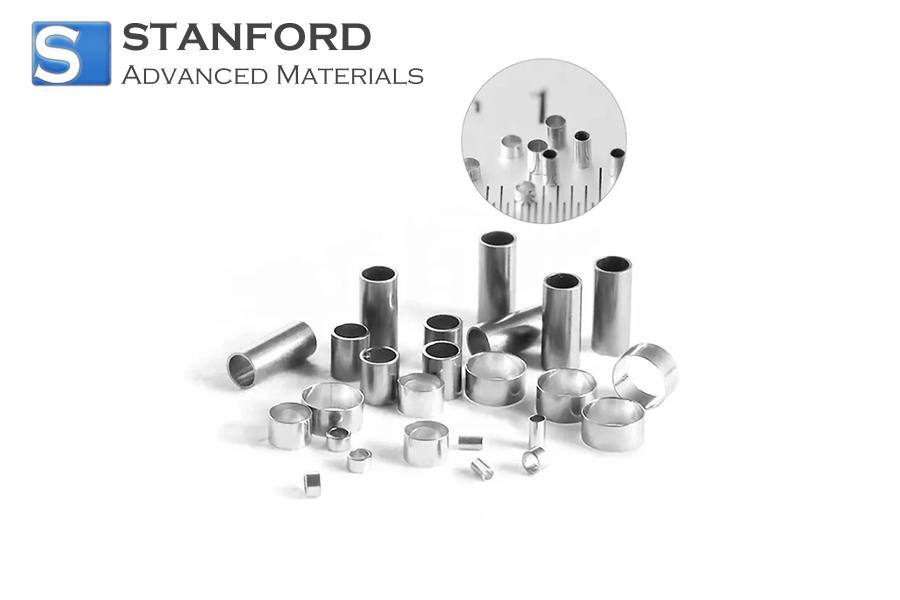
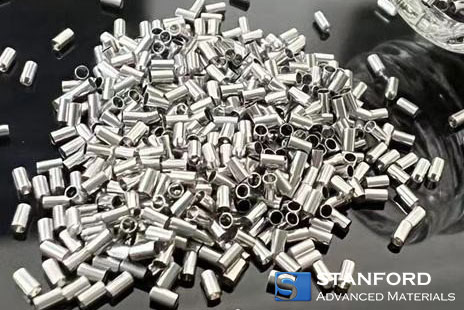
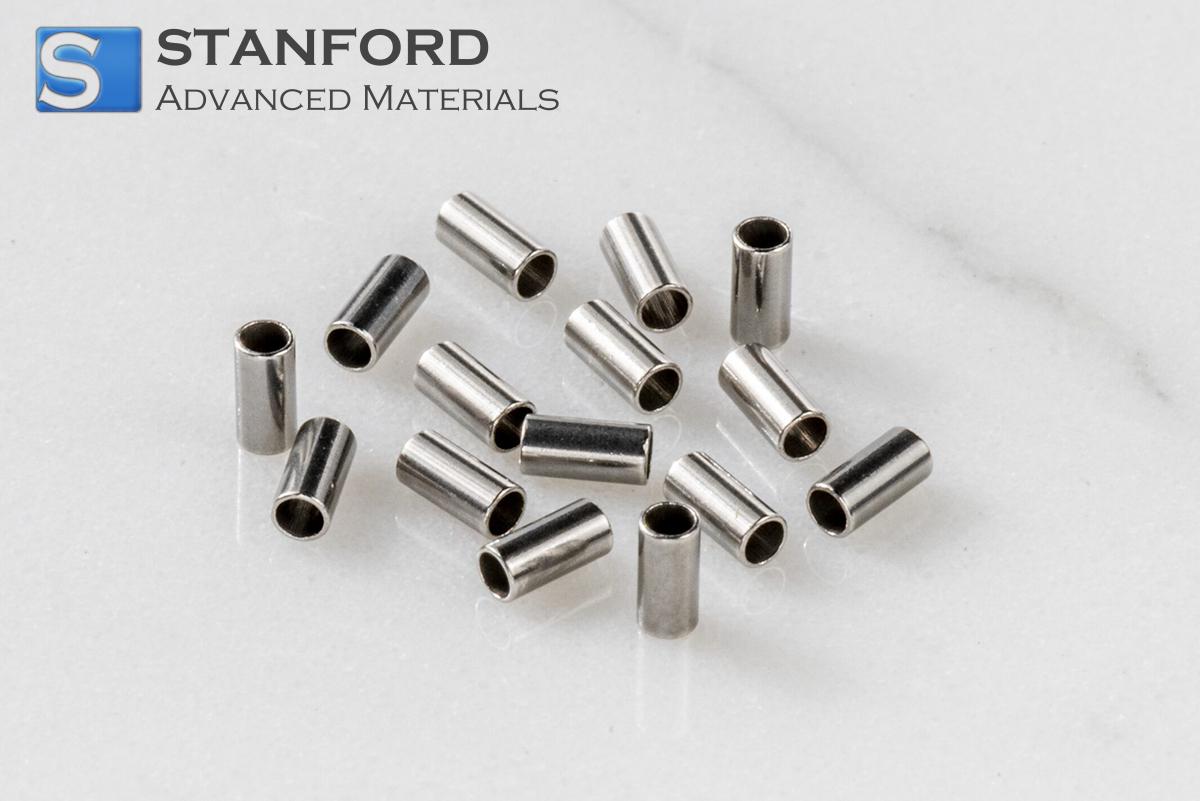
SAM supplied custom tantalum marker bands manufactured to the requested ID/OD range with close tolerance control on the wall section. The bands were produced from high-purity tantalum, selected for reliable radiopacity and stable performance in medical environments.
We controlled the geometry in stages:
- Inner diameter held at 0.076-0.077 inches
- Outer diameter held at 0.085-0.086 inches
- Wall thickness maintained at roughly 0.001 inch
- Edges finished to minimize burr formation and handling risk
The parts were inspected for roundness and surface condition before shipment. During process review, we also paid attention to packaging. Small medical components like these can be damaged by abrasion in transit, so the bands were packed in a way that reduced contact and preserved surface integrity.
For the customer's documentation needs, we supplied material certification and traceability records. That included confirmation of tantalum identity and batch-level control, which made internal quality review easier on their side. The engineering team there mentioned that this helped them move through their supplier qualification step without needing extra clarification rounds.
Results & Impact
The marker bands are integrated into the device build without dimensional surprises. Fit-up improved because the ID stayed within the expected mating range, and the OD remained consistent enough to avoid manual rework during assembly.
The most practical outcome was test continuity. The customer was able to proceed with prototype validation on schedule instead of pausing for alternate sourcing or last-minute machining adjustments. Imaging checks also confirmed the bands were clearly visible under radiographic conditions, which is exactly what the design needed.
A few observations stood out:
- The narrow wall section remained stable through handling
- The radiopacity was sufficient for clear marker identification
- Packaging quality reduced cosmetic damage during receipt and transfer
- The certification package simplified internal approval
For a part this small, that combination matters. A marker band does not get much attention when it works properly. That is usually the goal.
Key Takeaways
Tantalum marker bands look simple on paper, but the real work is in the geometry control, surface finish, and traceability. When the ID/OD window is only a few thousandths of an inch wide, supplier discipline matters more than broad material availability.
Stanford Advanced Materials (SAM) supported the project with custom sizing, radiopaque certification, and reliable delivery for a medical device build that could not tolerate unnecessary delay. SAM then continued to support follow-up discussions on sizing options and production timing, which gave the customer more room to move from prototype to the next stage of validation.
 Dr. Samuel R. Matthews