Products
 Bars
Bars
 Beads & Spheres
 Bolts & Nuts
 Crucibles
 Discs
Discs
 Fibers & Fabrics
 Films
Films
 Flake
Flake
 Foams
Foams
 Foil
Foil
 Granules
 Honeycombs
 Ink
Ink
 Laminate
 Lumps
Lumps
 Meshes
 Metallised Film
 Plate
Plate
 Powders
 Rod
Rod
 Single Crystals
 Sputtering Target
 Tubes
Tubes
 Washer
 Wires
Wires
 Converters & Calculators
 Write for Us



A Practical Guide to High-Dielectric-Constant Materials (Dk >25) for RF and Microwave Applications

Over the past 18 months, we've seen a clear uptick in requests for ceramic materials with a dielectric constant above 25. Most of these are coming from antenna miniaturization, 5G infrastructure, satellite ground terminals, and RF test equipment.
But a high Dk number alone doesn't tell the whole story. From what we've seen, stability, loss, manufacturability, and consistency matter just as much.
With that in mind, here's how we look at the usual candidates for high dielectric constant materials.
What Works and What Doesn't
|
Material |
Typical Dk (1–10 GHz) |
Loss Tangent |
Forms Available |
Verdict |
|
80 – 200+ |
0.01 – 0.05 |
Powder, pressed ceramic |
S |
|
|
100 – 600 (tunable) |
0.005 – 0.02 |
Ceramic, thin film |
S |
|
|
25 – 45 |
<0.002 |
Custom‑machined parts |
S |
|
|
Alumina‑based RF Ceramics |
~9 – 10 |
<0.001 |
Machined parts |
A |
|
Machinable RF Ceramics |
~6 |
~0.002 |
Machined parts |
A |
S = Recommended for Dk>25 requirements
A = Not suitable for Dk>25 (included for reference)
Barium Titanate
This is the old reliable one. In dense ceramic form, you can easily get barium titanate with Dk over 100, sometimes past 200. That kind of Dk reduces the physical size of your antenna or component significantly. The trade‑off is loss — it's higher than microwave‑grade materials, sometimes significantly.
I usually recommend BaTiO3 when the priority is miniaturization at almost any cost, or when loss isn't the first concern. Examples include certain ground‑based antennas, matching networks, or R&D work.
BST Ceramics
BST (Barium Strontium Titanate) takes Dk to another level — we're talking 100 to 600, and adds voltage tunability. That makes it attractive for phased arrays and tunable filters. The downsides are real though: you need a bias circuit, and loss increases when you tune.
In practice, BST is a specialist's tool. It excels in applications that require tunability, such as phased arrays and tunable filters. For fixed-frequency designs, however, other high‑k materials are often more straightforward to implement.
High‑k Microwave Ceramics
If you just need a solid, predictable Dk between 25 and 45 with low loss (tan δ under 0.002), high‑k microwave ceramic is usually the answer. It's not tunable, but it's also free from unexpected behavior. Temperature stability is good, and Dk drift across frequency and temperature is minimal.
When a Dk >25 requirement is straightforward (no extreme loss or tunability needs), this is typically our recommended starting point. It's the safest bet for fixed‑frequency antennas, dielectric resonators, and lens structures.
Alumina and Machinable RF Ceramics
These come up a lot in RF conversations, so it's worth mentioning them explicitly, but they won't get you to Dk >25.
Aluminum oxide (Al2O3) is great for low loss and easy metalization, but its Dk is around 9–10. Machinable ceramics like glass‑mica composites land around Dk 6. Both are excellent materials for many RF applications. But since our focus here is on Dk >25, they'll only play a supporting role in this guide.
Form Factors: Powder, Machined Parts, or Printable?
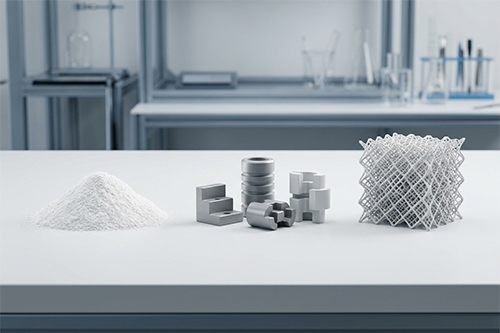
One question that keeps coming up is what form to ask for. Here's the answer:
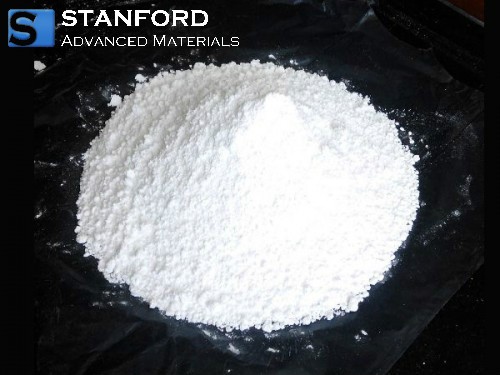
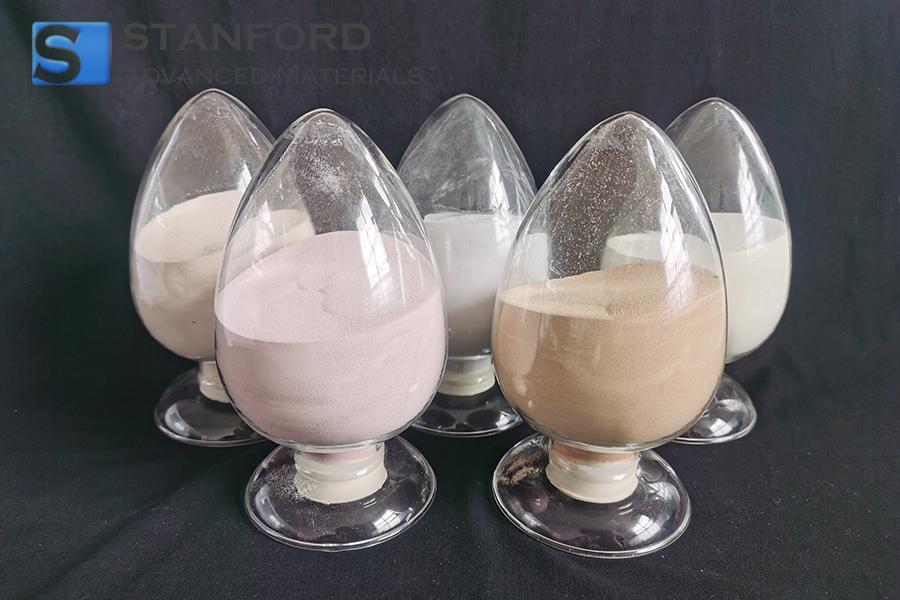
Powder – You're buying the raw material. Useful if you want to compound your own mix or press your own shapes. But you'll need post‑processing.
Custom‑machined ceramic – Tighter tolerances, ready to use out of the box. Longer lead time, and you're limited to geometries that can be machined.
3D‑printable feedstock – Promising for complex geometries and fast iteration. Still emerging for high‑Dk ceramics. Most printable options today are powder‑plus‑binder, followed by sintering.
For Dk >25, most reliable suppliers (including us) focus on powder and machined parts. Printable filaments exist but are not yet mainstream for production.
Let's Narrow It Down
When our engineering team evaluates a Dk>25 requirement, we typically start with three questions.
- Loss under 0.002 → look at high‑k microwave ceramics
- Loss over 0.01 is acceptable → barium titanate or BST become realistic
-
Tunable → BST is really the only practical option
-
Fixed → passive dielectrics are the right choice
-
Low volume, R&D → machined parts
-
High volume, simple shapes → pressed ceramic or powder supply
That framework doesn't cover every possible scenario, but it applies to the majority of cases we see.
Bottom Line
High dielectric constant materials aren't a niche anymore — they're becoming standard in RF and microwave system design. At Stanford Advanced Materials (SAM), we stock barium titanate, BST, high‑k microwave ceramics, and related compounds — in powder form and as custom‑machined parts. If you're evaluating these materials, our advice is to start with your frequency and loss budget, then work backward to the right form factor.
For data sheets or help narrowing down options, reach out to our technical team.
Want to learn more about the dielectric constant? See our related article here.
 Dr. Samuel R. Matthews