Products
 Bars
Bars
 Beads & Spheres
 Bolts & Nuts
 Crucibles
 Discs
Discs
 Fibers & Fabrics
 Films
Films
 Flake
Flake
 Foams
Foams
 Foil
Foil
 Granules
 Honeycombs
 Ink
Ink
 Laminate
 Lumps
Lumps
 Meshes
 Metallised Film
 Plate
Plate
 Powders
 Rod
Rod
 Single Crystals
 Sputtering Target
 Tubes
Tubes
 Washer
 Wires
Wires
 Converters & Calculators
 Write for Us



Non-Ferrous Metals Industrial Demand

Ferrous is a term which relates to containing iron. Ferrous metals are magnetic and prone to corrosion. On the other hand, non-ferrous metals are those that do not contain any iron and therefore non-magnetic and more resistant to corrosion when exposed to moisture. The most common of these non-ferrous metals include copper, aluminum, zinc, lead, cobalt, chromium, nickel, titanium, magnesium, and precious metals.
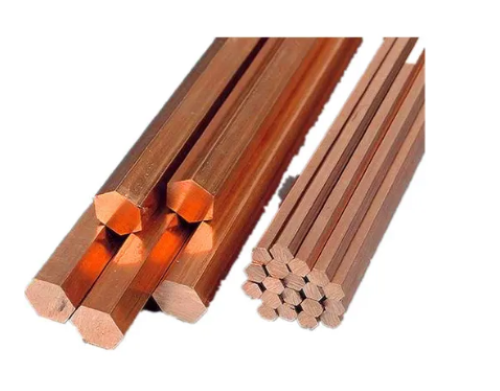
Aluminum, the most abundant metal in the earth’s crust, has a great recycling property. It is strong, flexible and very light in weight making it ideal for building structures, vehicles, cans, transmission lines, and cook wares. Copper is the best electrical conductor of all metals next to silver. It is malleable and ductile. It is useful in piping, cook ware, roofing and insulation, and electric components.
Tin, aside from the precious metals, is the most expensive non-ferrous metal. It is very malleable and very ductile. Tinplate is steel coated with tin. It is used in manufacturing cans, cars, springs, and glass. Lead, one of the heavy metals, is soft and malleable. It is typically used for roof flashing, electrodes in car batteries and for protection against radiation in X-rays.
There are these precious metals which are non-ferrous like gold and silver. Both are known for their use in jewelries. Silver, a soft, lustrous, white transition metal, has the highest electrical and thermal conductivity among all metals. Apart from its use in jewelry, it is also used in mirrors as a reflective component and in high quality cutting tools. Gold is a malleable, ductile, dense and shiny metal. It has an exceptional resistance against the destruction of individual acids preventing it from being defiled and discolored. It is typically used in jewelry. It is also undeniably been very helpful in computers.
Non-ferrous metals being mixed together form non-ferrous metal alloys. The most typical types are brass, bronze and solder. Brass, a mixture of copper and zinc, and bronze, a mixture of copper and tin, are commonly used in water fittings. But then, solder is an alloy of tin and lead. It is a fusible alloy used for joining together metal parts. It has a lower melting point compared to that of the metal work pieces.
Non-ferrous metals are extensively used for its wide variety of applications. Therefore millions of tons of non-ferrous metals are recycled annually. The versatility of metals enables them to keep their original properties almost completely even after the recycling process. Actually, the 40% of the global demand for copper is coped with by the recycled materials. Moreover, almost 30% of global zinc production also comes from secondary zinc.
 Chin Trento