Products
 Bars
Bars
 Beads & Spheres
 Bolts & Nuts
 Crucibles
 Discs
Discs
 Fibers & Fabrics
 Films
Films
 Flake
Flake
 Foams
Foams
 Foil
Foil
 Granules
 Honeycombs
 Ink
Ink
 Laminate
 Lumps
Lumps
 Meshes
 Metallised Film
 Plate
Plate
 Powders
 Rod
Rod
 Single Crystals
 Sputtering Target
 Tubes
Tubes
 Washer
 Wires
Wires
 Converters & Calculators
 Write for Us



Not All That Glitters Is Gold - Precious Metals And Technology

Often when we hear the words "precious metal", we think first of gold, silver, and platinum. Our connotations are aesthetic, economic, and artistic. We have gold-plated connectors for audio and video, platinum components in automobile catalysts, titanium implants and prostheses in our skeletons. But there's a whole different world of precious metals as used in high technology, paving the way to fulfilling our scientific ambitions.
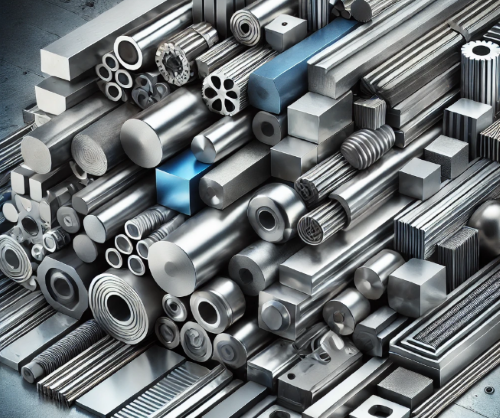
Probably the most well-known precious metal is Gold (Au). Since the ancient times recognized as remarkably resistant to external conditions and inspiring countless generations with its beauty and shimmer. In more recent times gold found its way into science and technology. Some of the applications include coating organic specimens and non-conducting materials to be able to view them with a scanning electron microscope. High-end CDs use gold as a reflecting layer to enhance audio quality. Gold foil is used as protective coating in satellites and many delicate electronic devices.
Iridium (Ir) is one of the rarest and most chemically inert metals found in the Earth's crust. It also has very low thermal expansion, which is why the International Prototype Meter in Sevres was made primarily from iridium. It was widely adopted in radioisotope thermoelectric generators used in many space probes and radio beacons in remote areas on Earth. It is also prominent in particle physics, where it is used to produce antiprotons.
One more example is palladium (Pd) a well-known catalyst in chemistry. It also features in multilayer ceramic capacitors, where it is used to manufacture electrodes. Palladium membranes are employed in membrane reactors to produce high purity hydrogen.
These are just a few of the manifold uses of precious metals in modern technology. Because of their purity and excellent electrochemical parameters, they will see even wider adoption in nanotechnology and new generations of computers. The already developed market for precious metal raw materials and components will have to grow to accommodate the coming wave of change. For people considering investing in that market this might be the right time to do so.
 Chin Trento