Products
 Bars
Bars
 Beads & Spheres
 Bolts & Nuts
 Crucibles
 Discs
Discs
 Fibers & Fabrics
 Films
Films
 Flake
Flake
 Foams
Foams
 Foil
Foil
 Granules
 Honeycombs
 Ink
Ink
 Laminate
 Lumps
Lumps
 Meshes
 Metallised Film
 Plate
Plate
 Powders
 Rod
Rod
 Single Crystals
 Sputtering Target
 Tubes
Tubes
 Washer
 Wires
Wires
 Converters & Calculators
 Write for Us



How is Molybdenum Extracted

Molybdenum ore beneficiation method
The main ore dressing method of molybdenum ore is flotation.
The molybdenum mineral recovered by flotation is molybdenite. The flotation agent uses non-polar oils as collectors, and a foaming agent is added. In order to ensure the quality of molybdenum concentrates, we need to further separate copper, lead, iron, and other metal minerals and calcium oxide and carbon minerals from molybdenum concentrate, can use sodium sulfide, cyanide to inhibit iron copper and impurities.
Smelting process of molybdenum concentrates
Molybdenum Concentrate Smelting mainly adopts the following methods:
Oxidation roasting: molybdenite is roasted by molybdenum calcine, followed by sublimation method or wet method to generate ammonium molybdate molybdenum trioxide, put ammonia into the solution, and separate from insoluble. Ammonium molybdate crystals are obtained by concentrating and crystallizing, or acid precipitation is used to form molybdate precipitation, thus separating from the soluble impurities. After calcination, they generated pure molybdenum trioxide, and then use the hydrogen reduction to produce metal molybdenum. According to the roasting equipment or the different adding components, the method can be divided into rotary kiln roasting, baking furnace process, fluidized bed roasting, and flash furnace roasting process. The method will produce a large amount of smoke, pollute the environment, the recovery rate of molybdenum is low, and the rare elements, rhenium almost all run away with the flue gas, it is not suitable for processing low-grade ore and complex ore.
Nitric acid leaching: the oxidation of MOS2 to produce soluble molybdate in an autoclave, which mainly uses inexpensive oxidants - air or pure oxygen. This method requires high temperature and high pressure, high requirement of reaction equipment, reaction conditions, and reliable production, technical difficulty, technical conditions of the leaching process is difficult to control, some security risks also exist in the production process, at present, has suspended the use of this method.
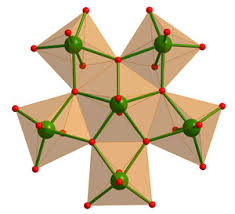
Sodium hypochlorite leaching method: mainly used for leaching low-grade ore tailings. In the leaching process, sodium hypochlorite itself will slowly resolve oxygen, some other metal sulfides will be oxidized by sodium hypochlorite hydroxide ion, these metals will precipitate and promote the production of molybdate, molybdenum solution returned to slag. The method needs mild reaction conditions, easy production control, and low requirement for equipment, but the consumption of raw material sodium hypochlorite is large and the production cost is too high.
Electrooxidation leaching method: it is improved by sodium hypochlorite method, the method is adding molybdenite mineral slurry to the electrolytic tank, has been equipped with Sodium Chloride Solution in the electro-oxidation process, Cl2 and anode products react with water to produce hypochlorite, molybdenum sulfide hypochlorite oxidation in minerals, to form molybdenum molybdate into solution. The method has the advantages such as a high leaching rate of sodium hypochlorite, mild reaction condition, and no pollution, and can conveniently control and adjust the direction, the limit, and the rate of the reaction.
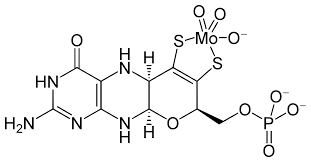
At present, there are some new methods, for example, molybdenite is not roasted, directly used oxygen pressure cooking method or bacterial leaching method to extract pure molybdenum trioxide. For low-grade oxide ore, use sulfuric acid to leach, ion exchange, and extraction method to extract pure molybdenum trioxide from solution.
Application overview of molybdenum
Molybdenum is used in the leading position in the iron and steel industry, accounting for about 80% of the total consumption of molybdenum, followed by the chemical industry, accounting for about 10%. In addition, molybdenum has also been used in electrical and electronic technology, medicine and agriculture, and other fields, accounting for about 10% of the total consumption.
 Chin Trento