
 Products
 Bars
Bars
 Beads & Spheres
 Bolts & Nuts
 Crucibles
 Discs
Discs
 Fibers & Fabrics
 Films
Films
 Flake
Flake
 Foams
Foams
 Foil
Foil
 Granules
 Honeycombs
 Ink
Ink
 Laminate
 Lumps
Lumps
 Meshes
 Metallised Film
 Plate
Plate
 Powders
 Rod
Rod
 Single Crystals
 Sputtering Target
 Tubes
Tubes
 Washer
 Wires
Wires
 Converters & Calculators
 Write for Us



What Nickel is Valuable

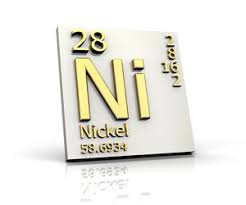
Nickel, the element symbol is Ni, the atomic number is 28 in the periodic table, the relative atomic mass is 58.69, and it is the VIII group metal. The density is 8.9g/cm, the melting point is 1455 DEG C, the boiling point is 2730 DEG C. Nickel is a silvery white metal that is easily oxidized by air in the air and produces some black oxide film on the surface. Therefore, people can see that the nickel is often black. Nickel is hard, has good ductility, magnetic and corrosion resistance, and can be highly polished. Nickel is also abundant in the earth's crust. In nature, it exists in the form of nickel silicate or sulfur, arsenic and nickel compounds. Nickel is often used in the manufacture of stainless steel, alloy steel and other steel, electroplating, high nickel alloy and batteries, widely used in aircraft, radar and other military manufacturing industry, civil machinery manufacturing industry and electroplating industry.
Brief introduction to nickel smelting
Nickel ore consists of copper sulphide ore and oxide ore, their dressing and smelting process is completely different: according to the different selection methods of stone copper-nickelsulphide level, then smelting. The method of smelting and enrichment of nickel oxide ore, can be divided into two major categories such as fire and wet method.
The preparation of nickel
Electrolysis method: the enriched sulfide ore is roasted into oxide, reduced to coarse nickel by carbon, and then pure nickel is obtained by electrolysis.
Carbonylation method: the nickel sulfide ore and carbon monoxide action to produce four carbonyl nickel, heating decomposition, and get a very high purity metal nickel.
Hydrogen reduction method: the reduction of nickel oxide by hydrogen can lead to metallic nickel.
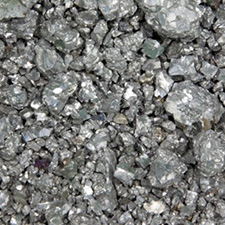
Types of nickel products
Nickel basic products
- nickel belt, nickel plate, pearl nickel foil plate, nickel scrap, nickel electrode, nickel, nickel, nickel sponge products, scrap nickel angle net, electrolytic nickel, nickel electroforming, nickel foam, pure nickel wire, nickel electroforming signs, mobile phone card, scrap nickel electroforming card edge material, battery conductive nickel film, Ni Cd, Ni electroforming mold plate, nickel slag, nickel bead net printing.
Nickel alloy products
Nickel iron alloy, nickel molybdenum alloy, nickel cobalt alloy, nickel aluminum alloy, high nickel alloy, nickel zinc alloy, nickel copper alloy, nickel powder.
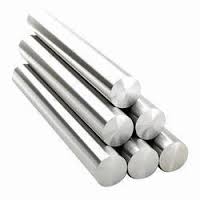
Grades classification of nickel products:
Grade one: the London Metal Exchange (LME) deals with more than 99.8% of pure nickel, such as electrolytic nickel, nickel blocks, and nickel spheres. Its use is extensive, including special steel, electronic materials and aerospace materials, such as alloy, catalyst, electroplating, battery materials.
Grade two: namely nickel iron alloy (nickel accounted for 16% ~ 40%), nickel oxide (nickel accounted for 75% ~ 98%) and general nickel (nickel accounted for about 98%) and so on. Almost all used for special steel. In addition, there are NiSO4.Ni (OH), 2, NiCl2.NiCO3 and other chemical products. Most of the two grade products are made of nickel lump, and the amount of consumption should be converted to the actual nickel content.
 Chin Trento