Products
 Bars
Bars
 Beads & Spheres
 Bolts & Nuts
 Crucibles
 Discs
Discs
 Fibers & Fabrics
 Films
Films
 Flake
Flake
 Foams
Foams
 Foil
Foil
 Granules
 Honeycombs
 Ink
Ink
 Laminate
 Lumps
Lumps
 Meshes
 Metallised Film
 Plate
Plate
 Powders
 Rod
Rod
 Single Crystals
 Sputtering Target
 Tubes
Tubes
 Washer
 Wires
Wires
 Converters & Calculators
 Write for Us



Tantalum for Medical Devices: Why Surgeons Choose This Metal

Most people have never heard of tantalum. But if you ever need a joint replacement, a skull repair, or a stent, there is a good chance that tantalum will be inside your body. This metal is rare. It is expensive. And it is exceptionally good at living inside the human body without causing problems. Here is what tantalum does in medical devices, why it works, and when it is worth the cost.
The Short Answer
Tantalum is used in medical implants because it is completely biocompatible, does not corrode in the body, and shows up clearly on X-rays. It also has a unique property: it can be made into porous foam that bone actually grows into.
No other metal offers this exact combination of properties.
If you need a permanent implant that must last decades without failing, tantalum is one of the best choices available.
What Makes Tantalum Different for Medical Use
Most metals cause problems inside the body.
Stainless steel and cobalt-chrome can release metal ions over time. Some patients develop allergic reactions. Titanium is better, but it still has limits.
Tantalum is different in four specific ways.
First, it is completely inert. The body does not attack it. It does not corrode in bodily fluids. No measurable metal ions are released. This matters for implants meant to stay in place for 20 or 30 years.
Second, it is not toxic. Tantalum powder injected into tissue causes almost no inflammatory response. This is rare among metals.
Third, it is highly radiopaque. Tantalum shows up bright white on X-rays and CT scans. Surgeons can see exactly where an implant is positioned. They can also track whether it has shifted over time.
Fourth, it can be made porous. Porous tantalum—often called "trabecular metal"—has a structure very similar to human bone. Bone tissue grows into the pores and locks the implant in place permanently.
Three Major Applications
Tantalum Medical Implants
The largest use of tantalum in medicine is in orthopedic implants.
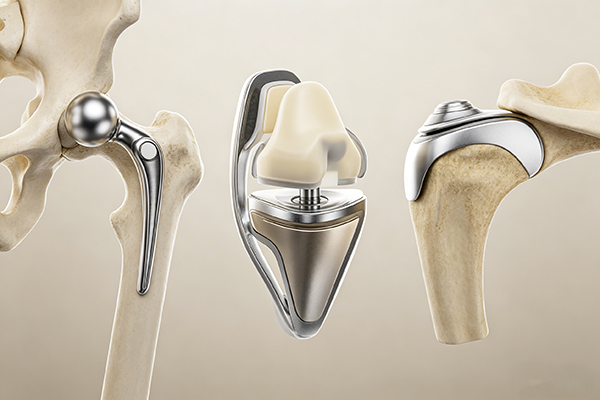
Hip replacements, knee replacements, and shoulder implants use tantalum components. The most common part is the acetabular cup—the socket part of a hip replacement. Surgeons press a porous tantalum cup into the pelvic bone. Over several months, bone grows into the tantalum pores. The cup becomes biologically fixed. No bone cement required.
Spinal fusion devices also use tantalum. Interbody cages made from porous tantalum hold vertebrae apart while bone grows through them.
Dental implants are another application. Tantalum implants integrate with jawbone similarly to titanium, with excellent long-term results.
Key property for implants: Porous structure allows bone ingrowth. No other metal replicates this as effectively.
Tantalum Surgical Tools
Tantalum is also used for instruments that go into the body during surgery.
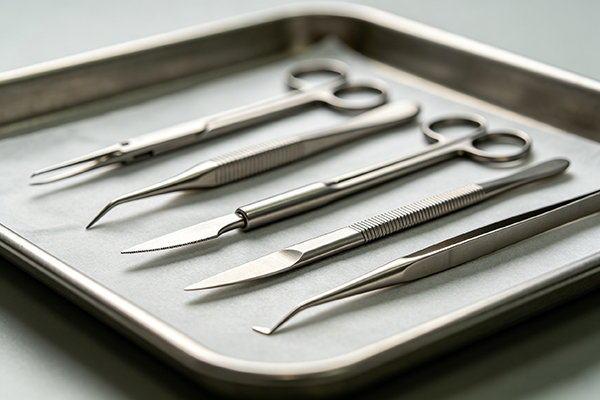
Retractors, forceps, needle holders, and other tools benefit from tantalum's properties. The metal is very dense and heavy, which gives surgical tools a solid, balanced feel. It does not corrode after repeated sterilization. And it is non-magnetic, which matters for surgeries performed near MRI machines.
However, tantalum tools are expensive. Most hospitals use titanium or stainless steel for routine instruments. Tantalum is reserved for specialized procedures where non-magnetic or non-reactive properties are critical.
Key property for tools: Non-magnetic and sterilization-resistant.
Tantalum Markers and Seeds
The third application is small tantalum markers used for tumor localization.
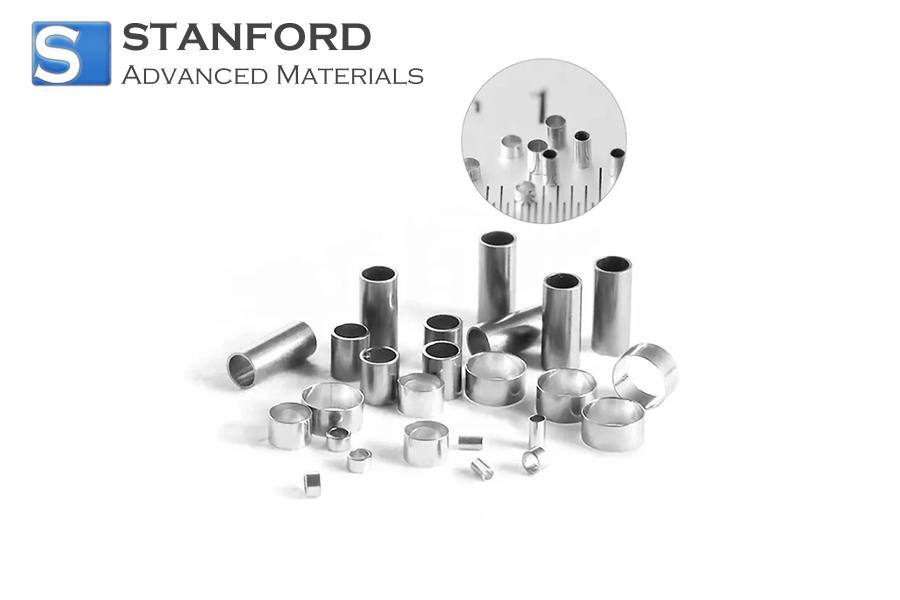
When a patient has a small tumor that needs radiation treatment, surgeons sometimes implant tiny tantalum seeds—about the size of a grain of rice—near the tumor. On X-ray or CT scans, these markers show up brilliantly. The radiation therapy machine can aim at the markers with sub-millimeter precision.
The same technique is used to mark biopsy sites. If a biopsy finds something suspicious but not immediately removable, a tantalum clip marks the spot for future monitoring.
Key property for markers: Extreme radiopacity. A 1 mm tantalum ball is as visible as a 5 mm titanium ball.
Tantalum vs Titanium: The Real Comparison
Most people ask: why not just use titanium?
Here is the honest comparison.
|
Property |
||
|
Biocompatibility |
Excellent |
Excellent |
|
Corrosion resistance |
Excellent |
Very good |
|
Radiopacity (X-ray visibility) |
Excellent (very bright) |
Poor (faint) |
|
Bone ingrowth (porous form) |
Excellent |
Good but not as good |
|
Cost |
Very high |
Moderate |
|
Weight |
Very heavy (16.6 g/cm³) |
Light (4.5 g/cm³) |
Titanium is cheaper and lighter. For most implants, titanium works perfectly well.
Tantalum is chosen when you need one of three things:
-
Maximum X-ray visibility (markers, seeds)
-
Maximum bone ingrowth (porous hip cups)
-
Maximum corrosion resistance in sensitive locations
If none of those apply, titanium is usually the smarter economic choice.
Limitations and Risks
Tantalum has two real limitations.
Cost is the first. Tantalum is rare. It costs significantly more than titanium or stainless steel. A tantalum hip cup might add hundreds of dollars to the implant cost. For most healthcare systems, that extra cost must be justified by better outcomes.
Availability is the second. Tantalum supply depends on mining in Brazil, Australia, and several African countries. Supply disruptions happen. Some hospitals stock alternative implants made from coated titanium for this reason.
There are no known allergic reactions to tantalum. No toxicity issues. No long-term failure modes unique to the metal itself.
Conclusion
Tantalum is a specialty metal for permanent medical implants where bone ingrowth or X-ray visibility is critical.
It is not the right choice for every device. It is too expensive for routine applications. But for hip replacements, spinal cages, tumor markers, and non-magnetic surgical tools, tantalum offers properties that no other metal can match.
If you are designing a medical device that must last 20 years inside a patient, tantalum belongs on your short list.
References
-
Black, J. (2020). Biological performance of tantalum: A review of the literature. Journal of Biomedical Materials Research Part B, 108(4), 1456-1468.
-
Bobyn, J.D., et al. (2022). Porous tantalum for orthopedic applications: 20 years of clinical experience. Clinical Orthopaedics and Related Research, 480(1), 45-58.
-
Levine, B.R., et al. (2019). Tantalum in orthopedic surgery: Current concepts and future directions. Journal of the American Academy of Orthopaedic Surgeons, 27(15), 555-565.
-
U.S. Food and Drug Administration. (2024). Class II special controls guidance document for porous metal orthopedic implants. FDA Guidance Document CDRH-2024-123.

 Chin Trento