
 Products
 Bars
Bars
 Beads & Spheres
 Bolts & Nuts
 Crucibles
 Discs
Discs
 Fibers & Fabrics
 Films
Films
 Flake
Flake
 Foams
Foams
 Foil
Foil
 Granules
 Honeycombs
 Ink
Ink
 Laminate
 Lumps
Lumps
 Meshes
 Metallised Film
 Plate
Plate
 Powders
 Rod
Rod
 Single Crystals
 Sputtering Target
 Tubes
Tubes
 Washer
 Wires
Wires
 Converters & Calculators
 Write for Us



The Application of Niobium Metal Products

Niobium, chemical symbol Nb, atomic number 41, melting point 2477 ℃, is one of the high melting point metals. Niobium is very soft, highly ductile, and silver-gray.
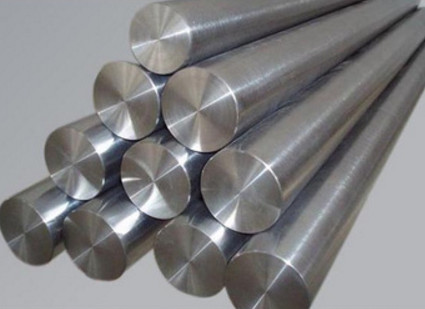
Niobium compounds mainly include niobium oxide, niobium nitride, niobium carbide, niobium tinate and lithium niobate. Niobium oxide is the main raw material for the production of other niobium products. It can also be used to produce capacitors, optical glass and so on. Lithium niobate, potassium niobate and other niobate monocrystal have good light refractivity, light transmittance and high dielectric constant. They are widely used in laser and electronics industry for the production of acoustic filters, optical modulators, mobile phone and computer screens, and other products. Niobium carbide is highly plastic at high temperature, doesn’t produce texture, and is commonly used in the production of cutting tools and ceramics. Niobium germanide and niobium tinate can be used as the wire for superconducting magnet.
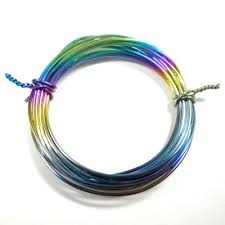
Niobium metal is mainly present in stainless steel in the form of ferroniobium. The incorporation of a small amount of niobium can greatly improve the yield strength of steel and adjust its toughness level. In addition, niobium makes steel have high temperature oxidation resistance and corrosion resistance, reduces the transition temperature of steel, making it easier to weld and shape. Ultra-high purity niobium is the main industrial superconducting material for the production of superconducting generators, accelerators, superconducting energy storage devices and nuclear magnetic resonance equipment. High-purity niobium materials are also widely used in aerospace field for the production of heat-resistant parts of engines of rockets and spacecraft. Niobium has good corrosion resistance and biocompatibility and will not cause any harm to the human body, so it is commonly used in the manufacture of surgical tools, bone plate and so on. Common niobium alloy includes niobium-titanium alloy, which is used as superconducting magnetic coil in magnetic levitation industry; niobium-zirconium alloy, which is corrosion-resistant and anti-catalytic, and is mostly used in the production of chemical reaction equipment; niobium-nickel alloy, which is mostly used in the production of turbine blades.
 Chin Trento