Products
 Bars
Bars
 Beads & Spheres
 Bolts & Nuts
 Crucibles
 Discs
Discs
 Fibers & Fabrics
 Films
Films
 Flake
Flake
 Foams
Foams
 Foil
Foil
 Granules
 Honeycombs
 Ink
Ink
 Laminate
 Lumps
Lumps
 Meshes
 Metallised Film
 Plate
Plate
 Powders
 Rod
Rod
 Single Crystals
 Sputtering Target
 Tubes
Tubes
 Washer
 Wires
Wires
 Converters & Calculators
 Write for Us



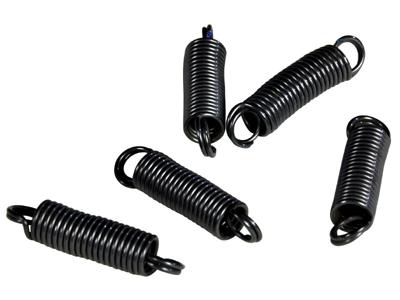
How Can Nitinol Make a Sprinkler Switch on

Nickel-titanium alloy, also known as nitinol, is a binary alloy composed of nickel and titanium. The two elements are roughly equal in atomic percentage (Nitinol 55 and Nitinol 60 are common). Due to the changes in temperature and mechanical pressure, nitinol has two different crystal structure phases, namely the austenitic phase and the martensitic phase.
In nitinol, the austenite is called the mother phase, which is the crystal phase shown by alloy at high temperature. When the temperature decreases, austenite will gradually convert to martensite (subphase).
In the process of martensite and austenite transformation, there are four kinds of temperatures:
As: the temperature at which martensite begins to convert to austenite during the process of temperature rise.
Af: the temperature at which martensite finishes the conversion into austenite during the process of temperature rise.
Ms: the temperature at which austenite begins to convert to martensite during the process of temperature drop.
Mf: the temperature at which austenite finishes the conversion into martensite during the process of temperature drop.
The phase transformation of nitinol has a thermal hysteresis, so As is not equal to Mf, for the same reason, Af is not equal to Ms.
Nitinol has two characteristics: shape memory effect (SME) and superelasticity (SE).
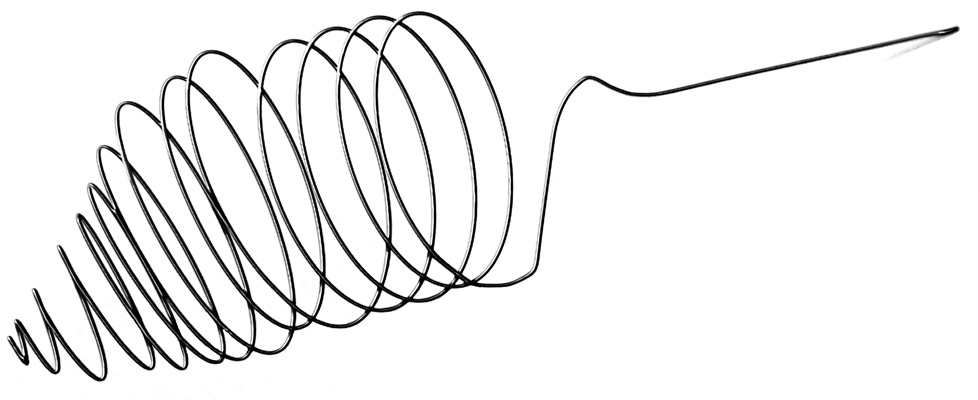
1. Shape memory
Shape memory happens when mother phase of a certain shape is cooled from above the Af temperature to below the Mf temperature and completely forms the martensite, deforming the martensite below Mf temperature. After being heated to below Af temperature, with reverse phase transformation, the material will automatically restore its shape in mother phase. In fact, the shape memory effect is a thermally induced phase transition process of nitinol. It refers to ability of nitinol to deform at a certain temperature and then restore the original, non-deformed shape when the temperature is higher than its "transition temperature".
2. Superelasticity
The so-called superelasticity refers to the phenomenon in which the sample produces a strain that is far greater than the elastic limit strain under the effect of external forces and the strain can automatically restore during unloading. In mother phase, due to the effect of external stress, the strain triggers martensitic phase transition so that the alloy exhibits mechanical behaviors that are different from those of ordinary materials. Its elastic limit is much larger than that of ordinary materials. And it no longer follows Hooke’s Law. Compared with shape memory effect, superelasticity does not involve heat.
 Chin Trento