
 Products
 Bars
Bars
 Beads & Spheres
 Bolts & Nuts
 Crucibles
 Discs
Discs
 Fibers & Fabrics
 Films
Films
 Flake
Flake
 Foams
Foams
 Foil
Foil
 Granules
 Honeycombs
 Ink
Ink
 Laminate
 Lumps
Lumps
 Meshes
 Metallised Film
 Plate
Plate
 Powders
 Rod
Rod
 Single Crystals
 Sputtering Target
 Tubes
Tubes
 Washer
 Wires
Wires
 Converters & Calculators
 Write for Us



Silver Nanoparticles in Medicine: A Powerful Tool for Modern Healthcare

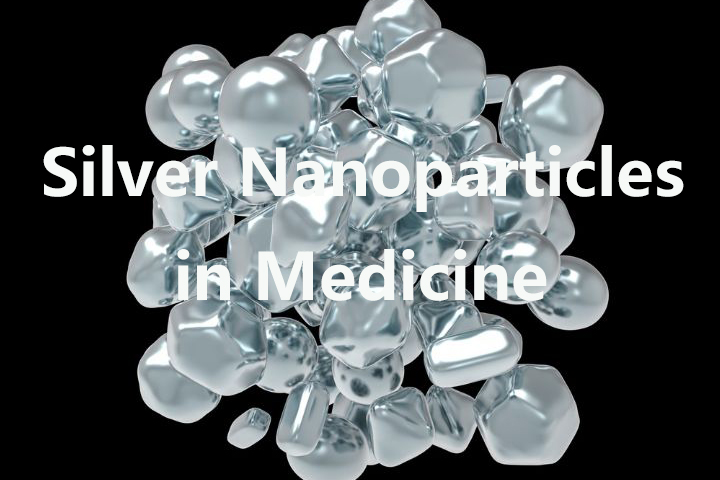
Silver nanoparticles (AgNPs) are the most revolutionary nanomaterials in medicine due to their superior optical, electrical, and biological characteristics. Their tiny size on the nanoscale and unique surface features enable them to engage with biological systems in ways not possible for bulk materials, providing a wide range of applications in diagnostics, treatment, and prevention.
What is Special about Silver Nanoparticles?
Silver nanoparticles possess several outstanding properties that distinguish them from conventional materials. Due to their particle size being smaller than the wavelength of visible light, they are optically transparent, and this makes them suitable for applications where there is a need for optical transparency, for instance, packaging and cosmetics coatings.
Besides their optical transparency, AgNPs possess:
- Surface effect: Their high surface energy makes them extremely chemically reactive.
- Size effect at small size: Their smaller size alters thermal and mechanical characteristics such as melting point and surface tension.
- Macroscopic quantum tunneling: Offers new electrical conductivity, especially in conductive coatings and inks.
- Quantum size effect: Alters electronic behavior, which offers new functionalities at the nanoscale.
These effects make silver nanoparticles useful for being deployed on a gigantic range of advanced materials, including catalysts, antistatic additives, low-temperature superconductors, conductive inks, and conductive coatings.
Medical Uses of Silver Nanoparticles
Perhaps one of the most significant uses of silver nanoparticles lies in the biomedical industry. Due to their extremely small particle size, silver nanoparticles can penetrate through blood vessels and move themselves to desired organs. Furthermore, silver nanoparticles can be employed to bind single-stranded DNA molecules, which makes them highly useful for various medical applications.
- Biosensing: Silver nanoparticles may be rendered sensitive to biosensors to detect trace amounts of biomolecules.
- Biological labeling: They are used to selectively bind to label DNA, proteins, or cells to visualize them.
- Biomedical imaging: Their characteristics provide contrast in imaging methods such as fluorescence and Raman imaging.
- Medical diagnostics: Silver nanoparticles find uses in diagnostic devices and test kits for the early detection of diseases.
- Targeted therapy: Their surface can be functionalized with drugs or targeting molecules, which allows them to direct treatments specifically to diseased tissues.
Antibacterial Applications in Medicine and Healthcare
Silver has long been utilized for its antimicrobial activity, but through its nanoparticle state, antibacterial activity is considerably enhanced. Silver nanoparticles can kill most bacteria, including antibiotic-resistant strains, through interfering with cell membranes, the generation of reactive oxygen species, and inhibition of bacterial DNA replication.
Owing to their wide range of antibacterial activity, they have been incorporated in a vast array of healthcare products like:
- Topical ointments and creams: To guard against infection of burns, cuts, and other open sores.
- Coatings on medical devices: Employed for coating catheters, surgical devices, and implants to prevent microbial contamination and biofilm formation.
- Water purification equipment: Used to prevent bacterial growth in potable water systems and dialysis equipment.
- Antibacterial athletic gear and clothing: Incorporated into fabrics and sporting goods to reduce odor and microbial load.
- Antibacterial medication: Integrated into wound dressings, eye drops, and nasal sprays to prevent infection.
Increased Use in Medical Facilities
Aside from direct patient care, silver nanoparticles are now being used in healthcare facilities to improve hygiene and reduce the risk of infection. Bed rails, door handles, and countertops are coated with silver nanoparticle-based coatings on high-touch devices in hospitals and clinics. Air purifiers and HVAC can also be installed with AgNPs to prevent airborne viruses and bacteria.
In operating rooms, silver nanoparticle-coated gowns and equipment offer additional protection against infection.
In implantable medical devices such as pacemakers and joint replacements, AgNP coatings reduce the incidence of post-surgical infections.
Summary Table
|
Application Area |
Function of AgNPs |
Key Benefits |
|
Biomedical Imaging |
Optical enhancement |
Improved imaging resolution and sensitivity |
|
Biosensing & Diagnostics |
Surface binding and signal amplification |
High sensitivity; rapid detection |
|
Drug Delivery & Targeted Therapy |
Site-specific delivery via surface modification |
Reduced side effects; enhanced therapeutic efficiency |
|
Topical Antibacterial Agents |
Disrupts bacterial membranes; inhibits replication |
Broad-spectrum antibacterial activity; accelerates healing |
|
Medical Device Coatings |
Antibacterial barrier; prevents biofilm formation |
Reduced infection risk; extended device life |
|
Water Purification & Filtration |
Inhibits microbial growth |
Safe, clean water; long-term antimicrobial performance |
|
Antibacterial Textiles |
Continuous surface-level microbial inhibition |
Odor control; reduced microbial transmission |
|
Healthcare Infrastructure |
Prevents bacterial/viral spread |
Enhanced hygiene; infection control |
Conclusion
Silver nanoparticles represent a major advancement in nanomedicine. Their unique combination of transparency, chemical reactivity, and biocompatibility makes them ideal for a wide range of applications—from diagnostics and drug delivery to infection control and medical device manufacturing. As research continues to reveal new capabilities, silver nanoparticles are poised to play an increasingly vital role in the future of healthcare. For more silver products, please check Stanford Advanced Materials (SAM).
 Chin Trento