Products
 Bars
Bars
 Beads & Spheres
 Bolts & Nuts
 Crucibles
 Discs
Discs
 Fibers & Fabrics
 Films
Films
 Flake
Flake
 Foams
Foams
 Foil
Foil
 Granules
 Honeycombs
 Ink
Ink
 Laminate
 Lumps
Lumps
 Meshes
 Metallised Film
 Plate
Plate
 Powders
 Rod
Rod
 Single Crystals
 Sputtering Target
 Tubes
Tubes
 Washer
 Wires
Wires
 Converters & Calculators
 Write for Us



7 Applications and Examples of Photoinitiators

These are special kinds of compounds that, upon absorption of light, initiate polymerization reactions. The material hardens or cures rapidly with the action of UV or visible light. Because of this capability to initiate fast and controlled curing processes, photoinitiators have become of substantial importance in various industries, from advanced electronics and medical devices through coatings and adhesives to 3D printing.
1. Coatings and Inks
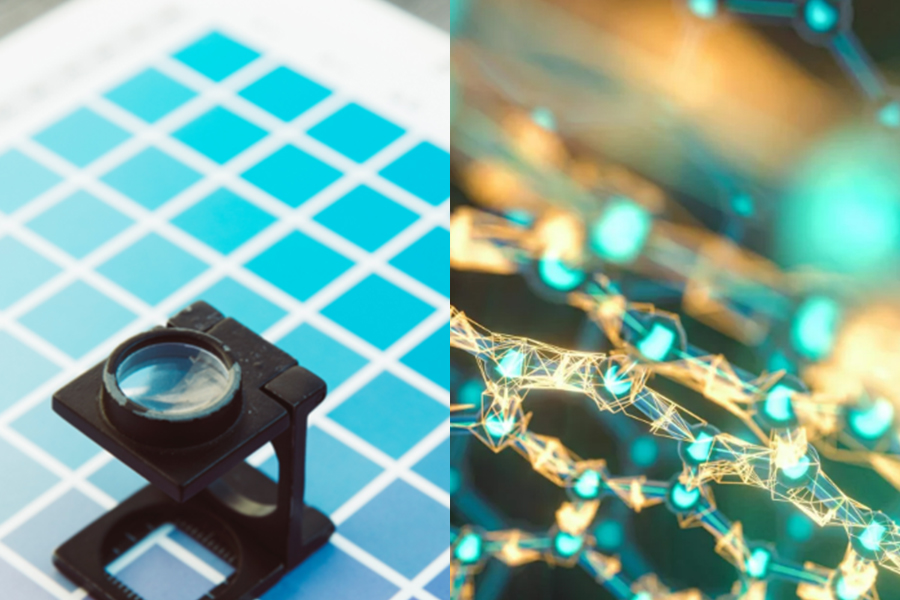
Photoinitiators find a wide field of applications in UV-curable coatings and inks.
Applications involving these systems include printing, packaging, home décor laminates, and industrial coatings. As an example, photoinitiators are used in the printing of signs and packaging lines where there is a need to cure inks in seconds, thus allowing high-speed, continuous production. Decorative laminates for furniture or building panels utilize light-cured coatings to produce a finish that is both tough and quick-drying.
Photoinitiators help achieve surface hardness quickly without the need for heat. VOC emissions are reduced, and energy consumption is lowered. The actual manufacturer benefits from cleaner processes and faster line speeds.
UV curing allows quality enhancement and also gives improved scratch and chemical resistance, as desired for both functional and decorative coating applications.
2. Glues
Light-cure adhesives for high-performance bonding.
In electronics assembly and automotive manufacturing, photoinitiator-based adhesives are utilized for bonding parts like sensors, circuit boards, and structural components. These adhesives get exposed to UV or LED light and cure within seconds to provide strong and reliable bonds.
This curing method provides good control, high bonding strength, and resistance to aging and environmental stress. It minimizes shrinkage and uniformly spreads adhesion, which is important in sensitive components.
Fast cure time minimizes production bottlenecks and enhances the reliability of automated assembly lines.
3. Electronics Industry
Photoinitiators are crucial in the manufacture of photoresists for semiconductor fabrication.
In chip manufacturing, photoinitiators are a key component in photoresist materials applied to silicon wafers. Since accurate pattern transfer is critical for photolithography, high-purity photoinitiators ensure the patterns used to create circuits are precise and defect-free.
High stability and purity are demanded, so contamination does not occur. The control has to be tight for processes in such volume production of semiconductors to avoid loss of yield.
Photoinitiators have become indispensable in the microelectronics industry: they enable miniaturization and reliability in integrated circuits and other electronic devices.
4. 3D Printing and SLA
Photopolymerization-based curing in 3D printing techniques is driven by photoinitiators.
In SLA and DLP printing, the photoinitiators help liquid resins to fasten rapidly into 3D structures in detail. Applications include dental models, hearing devices, prototypes in jewelry, and specific engineering parts.
All these systems have the added advantage of high-resolution accuracy and speedy curing, whereby material properties can be controlled layer by layer.
As the technology of additive manufacturing continues to evolve, new photoinitiator chemistries are developed to tailor resin performance for improved curing depth and compatibility with various light sources.
5. Medical Field
Photoinitiators are used in many medical-grade curing and pharmaceutical processes.
Light-activated formulations cure dental materials such as fillings, sealants, and cements. Photoinitiators in drug delivery help with the synthesis of polymers that release medication in controlled doses.
The materials used should be non-toxic, biocompatible, and safe for use inside the human body. Light curing allows for fast treatment with high precision and low thermal damage.
In this way, photoinitiator-based systems allow for clean, fast, and reliable processing in clinical and laboratory settings. This is important in healthcare environments where time can be of the essence.
6. Composite Materials
UV-curable composite materials for structural and functional parts.
They find applications in the manufacture of various components, including wind turbine blades, automotive panels, and aerospace structures, where carefully programmed curing cycles and superior mechanical properties are required.
Photoinitiators speed up the production rate by ensuring uniform curing, high strength, and less processing time.
Fast-curing composites help manufacturers meet tight deadlines and quality standards in demanding sectors like aviation and renewable energy.
7. Other Specialized Uses
Niche applications within optics, imaging, and dental care.
They serve in the protection of signal integrity in optical fiber coatings, as anti-etch agents in microfabrication, and in photopolymer printing plates, which allow for fine details to be printed. In restorative dentistry, they ensure adequate curing of fillings with minimal shrinkage.
They provide controlled activity, compatibility with special formulations, and performance over long periods.
These applications reveal the versatility of photoinitiators in both high-tech and healthcare-related environments.
Summary Table
|
Application Area |
Specific Applications |
Key Industries |
|
Coatings & Inks |
UV-curable coatings and inks for fast surface hardening on wood, plastics, and paper |
Printing, Packaging, Home Décor |
|
Adhesives |
Light-curable adhesives for electronics assembly, automotive bonding, and optical components |
Electronics, Automotive, Optoelectronics |
|
Electronics |
Photoinitiators in photoresist formulations for semiconductor photolithography |
Semiconductor, IC Manufacturing |
|
3D Printing (SLA) |
Resin formulations in stereolithography (SLA) and DLP printing for precise and rapid prototyping |
3D Printing, Rapid Prototyping |
|
Medical Applications |
Dental filling materials, light-curable resins, and photoinitiated drug delivery systems |
Dentistry, Biomedical Devices |
|
Composite Materials |
UV-curable composite resins for structural components, laminates, and reinforced materials |
Aerospace, Automotive, Construction |
|
Other Special Uses |
Fiber optic coatings, photo-polymer printing plates, anti-etch coatings, and light-cured dental sealants |
Optical, Printing, Dental |
For more information, please refer to Stanford Advanced Materials.
Conclusion
Photoinitiators are indispensable in many industries. Their ability to initiate a fast, efficient polymerization changed the way we print, bond, build, and heal. Be it UV-cured packaging lines or next-generation semiconductor fabs, photoinitiators assure quality, speed, and environment-friendly performance. And as new formulations continue to be developed, their role will be even bigger in advanced manufacturing and smart materials development.
Frequently Asked Questions
Q: What are photoinitiators used for in coatings and inks?
A: They initiate fast curing when exposed to light, thus enabling efficient hardening of coatings and inks.
Q: Why are photoinitiators important in electronics manufacturing?
They help in the production of high-purity photoresist materials, and their use is indispensable for precision in circuit patterning on silicon wafers.
Q: How does the photoinitiator help in 3D printing?
A: They support fast polymerization without compromising the accuracy of the curing of each resin layer for high-resolution printing at a faster pace.
 Chin Trento