
 Products
 Bars
Bars
 Beads & Spheres
 Bolts & Nuts
 Crucibles
 Discs
Discs
 Fibers & Fabrics
 Films
Films
 Flake
Flake
 Foams
Foams
 Foil
Foil
 Granules
 Honeycombs
 Ink
Ink
 Laminate
 Lumps
Lumps
 Meshes
 Metallised Film
 Plate
Plate
 Powders
 Rod
Rod
 Single Crystals
 Sputtering Target
 Tubes
Tubes
 Washer
 Wires
Wires
 Converters & Calculators
 Write for Us



The 2025 Nobel Prize in Chemistry: What Are MOFs?

The Royal Swedish Academy of Sciences awarded the 2025 Nobel Prize in Chemistry to Susumu Kitagawa, Richard Robson, and Omar M. Yaghi for their forward-looking research on metal–organic frameworks (MOFs). The revolutionary materials, with their humongous internal surface areas, tunable pore structures, and unitary design, have proven themselves to be a cornerstone of materials chemistry with groundbreaking use in energy storage, environmental decontamination, and molecular engineering.

Fig. 1 2025 Chemistry Nobel Prize
Introduction to MOFs
MOFs are three-dimensional solid crystals composed of metal ions or clusters coordinated with organic ligands, the latter producing three-dimensional structures with highly tunable pore architectures. Due to the synergy of high surface area, light density, and elastic structure, chemists can tailor frameworks with predictable pore size, chemical functionality, and mechanical properties.
Certain MOFs achieve internal surface area of more than 7,000 m²/g, an order of magnitude better than activated carbon, with unparalleled potential for molecule storing and separating. The modularity of MOFs also enables functionalization for an application, ranging from gas separation and storage to drug delivery and catalysis.
History and Development of MOFs
Construction of metal–organic frameworks (MOFs) began with Richard Robson in 1989, as he first came up with the theory by bridging copper ions with a four-armed organic linker to produce a crystalline network with accurately defined cavities. This opened the way for what became a rapidly developing field of research.
Then, Susumu Kitagawa demonstrated the versatility of MOFs with structures' ability to alter through structural transformation such that frameworks can "breathe" according to guest molecules.
Omar Yaghi subsequently extended the field even further with the synthesis of MOF-5, a material that possesses an astonishing surface area of greater than 3,000 m²/g and good gas uptake capabilities, showing the material's practical utility in real-world applications.
Their contributions, collectively, established MOFs as a mysterious family of porous crystalline solids with possible application and also inherent interest.
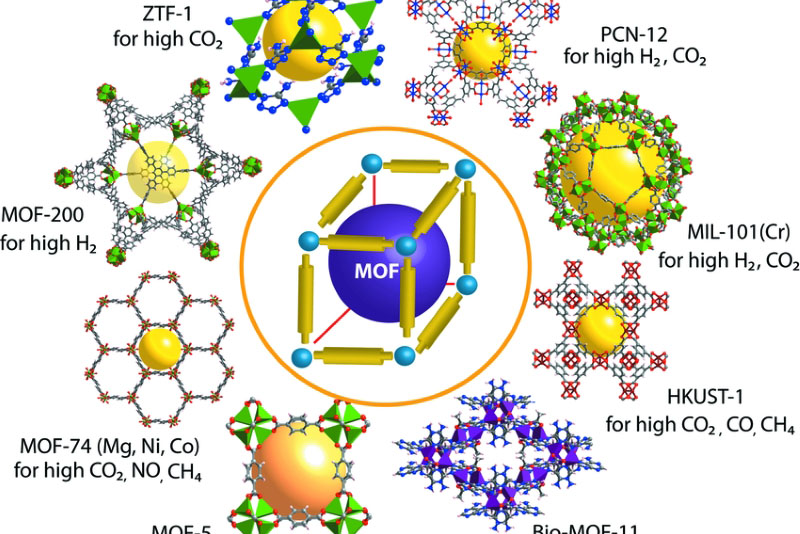
Fig. 2 Schematic representation of important reported MOFs
Synthesis Methods of MOFs
Solvothermal remains the most popular method of MOF synthesis. Here, metal salts and organic ligands are mixed in formamide-functionalized protic or aprotic organic solvents. The reaction is typically carried out under autogenous pressure higher than the solvent's boiling point in an autoclave, where crystal growth is allowed and very ordered structures are achieved. Slow crystal growth is generally necessary to obtain large defect-free crystals with optimal internal surface area.
Even though solvothermal synthesis is conventional and sure, a few other methods have emerged to render product structures adjustable and enhance efficiency. Techniques such as microwave-assisted, sonochemical, mechanochemical, electrochemical, and ionothermal synthesis are increasingly gaining widespread application.
For instance, mechanochemical synthesis employs grinding and mechanical energy rather than solvents, minimizing environmental burden and allowing for quick framework development. Microwave-assisted synthesis has also been shown to generate MOFs with comparable crystallinity within a matter of minutes rather than hours. All these developments are important for large-scale production of MOFs and determining new architectures.
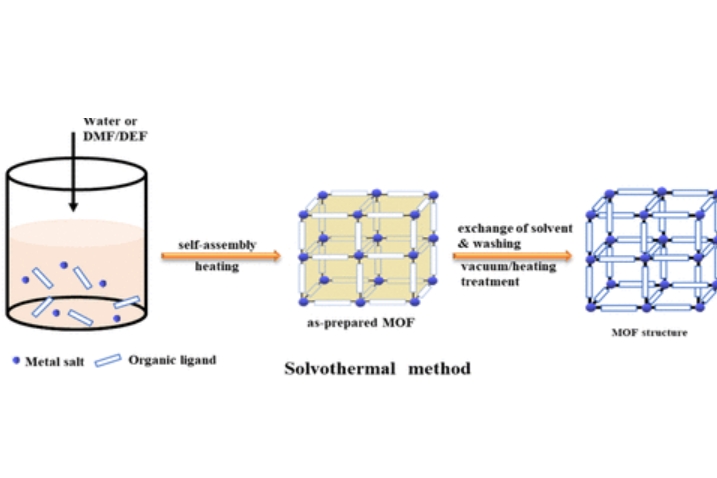
Fig. 3 Conventional Solvothermal Synthesis of MOF Structures
Potential Applications of MOFs
The unique MOF properties—low density, high surface area, porous yet tunable porosity, and structural flexibility—afford an enormous range of potential applications:
- Gas Storage and Delivery: MOFs possess unique application value in hydrogen, methane, and carbon dioxide storage. For instance, MOF-5 adsorbs over 20 wt% hydrogen under 77 K and 1 bar, and MOF-177 has CO₂ adsorption of over 6 mmol/g at 298 K under 1 bar. These attributes have made MOFs clean energy storage materials such as hydrogen fuel cells and methane cars.
- Environmental Remediation: MOFs have been used to remove contaminants from water and air. Some MOFs adsorb PFAS ("forever chemicals") selectively from wastewater, while others have affinity for carbon dioxide, enabling carbon capture. For example, Mg-MOF-74 has CO₂ adsorption capacities of up to 8 mmol/g at room conditions, which makes it viable for application in emission control.
- Water Harvesting: Certain MOFs are able to harvest water from arid air. Described in field tests in arid environments, Zirconium-based MOF-801 collected 2.8 liters of water per kilogram of MOF per day under low humidity (20–30% relative humidity).
- Drug Delivery: MOF porous architectures make it possible to encapsulate therapeutic molecules for controlled release. In experimental studies, MIL-100(Fe) matrices have released anti-cancer drugs with improved stability and targeted release characteristics, reducing systemic toxicity.
- Energy Storage and Electronics: MOFs are explored for applications in supercapacitors, batteries, and catalysis. MOFs can be used as high capacitance and conductivity electrode materials or as catalyst supports for catalytically active metal nanoparticles.
These uses are proof that MOFs are no longer a laboratory curiosity; already, they are demonstrating quantifiable, real-world performance in numerous applications. Commercialization on scales greater than the lab is still challenging, but research still seeks to enhance stability, reproducibility, and economy.
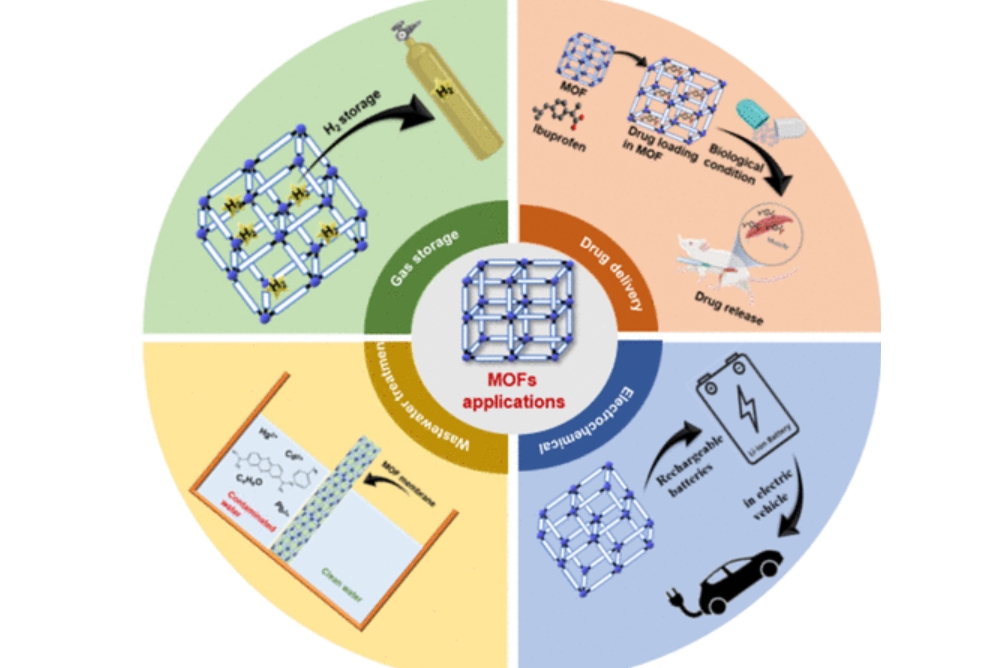
Fig. 4 Applications in Energy, Drug Delivery, and Wastewater Treatment
Conclusion
The 2025 Chemistry Nobel Prize to Kitagawa, Robson, and Yaghi most notably points to the transformative size of MOFs. From groundbreaking structural concepts to high-tech synthesis methods and untapped applications in the future, MOFs are a tribute to the union of fundamental chemistry with practical utility. For more industrial news and tech support, please check Stanford Advanced Materials (SAM).
References:
- Dey, Chandan & Kundu, Tanay & Biswal, Bishnu & Mallick, Arijit & Banerjee, Rahul. (2013). Crystalline metal-organic frameworks (MOFs): synthesis, structure and function. Acta Crystallographica Section B. 70. 3-10. 10.1107/S2052520613029557.
- Ganesan, M. (n.d.). Are metal-organic frameworks (MOFs) at a commercial tipping point? CAS Insights.
- Raptopoulou, C. P. (2021). Metal-organic frameworks: Synthetic methods and potential applications. Materials (Basel), 14(2), 310. (https://doi.org/10.3390/ma14020310)
- Sanders, R. (2025, October 8). UC Berkeley’s Omar Yaghi shares 2025 Nobel Prize in chemistry. Berkeley News.
- The Royal Swedish Academy of Sciences. (2025). The Royal Swedish Academy of Sciences has decided to award the Nobel Prize in Chemistry 2025. Nobel Prize Press Release.
- Yusuf, V. F., Malek, N. I., & Kailasa, S. K. (2022). Review on metal–organic framework classification, synthetic approaches, and influencing factors: Applications in energy, drug delivery, and wastewater treatment. ACS Omega, 7(49), 44507–44531. (https://doi.org/10.1021/acsomega.2c05310)
 Dr. Samuel R. Matthews