
 Products
 Bars
Bars
 Beads & Spheres
 Bolts & Nuts
 Crucibles
 Discs
Discs
 Fibers & Fabrics
 Films
Films
 Flake
Flake
 Foams
Foams
 Foil
Foil
 Granules
 Honeycombs
 Ink
Ink
 Laminate
 Lumps
Lumps
 Meshes
 Metallised Film
 Plate
Plate
 Powders
 Rod
Rod
 Single Crystals
 Sputtering Target
 Tubes
Tubes
 Washer
 Wires
Wires
 Converters & Calculators
 Write for Us



The Era of Graphene: Unleashing a Revolution in Material Science

In the ever-evolving landscape of materials science, every so often, a revolutionary material emerges that promises to drastically reshape technology and industry. Graphene, a marvel of modern science, stands out as one of these groundbreaking materials. With its astonishing range of potential applications, from enhancing computing speed to revolutionizing medical implants, graphene may well be paving the way for a future filled with unprecedented technological advancements.
Graphene's Revolutionary Potential
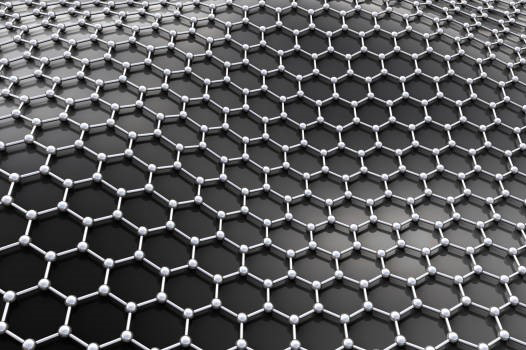
Graphene's structure—a single layer of carbon atoms arranged in a hexagonal pattern—gives it a set of unique and powerful properties. Often described as atomic-scale chicken wire, it combines exceptional strength, flexibility, and conductivity. Since its properties were first explored theoretically in the 1940s and more tangibly by Andre Geim and Konstantin Novoselov, who were awarded the 2010 Nobel Prize in Physics, graphene has captivated the scientific community. Their innovative "micromechanical cleavage" technique, using simple Scotch tape to isolate graphene layers, marked a significant breakthrough in its accessibility.
Transforming Industries with Graphene
Graphene's impact on various industries could be transformative. In computing, for instance, when combined with boron nitride, graphene could lead to the development of new-generation transistors that dramatically decrease reaction times, potentially circumventing the limitations of Moore’s Law on miniaturization and enhancing computer speeds. Its overlapping electron bands, a distinct characteristic compared to other semiconductors, may soon enable the creation of more efficient solar cells.
The material's exceptional strength and flexibility also suggest significant advancements in construction and manufacturing. Imagine buildings, vehicles, and spacecraft constructed with materials that are not only stronger and lighter but also more durable. Graphene's potential doesn't end at structural applications; its transparency and conductivity are perfect for developing more responsive, bendable touchscreens, which could revolutionize the design and functionality of digital devices.
Medical and Environmental Applications
In the medical field, graphene's robustness combined with its flexibility could lead to the creation of new kinds of prosthetics and implants, offering greater comfort and functionality while being significantly lighter. Moreover, its use in personal protection equipment could enhance durability without compromising on weight or comfort, making it ideal for protective gear in various high-risk professions.
Challenges and Future Prospects
Despite its promising applications, the widespread adoption of graphene hinges on the ability to produce it on a large scale at a reasonable cost. The development of cost-effective, efficient manufacturing processes remains a critical challenge. However, with ongoing advancements in production techniques and a deepening understanding of its properties, graphene's integration into everyday technology and industrial applications seems increasingly feasible.
The potential of graphene extends far beyond its current capabilities and into the realm of high-energy physics and cosmology, where its properties could lead to new insights into quantum mechanics and other advanced scientific fields. The trajectory of graphene’s impact is still unfolding, and its full potential remains to be tapped. As research continues and production methods evolve, graphene stands on the brink of transforming our technological landscape, heralding a new era of material innovation and application that could well redefine the 21st century.
 Chin Trento