
 Products
 Bars
Bars
 Beads & Spheres
 Bolts & Nuts
 Crucibles
 Discs
Discs
 Fibers & Fabrics
 Films
Films
 Flake
Flake
 Foams
Foams
 Foil
Foil
 Granules
 Honeycombs
 Ink
Ink
 Laminate
 Lumps
Lumps
 Meshes
 Metallised Film
 Plate
Plate
 Powders
 Rod
Rod
 Single Crystals
 Sputtering Target
 Tubes
Tubes
 Washer
 Wires
Wires
 Converters & Calculators
 Write for Us



New 3D Printing Material-Refractory Metal

Stanford Advanced Materials has overcome the problem of turning refractory metals into 3D printing materials. The refractory metal spherical powders for 3D printing we have manufactured are now available in bulk and are even applied in the key components of the aerospace industry.
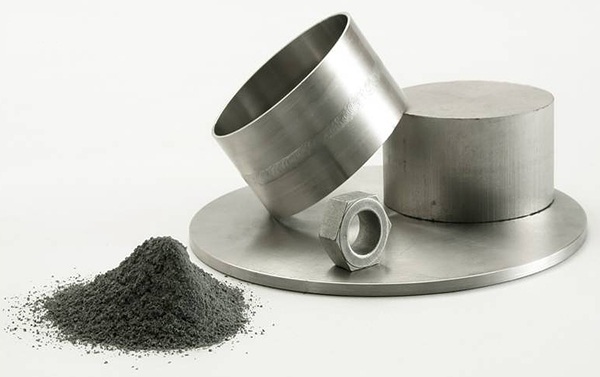
Materials such as tungsten, molybdenum, and rhenium have high melting points. For example, the melting point of tungsten is 3410 degrees. To turn such metals into spherical powders for 3D printing is very difficult. But at the same time, these refractory metals have good high-temperature resistance, corrosion resistance, high hardness, low expansion coefficient, and other characteristics. They are widely used in the aerospace industry. Currently, Germany, the United States, Japan, and other countries have the core technologies of the related equipment and materials of metal spherical powders for 3D printing. The production of metal spherical powder has been industrialized. The technical standards system of powder raw materials and product manufacturing has been established. SAM can supply ultra-fine 3D printing refractory metal spherical powder, which can basically meet the requirements of industrial production in terms of material purity, sphericity, spheroidization rate, and batch stability.
With the plasma spheroidization technique, scattered non-spherical powder is rapidly melted by going through the plasma zone. Due to surface tension, the melted droplet becomes spherical. And then, after quick solidification, refractory metal spherical powder for 3D printing is produced. As the powder material has been through surface treatment and modification, its filling density is 2 times that of non-spherical powder, its sphericity reaches 90% or more, its spheroidization rate reaches 85% or more, and its average particle size is less than 40μm. The successful production of refractory metal spherical powder and its application in key components of the aerospace industry has filled the blank of the production of high-quality refractory metal spherical powder.
 Chin Trento