Products
 Bars
Bars
 Beads & Spheres
 Bolts & Nuts
 Crucibles
 Discs
Discs
 Fibers & Fabrics
 Films
Films
 Flake
Flake
 Foams
Foams
 Foil
Foil
 Granules
 Honeycombs
 Ink
Ink
 Laminate
 Lumps
Lumps
 Meshes
 Metallised Film
 Plate
Plate
 Powders
 Rod
Rod
 Single Crystals
 Sputtering Target
 Tubes
Tubes
 Washer
 Wires
Wires
 Converters & Calculators
 Write for Us



Why Do We Need High-density Tungsten Alloy Shielding?

With the development of medical technology, more and more radiation equipment appears in our lives. The popularity of medical equipment and nuclear power has a significant influence on our lives. It raised the attention of people on how to protect them from the harm of radiation. Therefore, it’s necessary to shield radiation such as x-rays, gamma radiation (energetic electromagnetic radiation), alpha particles (helium atoms), beta particles (electrons) cosmic radiation, etc.
The Reason Why We Should Block Radiation Sources
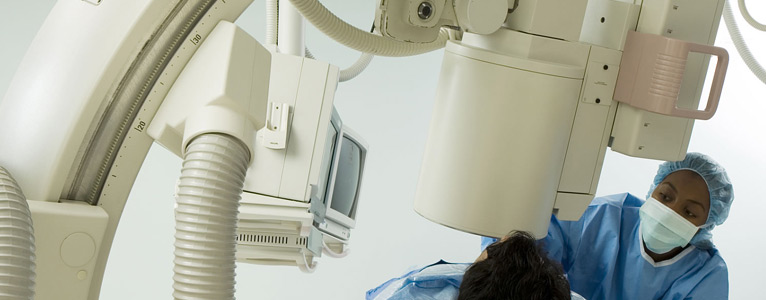
Radiation sources must be blocked in order to protect the patients, doctors, nurses, and others in the hospital. The radiation level of the radioactive materials must be controlled low enough, lest produce harmful ionizing radiation, so as not to cause lung cancer, skin cancer, and other cancers.
Choices of Shielding Materials
Lead and iron are traditional radiation shielding materials, but there is no doubt that a high proportion of tungsten alloy blocks is the best choice. The reason for choosing high-density tungsten alloy shielding as shielding material is that tungsten alloy has excellent ray absorption capacity, high density (density is twice of lead) as well as good corrosion resistance.
Advantages of High-density Tungsten Alloy Shielding
The property of radiation shielding is closely related to the density of the material. Higher density means better ray absorption and radiation shielding ability. Due to the higher density of tungsten alloy than other materials, the ray absorption and block ability are better than other traditional shielding materials, such as lead. High-density tungsten alloy shielding has better shielding on gamma rays, which can reduce the volume of shielding. Compared with the lead in the same volume, high-density tungsten alloy shielding has better radiation shielding.
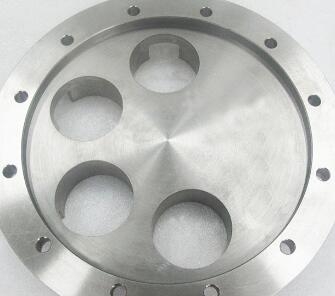
Due to the combination of high density, machinability, good corrosion resistance, and high radiation absorption capability (superior to lead and steel), and high strength, tungsten alloy is the best raw material for shielding. Tungsten alloy shielding still has the same radiation shielding ability as lead even when dwindled in the volume and thickness of the container. In addition, compared with lead and depleted uranium, high-density tungsten alloy is more environmentally friendly due to its non-toxic and pollution-free properties.
Application of High-density Tungsten Alloy
High-density tungsten alloy shielding is not subject to NRC, EPA, and OSHA regulations of special constraints, so it is widely used in nuclear medicine as a collimator, container radioactive isotope, radiation source container, etc.
Related reading: Application Of Tungsten Alloy In Industrial Shielding
Conclusion
Thank you for reading our article and we hope it can help you to have a better understanding of why we need high-density tungsten alloy shielding. If you want to learn more about tungsten products, we would like to advise you to visit Stanford Advanced Materials (SAM) for more information.
Stanford Advanced Materials (SAM) is a worldwide tungsten supplier and has over two decades of experience in the manufacture and sale of tungsten products, providing high-quality products to meet our customers' R&D and production needs. As such, we are confident that SAM will be your favorite tungsten supplier and business partner.
 Chin Trento