
 Products
 Bars
Bars
 Beads & Spheres
 Bolts & Nuts
 Crucibles
 Discs
Discs
 Fibers & Fabrics
 Films
Films
 Flake
Flake
 Foams
Foams
 Foil
Foil
 Granules
 Honeycombs
 Ink
Ink
 Laminate
 Lumps
Lumps
 Meshes
 Metallised Film
 Plate
Plate
 Powders
 Rod
Rod
 Single Crystals
 Sputtering Target
 Tubes
Tubes
 Washer
 Wires
Wires
 Converters & Calculators
 Write for Us



The Firefighter Uniform: A Shield in a Blazing Fire

A raging fire is a tyrannical monster that devours everything, reducing a bustling downtown area to ashes in no time. Amidst the chaos and danger, firefighters emerge as heroes, entering the fiery inferno to save lives. But what enables these ordinary individuals to perform such extraordinary feats? The answer lies in their protective gear: the firefighter uniform. This special clothing is crucial for protecting firefighters' safety and ensuring they can operate effectively in dangerous conditions.
The Anatomy of a Firefighter Uniform
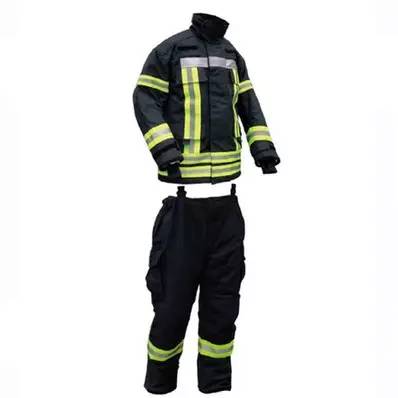
The firefighter uniform is crafted from special materials and designed with multiple unique features. It offers excellent flame resistance and heat insulation while also preventing corrosion from chemical substances such as acids and alkalis. Additionally, it has anti-static properties. The uniform's wide and thick design ensures comfort and freedom of movement, essential for the demanding tasks firefighters face.
Modern firefighter uniforms consist of several layers:
- Outer Layer (Reflective Layer): This thin layer of metal aluminum coating reflects most of the heat radiation, helping firefighters reach their targets safely.
- Middle Layer (Waterproof Layer): Made from polytetrafluoroethylene (PTFE), this layer is water-resistant, tolerates extreme temperatures, and resists strong acids and alkalis.
- Inner Layer (Heat Insulation Layer): Typically made from flame-retardant fibers like aramid, this layer provides high-temperature resistance and flame retardancy.
Reflective Layer: Deflecting Heat Radiation
Although the reflective layer of the firefighter uniform is only a thin metal aluminum coating, it plays a critical role by reflecting the majority of the heat radiation. This reflection helps firefighters approach and operate near intense heat sources without succumbing to the extreme temperatures.
Waterproof Layer: Unyielding Protection
The waterproof layer, usually crafted from PTFE, does not absorb or expand when exposed to water. PTFE, known as the "King of Plastics," remains stable at temperatures ranging from -269.3°C to 250°C and resists harsh chemicals. Its exceptional dielectric properties ensure that changes in electromagnetic frequency and temperature do not affect its performance, providing robust protection in the most challenging environments.
Heat Insulation Layer: Withstanding Extreme Temperatures
The inner heat insulation layer is made from high-temperature-resistant and flame-retardant fibers. Aromatic polyamide fiber, or aramid, is a synthetic fiber used in this layer due to its excellent heat shielding properties. The combination of amide groups and benzene rings in aramid provides superior flame resistance, ensuring that firefighters can withstand intense heat and flames.
Conclusion
The combination of the reflective, waterproof, and insulating layers creates a formidable shield that enables firefighters to confront the flames bravely. These meticulously designed uniforms are essential for their safety, allowing them to carry out their life-saving missions effectively. By leveraging advanced materials and innovative design, firefighter uniforms provide the protection needed to navigate and survive in the most perilous conditions.
Call to Action
Stay informed about the latest advancements in firefighting gear and safety technologies. For more information and updates, visit Stanford Advanced Materials (SAM) and subscribe to our newsletter.
 Chin Trento