{{flagHref}}
Products
  • Products
  • Categories
  • Blog
  • Podcast
  • Application
  • Document
|
|
/ {{languageFlag}}
Select Language
Stanford Advanced Materials {{item.label}}
Stanford Advanced Materials
Select Language
Stanford Advanced Materials {{item.label}}
Please start talking

How to finalize your demands for nitinol

Nitinol (Nickel Titanium)

Nitinol is a metal alloy of nickel and titanium, Nitinol alloys exhibit two closely related and unique properties:

Shape memory effect: Shape memory is the ability of nitinol to undergo deformation at one temperature, then recover its original, undeformed shape upon heating above its "transformation temperature".

Superelasticity: Superelasticity occurs at a narrow temperature range just above its transformation temperature; in this case, no heating is necessary to cause the undeformed shape to recover, and the material exhibits enormous elasticity, some 10-30 times that of ordinary metal.


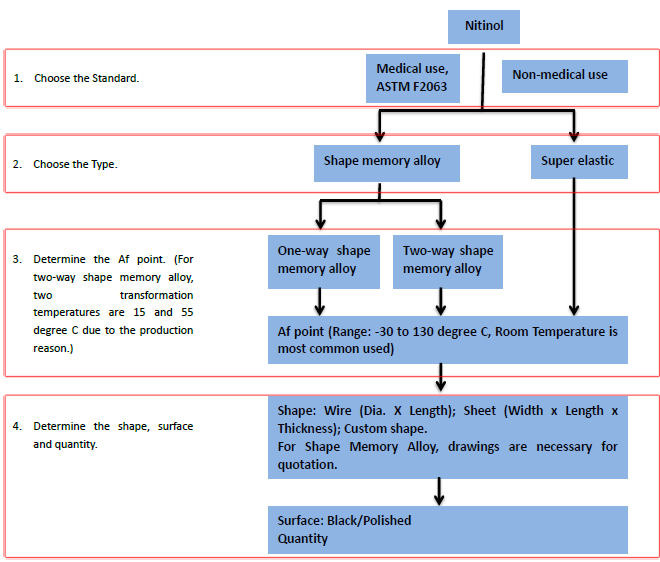
Af point: Final temperature for a martensite to austenite transition. The nitinol shows its superelasticity or shape memory above the Af point. (What is the temperature do you want the nitinol to become superelastic or recover its original shape?)

One-way shape memory alloy: The product can be deformed under Af point by external force, it will back to its original shape when heating over Af point temperature.

Two-way shape memory alloy: The product can be one shape under lower temperature and be another shape when heating over another higher temperature, the process is automatic.


How to finalize your demands?
Nitinol - SAM

CATEGORIES
About the author

Chin Trento

Chin Trento holds a bachelor's degree in applied chemistry from the University of Illinois. His educational background gives him a broad base from which to approach many topics. He has been working with writing advanced materials for over four years at Stanford Advanced Materials (SAM). His main purpose in writing these articles is to provide a free, yet quality resource for readers. He welcomes feedback on typos, errors, or differences in opinion that readers come across.

REVIEWS
{{viewsNumber}} Thought On "{{blogTitle}}"
{{item.created_at}}

{{item.content}}

blog.levelAReply (Cancle reply)

Your email address will not be published. Required fields are marked*

Comment*
Name *
Email *
{{item.children[0].created_at}}

{{item.children[0].content}}

{{item.created_at}}

{{item.content}}

blog.MoreReplies

LEAVE A REPLY

Your email address will not be published. Required fields are marked*

Comment*
Name *
Email *

Related News & Articles

MORE >>
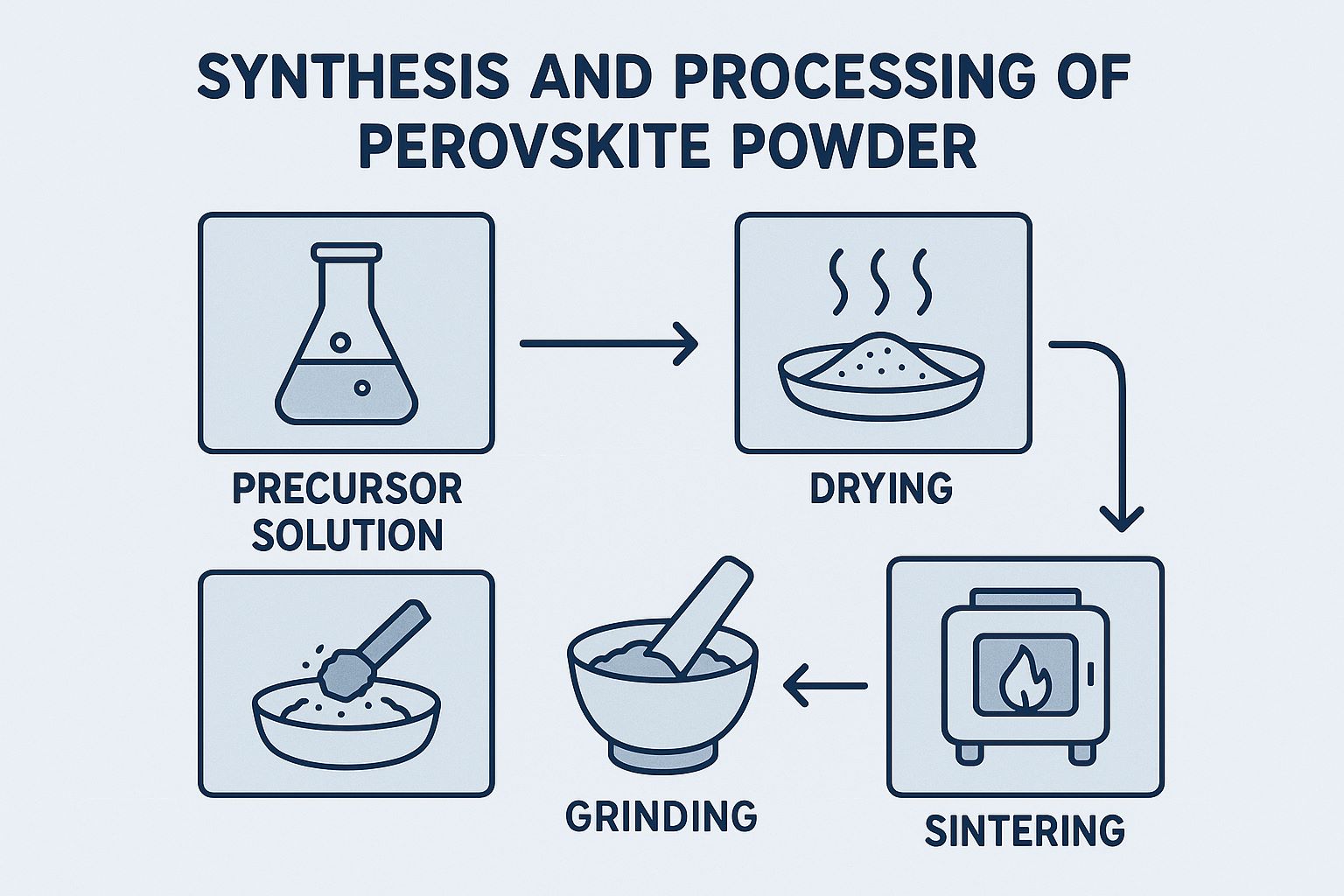
Synthesis and Processing of Perovskite Powder

This article gives a comprehensive review of perovskite powder. The synthesis processes used in the laboratory and industry are discussed. Topics include common procedures such as the sol gel process, hydrothermal technique, and solid-state reaction. Size control of particles, morphology, purity, and phase characterization are also mentioned in the discussion.

READ MORE >
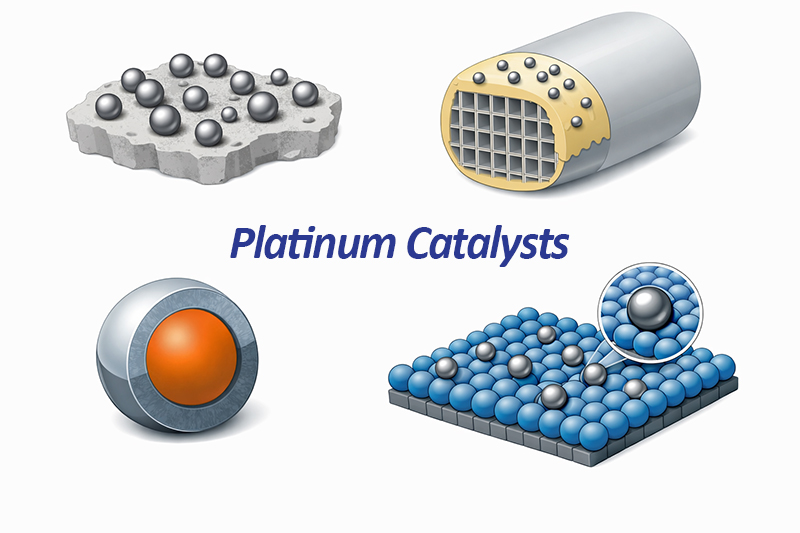
Main Forms of Platinum Catalyst
Platinum Catalysts: A Practical Selection Guide for Engineers

Platinum is one of the most important materials in modern catalysis. It speeds up many reactions that would take far too long on their own. Whether it is cleaning car exhaust or helping to produce hydrogen gas, platinum plays a crucial role in a range of processes.

READ MORE >
A Practical Guide to High-Dielectric-Constant Materials (Dk >25) for RF and Microwave Applications

Over the past 18 months, demand for Dk >25 ceramic materials has surged in antenna miniaturization and 5G infrastructure. But a high Dk number alone isn't enough—stability, loss, and manufacturability matter. In this guide, we compare Barium Titanate, BST ceramics, and high-k microwave ceramics across form factors (powder, machined parts, and printable feedstock). Plus, a practical framework to match material choice to your frequency, loss budget, and volume requirements.

READ MORE >
Leave A Message
Leave A Message
* Your Name:
* Your Email:
* Product Name:
* Your Phone:
* Comments: