Products
 Bars
Bars
 Beads & Spheres
 Bolts & Nuts
 Crucibles
 Discs
Discs
 Fibers & Fabrics
 Films
Films
 Flake
Flake
 Foams
Foams
 Foil
Foil
 Granules
 Honeycombs
 Ink
Ink
 Laminate
 Lumps
Lumps
 Meshes
 Metallised Film
 Plate
Plate
 Powders
 Rod
Rod
 Single Crystals
 Sputtering Target
 Tubes
Tubes
 Washer
 Wires
Wires
 Converters & Calculators
 Write for Us



Platinum Catalysts: A Practical Selection Guide for Engineers

Platinum is one of the most important materials in modern catalysis. It speeds up many reactions that would take far too long on their own. Whether it is cleaning car exhaust or helping to produce hydrogen gas, platinum plays a crucial role in a range of processes.
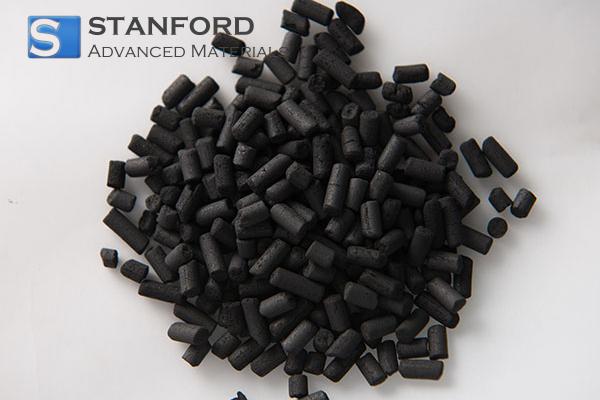
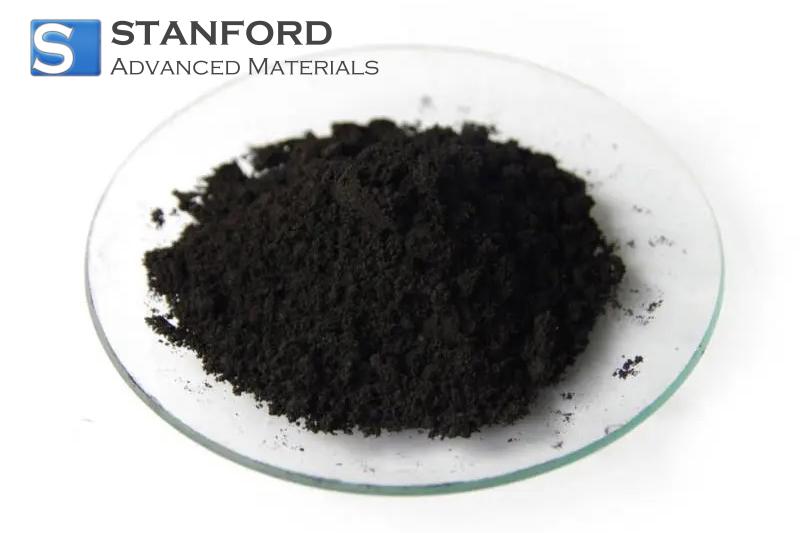
Figure 1. Platinum on Carbon Catalyst
Why Platinum Is Valued
Platinum gets its strength from a unique electronic setup. It bonds with simple molecules like hydrogen, oxygen, and carbon monoxide at just the right intensity. The bond is strong enough to break old bonds but not so firm that new products stick around. In short, platinum helps reactions move along quickly.
Some of its most noted properties are:
-
High activity: It speeds up important reactions such as oxygen reduction and hydrogen oxidation.
-
Stability: Platinum can handle harsh conditions without oxidizing or corroding easily.
-
Versatility: It serves many roles across the auto, energy, and chemical industries.
The downside is that platinum is not cheap. As of March 5, 2026, the spot price was approximately $2,133–$2,292 per troy ounce (APMEX). Prices have experienced high volatility recently due to geopolitical tensions, trading within a range of roughly $1,847 to $2,449 over the past month. Much of the supply comes from South Africa, adding to the challenge of its availability.
Main Forms of Platinum Catalysts
There are a few ways platinum is used in catalysis. Let us look at the most common ones.
Supported Nanoparticles
The most popular format is supported nanoparticles. Here, tiny particles of platinum (usually about 2 to 5 nanometers) sit on a type of support such as carbon or an oxide. This careful spread means that every bit of the platinum can work hard at speeding up reactions. This form is often found in:
-
Electrodes in fuel cells
-
Liquid-phase hydrogenation setups
-
Sensors that measure different chemical compounds
By using small particles on a high-surface-area support, you make the best use of the expensive metal.
Coated Substrates
Another common method is to coat a solid material, like ceramic or metal honeycombs, with a thin layer of platinum. These coatings are used mainly in settings that require a large catalyst surface area.
For example, consider the systems in a car's exhaust line. The platinum layer helps convert harmful gases like carbon monoxide, hydrocarbons, and nitrogen oxides into less harmful substances. This method is reliable, even though it uses more metal per device.
Advanced Structures
Newer designs include core-shell materials and catalysts with single platinum atoms. In a core-shell structure, a cheaper material forms the inner core, while a very thin layer (only two or three atoms thick) of platinum makes up the outer shell. This design helps stretch the use of expensive platinum.
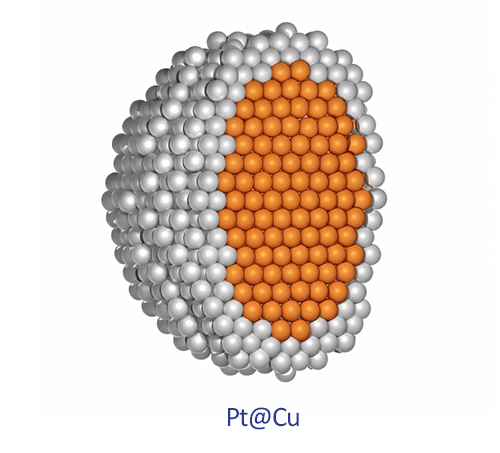
Figure 2. Core-shell structure
Single-atom catalysts have individual platinum atoms spread on a support. These offer maximum efficiency in theory, though keeping the atoms in place can be a challenge.
Ultra-low platinum loading designs are also being tried. Even with less than 2% platinum, these catalysts can sometimes match the performance of traditional ones.
Key Applications of Platinum Catalysts
Platinum finds its use in a number of areas vital to industry and everyday living.
Automotive Emission Control
In cars, platinum is key to reducing harmful exhaust emissions. The catalyst helps change carbon monoxide, unburned hydrocarbons, and nitrogen oxides into carbon dioxide, water, and nitrogen. A small amount—between 1 and 3 grams per vehicle—is enough.
With structures built on a washcoated honeycomb, these catalysts work hard to keep polluting emissions at bay. In normal operation, they can remove more than 90% of pollutants. Many vehicles go over 150,000 kilometers without significant changes in performance.
Fuel Cells
Fuel cells transform hydrogen and oxygen into electricity with water as the only byproduct. In these systems, platinum nanoparticles are typically spread on a carbon support, often measuring around 2 to 3 nanometers in size to optimize performance. For instance, a modern fuel cell may use between 0.1 and 0.4 milligrams of platinum per square centimeter, and advancements aim to cut that further. No other metal matches platinum when it comes to speeding up the oxygen reduction reaction in an acidic environment.
Chemical Synthesis
Platinum catalysts also help in chemical manufacturing. In processes like nitric acid production, a gauze made of platinum and a bit of rhodium catalyzes the oxidation of ammonia at high temperatures (about 850 to 900°C). In the refining of petroleum, platinum is used to boost the quality of gasoline by converting lower-quality inputs into higher-octane products. Additionally, platinum catalysts help achieve high selectivity in hydrogenation reactions used to make fine chemicals.
Emerging Role in the Hydrogen Economy
The move toward a hydrogen-based energy system is testing new ways to use platinum. In water electrolysis, which splits water into hydrogen and oxygen, platinum plays a role at the cathode.
Some new designs use armor-like catalysts where a cobalt-nickel alloy sits inside a graphene shell with a few surface platinum atoms. Other trials use catalysts with single platinum atoms that produce a very high number of hydrogen molecules per atom. Even zinc-air batteries are showing promise with ultra-low platinum formulations, attaining higher power output and solid stability over many hours of use.
How to Choose the Right Platinum Catalyst
When picking a platinum catalyst, there are a few key points to weigh:
-
Activity: Decide how fast you need the reaction to move. Often, smaller particles or certain alloys give a high activity level.
-
Selectivity: You may need the catalyst to favor one reaction over another. This sometimes means choosing a specific particle size or support.
-
Durability: Think about the lifespan of your catalyst. Bigger particles or stronger supports can help it last longer.
-
Operating Conditions: Consider the working temperature, pressure, and other environmental factors. A catalyst that performs well at low temperatures might fail in high-heat settings.
-
Cost: Remember that platinum is pricey. The initial cost should be balanced against long-term savings if the catalyst lasts longer.
A quick selection guide might have you list the application, the recommended form, and factors like thermal stability or resistance to poisoning.
|
Application |
Recommended Form |
Loading |
Key Considerations |
|
Gasoline catalytic converter |
Pt-Pd nanoparticles on washcoated honeycomb |
1-3 g/vehicle |
Thermal stability, poison resistance |
|
Diesel oxidation catalyst |
Pt nanoparticles on zeolite/alumina |
2-5 g/vehicle |
NO oxidation, low-temperature light-off |
|
Fuel cell cathode |
0.1-0.4 mg/cm² |
Mass activity, voltage cycling durability |
|
|
PEM electrolyzer cathode |
~0.3 mg/cm² |
HER activity, high-current stability |
|
|
Nitric acid production |
100s kg/plant |
High-temperature stability, mechanical strength |
|
|
Industrial offgas |
Pt monolithic honeycomb |
Proprietary |
Poison resistance, low pressure drop |
|
Zinc-air battery |
Ultra-low Pt composite (<2% Pt) |
<2 wt% |
ORR activity in alkaline, cycle life |
The Bottom Line
Platinum catalysis is not just one thing. It is a family of tools built to solve very different challenges.
For most needs, supported platinum nanoparticles on carbon or oxide have stood the test of time. If you have a high-volume, cost-sensitive project, you might lean toward ultra-low loading forms. And for the toughest conditions—be it high temperature, the risk of poisoning, or a long service life—you might invest in specialized forms such as coated substrates or stable alloys.
When in doubt, keep it simple. Test your choices under real conditions, adjust as needed, and let hard-earned experience guide you. Reliable engineering often comes down to practical steps and a willingness to iterate.
For quality materials that you can trust in these applications, consider the offerings from Stanford Advanced Materials (SAM).
Sources & Further Reading
-
Brookhaven National Laboratory. "Scientists Develop Fuel-Cell Catalyst for Heavy-Duty Vehicles." 2025.
-
Xu, M. et al. "Enriched asymmetric π electrons confining single-site Pt for acidic hydrogen evolution." Joule, 2025.
-
Hofer, J. et al. "Platinum-catalysed conversion of sulphur species." CRU Group, Sulphur 421, 2025.
-
Gasteiger, H.A. et al. "Activity benchmarks for oxygen reduction catalysts." Applied Catalysis B, 2005.
-
Nanjing Tech University. "Ultra-low Pt catalyst for zinc-air batteries." Frontiers in Energy, 2025.
-
U.S. Department of Energy. Hydrogen and Fuel Cells Program Annual Progress Report, 2023.
-
Johnson Matthey, Tanaka, Umicore product literature.
-
Emitec, P&P Industries technical documentation.
Data on platinum prices and market trends from Platinum Guild International, E4tech and APMEX.
 Chin Trento