Products
 Bars
Bars
 Beads & Spheres
 Bolts & Nuts
 Crucibles
 Discs
Discs
 Fibers & Fabrics
 Films
Films
 Flake
Flake
 Foams
Foams
 Foil
Foil
 Granules
 Honeycombs
 Ink
Ink
 Laminate
 Lumps
Lumps
 Meshes
 Metallised Film
 Plate
Plate
 Powders
 Rod
Rod
 Single Crystals
 Sputtering Target
 Tubes
Tubes
 Washer
 Wires
Wires
 Converters & Calculators
 Write for Us



Medical Grade Titanium Materials - Indispensable to the Medical Industry

Titanium is one chemical element that has varied uses in human life. Because of its unique properties such as high strength, low density, high heat resistance, and anti-corrosion, titanium materials find their way into many industries. It is a well-known fact that the first uses of titanium were in the aerospace industry, where it was used for aircraft components. Today, the medical field has also benefitted from titanium because of its non-toxic properties and the unique ability to join with the human bone.

1. Types of Medical Grade Titanium Materials
There are many titanium alloys that are used for various industries, but the ones that are compatible for medical use are Titanium 6AL4V and 6AL4V ELI. These are titanium materials that are alloyed with aluminum (6%) and vanadium (4%). They are also known as Grade 5 and Grade 23, and have high compatibility with the human body. There are several distributors all over the world who specialize in selling medical grade titanium materials.
In the dental field, Ti-6Al-4V and Ti-6Al-4V ELI are often used for implants. A screw made of titanium is inserted into the jaw, which acts as the root of the tooth. The implant is given a certain amount of time for the titanium implant to blend into the bones. Once the implant has set in, an artificial tooth is inserted into the implant.
2. Benefits of Medical Grade Titanium Materials
As mentioned above, two of the most important characteristics of titanium are its high strength-to-weight ratio and its ability to resist corrosion. It does not react with body fluids and acids which makes it more long-lasting. Titanium-grade materials are used for prosthetics such as pins, plates, rods, and cages that are inserted into the body.
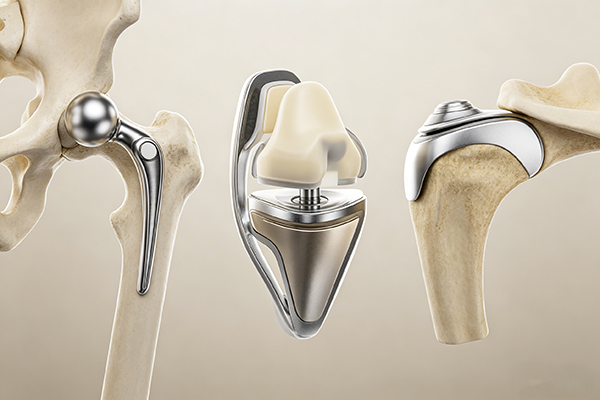
One of the most common uses for medical-grade titanium materials is for hip and knee replacement surgery. These materials can also be used to replace elbow and shoulder joints. Titanium pegs are used for aesthetic purposes, such as stands for false eyelashes. Titanium heart valves continue to save the lives of those who need this implant to survive.
3. Titanium Materials for Surgical Instruments
Titanium is harder than some grades of steel, but lighter in weight. It can be used together with other materials for surgical instruments that must be durable, lightweight, and have strong anti-corrosion properties. Some of the common surgical devices made of titanium materials are retractors, surgical tweezers, scissors, surgical forceps, suture instruments, needles, and needle holders.
4. Titanium Materials For Dental Use
Since titanium has the unique ability to fuse with human bone, it is the only material chosen by dentists for dental implants. These are titanium screws that are inserted into the jaw and once newly formed cells attach themselves to the titanium implant, a bond forms between the body's bone and the newly implanted screw.
5. Future of Titanium Materials for Medical Use
There will be considerable growth in the demand for medical-grade titanium materials in the years to come. As the baby boomers reach their golden years, many of them may succumb to weak bones and may need hip and joint replacements. Titanium will continue to be the material of choice for the medical and dental fields.
Related reading: Applications Of Titanium Materials In The Medical Industry
Conclusion
Thank you for reading our article and we hope it can help you to have a better understanding of the titanium used in the medical industry. If you want to learn more about titanium products, we would like to advise you to visit Stanford Advanced Materials (SAM) for more information.
Stanford Advanced Materials (SAM) is a worldwide supplier of titanium products and has over two decades of experience in the manufacture and sale of medical-grade titanium materials, providing high-quality products to meet our customers' R&D and production needs. As such, we are confident that SAM will be your favorite titanium supplier and business partner.
 Chin Trento