Products
 Bars
Bars
 Beads & Spheres
 Bolts & Nuts
 Crucibles
 Discs
Discs
 Fibers & Fabrics
 Films
Films
 Flake
Flake
 Foams
Foams
 Foil
Foil
 Granules
 Honeycombs
 Ink
Ink
 Laminate
 Lumps
Lumps
 Meshes
 Metallised Film
 Plate
Plate
 Powders
 Rod
Rod
 Single Crystals
 Sputtering Target
 Tubes
Tubes
 Washer
 Wires
Wires
 Converters & Calculators
 Write for Us



The Application of Zirconium Carbide Powder

As a kind of hard refractory ceramic material, Zirconium Carbide (ZrC) is normally used in tool bits for cutting tools. Processed by sintering, Zirconium Carbide (ZrC) has high-temperature oxidation resistance, high strength, high hardness, good thermal conductivity, and toughness. Besides, Zirconium Carbide (ZrC) nanopowder has high visible light absorption, excellent infrared reflectance, and large energy storage characteristics.
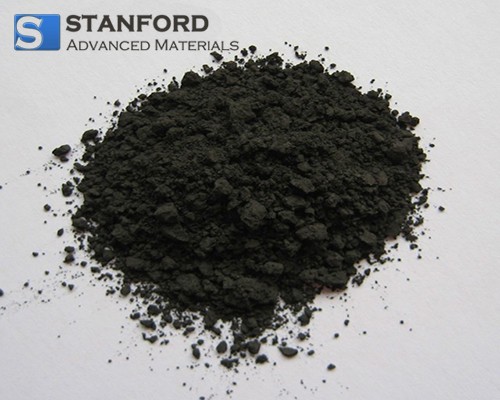
Application of Zirconium Carbide Powder
Coating Materials
Hafnium-free Zirconium Carbide (ZrC) and Niobium Carbide can be used as refractory coatings in nuclear reactors. With low neutron absorption cross-section and weak damage sensitivity under irradiation, it can be used as the coating of uranium dioxide and thorium dioxide particles of nuclear fuel. The coating is usually deposited by thermal chemical vapor deposition in a fluidized bed reactor. It also has a high emissivity and high current capacity at elevated temperatures, making it a promising material for use in thermo-photovoltaic radiators and field emitter tips and arrays.
Cemented Tools
Due to its hardness, Carbide compounds can be used as drills and other tools that need to be abrasion-resistant. Zirconium Carbide (ZrC) is a kind of important high-temperature structural material with a high melting point, high intensity, and corrosion resistance. The application in the hard alloy can improve the intensity and corrosion resistance of materials.
Nano-Structured Parts
Nanometer zirconium carbide can be used in nano-structured parts in the metallurgical, chemical, and aviation industries. It finds its application in the textile industry in making thermostat textiles in nylon, fiber, and hard alloy. Composite materials that are used in the ceramic and metal matrix are also made from these nanoparticles.
Conclusion
Thank you for reading our article and we hope it can help you learn how to improve the properties of zirconium carbide powder well. If you want to know more about zirconium carbide powder, we would like to advise you to visit Stanford Advanced Materials (SAM) for more information.
Stanford Advanced Materials (SAM) is a worldwide supplier of zirconium carbide powder and has over two decades of experience in the manufacture and sale of zirconium carbide powder, offering high-quality zirconium carbide powder to meet customers' R&D and production needs. As such, we are confident that SAM will be your favorite zirconium carbide powder supplier and business partner.
 Chin Trento