Products
 Bars
Bars
 Beads & Spheres
 Bolts & Nuts
 Crucibles
 Discs
Discs
 Fibers & Fabrics
 Films
Films
 Flake
Flake
 Foams
Foams
 Foil
Foil
 Granules
 Honeycombs
 Ink
Ink
 Laminate
 Lumps
Lumps
 Meshes
 Metallised Film
 Plate
Plate
 Powders
 Rod
Rod
 Single Crystals
 Sputtering Target
 Tubes
Tubes
 Washer
 Wires
Wires
 Converters & Calculators
 Write for Us



An Overview on Rare Earth Materials

Introduction
Rare earth materials, with their distinctive physical and chemical properties, play a pivotal role in various industrial applications. This article delves into the significance of rare earth elements, their global presence, and the diverse range of applications that leverage their unique characteristics.
Rare Earth Elements and Global Deposits
China, Russia, the United States, Australia, and India stand as major contributors to the world's rare earth deposits. Noteworthy minerals like bastnaesite, monazite, and ion-adsorbed rare earth mines hold strategic importance in global resource distribution.
Understanding Rare Earth Elements
As defined by the International Federation of Pure and Applied Chemistry, rare earth elements consist of 15 lanthanides with atomic numbers ranging from 57 to 71. This group, situated in the third subgroup of the Mendeleev periodic table, includes scandium and yttrium due to their analogous electronic structure and chemical properties.
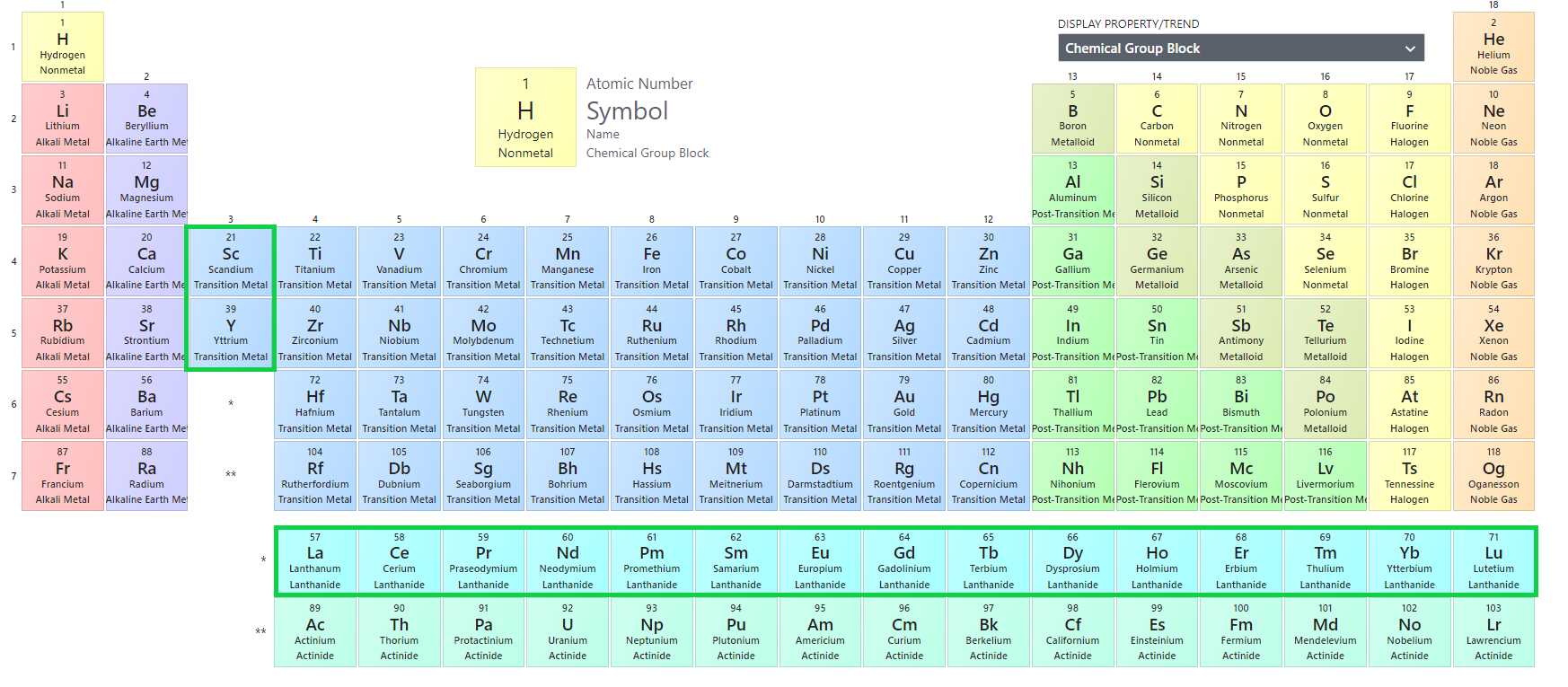
Categorization of Rare Earth Elements
The distinct physical and chemical variances among rare earth elements lead to their classification into light and heavy groups. The first seven elements, up to gadolinium, are termed light rare earth elements, while those beyond, including gadolinium, are classified as heavy rare earth elements. Despite its lower atomic weight, Yttrium aligns closely with heavy rare earth elements due to its ion radius within the ion radius chain of this subgroup.
Applications Across Industries
Rare earth materials find application in an extensive array of industries, contributing to the production of fluorescent materials, metal hydride battery components, electric light sources, permanent magnets, hydrogen storage solutions, catalytic materials, precision ceramics, lasers, superconductors, magnetostrictive materials, magnetically cooled devices, magneto-optical storage, and optical fiber materials.
SAM's Expertise in Rare Earth Supply
With over two decades of experience, Stanford Advanced Materials (SAM) stands as a reliable supplier of rare earth metals and compounds. SAM offers a comprehensive range of rare earth materials, excluding radioactive promethium, with a commitment to superior quality and competitive prices. Notably, rare earth oxides are readily available in multiple inventories for swift delivery upon order confirmation.
Illustrations
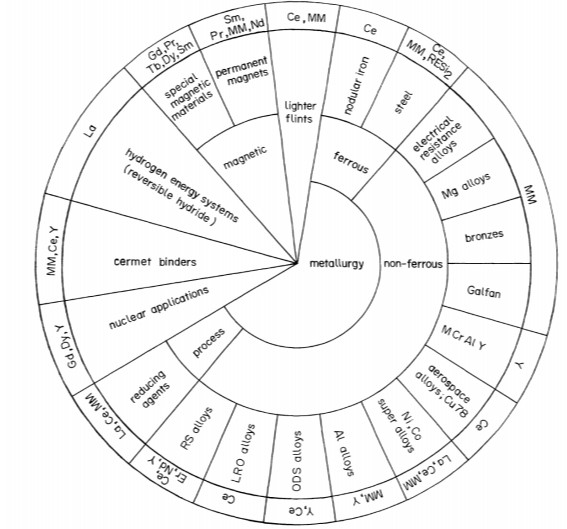
Application of rare earth:metallurgical
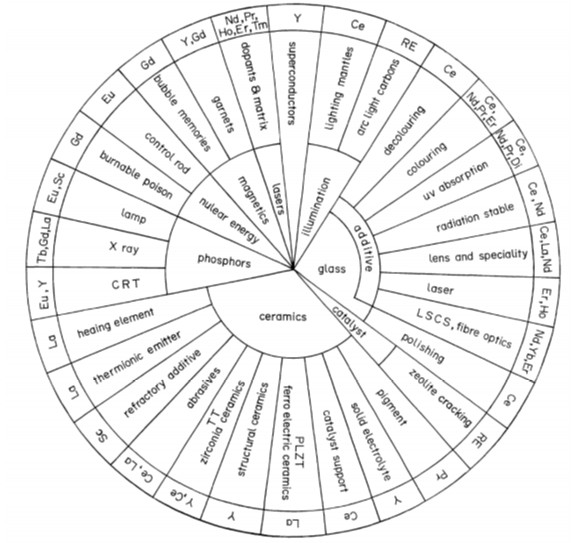
Applications of rare earth: non-metallurgical
Conclusion
In conclusion, rare earth materials have emerged as indispensable components in modern industrial landscapes. From enhancing the efficiency of electronic devices to enabling advanced metallurgical processes, their versatile applications underscore the critical role rare earth elements play in shaping technological advancements. SAM's dedicated supply chain further ensures the accessibility of these essential materials, contributing to the continued evolution of various industries.
 Chin Trento