Products
 Bars
Bars
 Beads & Spheres
 Bolts & Nuts
 Crucibles
 Discs
Discs
 Fibers & Fabrics
 Films
Films
 Flake
Flake
 Foams
Foams
 Foil
Foil
 Granules
 Honeycombs
 Ink
Ink
 Laminate
 Lumps
Lumps
 Meshes
 Metallised Film
 Plate
Plate
 Powders
 Rod
Rod
 Single Crystals
 Sputtering Target
 Tubes
Tubes
 Washer
 Wires
Wires
 Converters & Calculators
 Write for Us



Superelasticity and Shape Memory of Nitinol

Nitinol (nickel~titanium) alloys exhibit a combination of properties that make them particularly suitable for the manufacture of self-expanding stents. Some of these properties are not possessed by other materials currently used to manufacture stents.
Nitinol (nickel~titanium) alloys have many material properties and device characteristics such as elastic deployment, thermal deployment, kink resistance, constancy of stress, dynamic interference, biased stiffness, magnetic resonance imaging (MRI) compatibility, radiopacity, and biocompatibility.
Nitinol alloys are rapidly becoming the materials of choice for use in self-expanding stents, graft support systems, filters, baskets, and various other devices for interventional procedures. Nitinol Medical Technologies, World Medical Technologies, and Cordis offer nitinol products, the performance of which is based on the highly unusual properties of nitinol alloys.
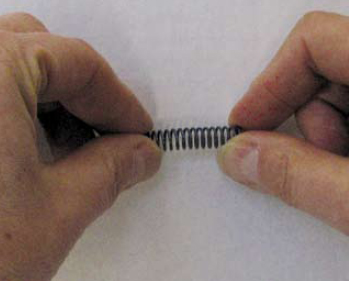
The best-known properties of nitinol alloys are their superelasticity and thermal shape memory. While the term 'shape memory' describes the phenomenon of restoring a predetermined shape by means of heating, having 'plastically' deformed that shape, the term superelasticity refers to the enormous elasticity of these alloys, which can be IO times greater than the best stainless steels used in medicine today. Although both effects are clearly spectacular, they are not the only important properties of the material.
In combination with strength, fatigue resistance, biocompatibility, and MRI compatibility, these nitinol-specific properties allow interesting solutions for the design of superior medical devices.
Conventional metallic materials such as stainless steel, titanium, and Eigilloy a.o., which are used in stents, filters, and other interventional devices, exhibit a distinctly different elastic deformation behavior from that of the structural materials of the human body.
Similar behavior is found with nitinol alloys, which are equiatomic or near-equiatomic intermetallic compounds of titanium and nickel.
 Chin Trento