
 Products
 Bars
Bars
 Beads & Spheres
 Bolts & Nuts
 Crucibles
 Discs
Discs
 Fibers & Fabrics
 Films
Films
 Flake
Flake
 Foams
Foams
 Foil
Foil
 Granules
 Honeycombs
 Ink
Ink
 Laminate
 Lumps
Lumps
 Meshes
 Metallised Film
 Plate
Plate
 Powders
 Rod
Rod
 Single Crystals
 Sputtering Target
 Tubes
Tubes
 Washer
 Wires
Wires
 Converters & Calculators
 Write for Us



High-temperature Applications of TZM Alloy

TZM alloy, also called TZM molybdenum alloy, refers to the Titanium-Zirconium-Molybdenum alloy. Usually, alloying elements determine the common basic properties of alloys belonging to the same series. Titanium, zirconium and molybdenum have good thermal properties, which promise the performance of TZM in high temperature environments.
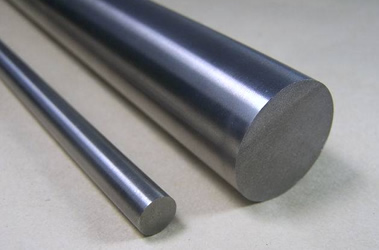
The molybdenum TZM alloy is a commonly used construction material for high-temperature applications. It is well known that pure molybdenum and its molybdenum alloys develop a distinct subgrain structure and texture during hot deformation. These microstructural aspects have a significant effect on strength at elevated temperatures.TZM alloy is also used as a structural material in thermally loaded applications or as plate material in rotary X-ray tubes.
Compared to pure molybdenum, TZM alloy exhibits a higher strength and creep resistance. Especially at elevated temperatures the primary strengthening mechanism was attributed to carbide particles.
Several types and grades of molybdenum alloys are available commercially. TZM alloy bar was selected as the most suitable material on the basis of its superior high-temperature tensile strength and a high recrystallization temperature (between 1400 and 1600 C). A high recrystallization temperature is particularly important as this eliminates the possibility of recrystallization during brazing welding causing a loss in ductility and strength.
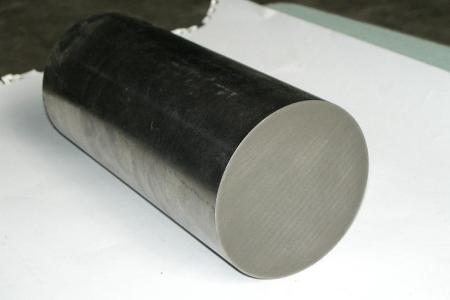
By means of solid-solution and carbide-strengthening TZM alloy features improved high-temperature strength up to 1400 °C and a higher recrystallization temperature, compared to pure Molybdenum.
Other typical high-temperature applications of TZM alloy include Components for heat treatment equipment, supports, fixtures, carriers, hot runner nozzles, casting molds, forging dies and others.
Thanks for reading this passage. If you feel interested in TZM alloy, you can send us an inquiry or contact us via [email protected]. Free samples are available.
 Chin Trento