Products
 Bars
Bars
 Beads & Spheres
 Bolts & Nuts
 Crucibles
 Discs
Discs
 Fibers & Fabrics
 Films
Films
 Flake
Flake
 Foams
Foams
 Foil
Foil
 Granules
 Honeycombs
 Ink
Ink
 Laminate
 Lumps
Lumps
 Meshes
 Metallised Film
 Plate
Plate
 Powders
 Rod
Rod
 Single Crystals
 Sputtering Target
 Tubes
Tubes
 Washer
 Wires
Wires
 Converters & Calculators
 Write for Us



How Titanium Alloy is Used in These 4 Industries Today?

Titanium alloy is an alloy composed of other elements based on titanium. In modern industry, titanium alloy has become the preferred material for high-performance structural parts with its excellent high strength, corrosion resistance, and heat resistance. In addition, titanium has unique functions such as biocompatibility, superconductivity, hydrogen storage, and shape memory, which are widely used in medical devices, the chemical industry, aerospace aviation, ships, and other fields.
Currently, the application of titanium alloy is mainly concentrated in the following fields.
Titanium Alloy Used in Aerospace Field
Titanium is an integral part of the aircraft's fuselage, engine, and rocket parts. The United States applied titanium alloy materials to develop high-performance aircraft, such as x-31, x-30, etc. It has a very significant effect, which is that the M coefficient of the aircraft has increased by about three times, while the overall quality of the aircraft has decreased to 80%. Russia produces titanium alloy sheets, forgings, etc., which are used in aircraft manufacture of titanium alloy raw materials. Titanium alloys have also been heavily used in the development of China's Shenzhou spacecraft.

Related Reading: Titanium Used in the Aircraft Industry
Titanium Alloy Used in Shipbuilding Industry
The ship and other equipment are immersed in water for a long time, so the materials are required to have the characteristics of high corrosion resistance, safety and reliability, and long service life. Due to its wide range of strength, unique physical properties, excellent mechanical properties, corrosion resistance, and impact resistance, titanium alloys have been widely used in shipbuilding.
The titanium alloys of Russian ships are used in pumps, filters, supply pipes, fire extinguishing systems, pressure vessels, and other equipment; the Timetal 5111 developed by the U.S. Navy and Timet of the United States has good fracture toughness and anti-stress corrosion resistance, as well as good temperature, creep property and easy to weld. These high-performance titanium alloys are used in the marine systems, cooling systems, sewage treatment systems, electrical components, and other equipment of American ships.
Related Reading: Titanium Used in the Marine Industry
Titanium Alloy Used in the Biomedical Field
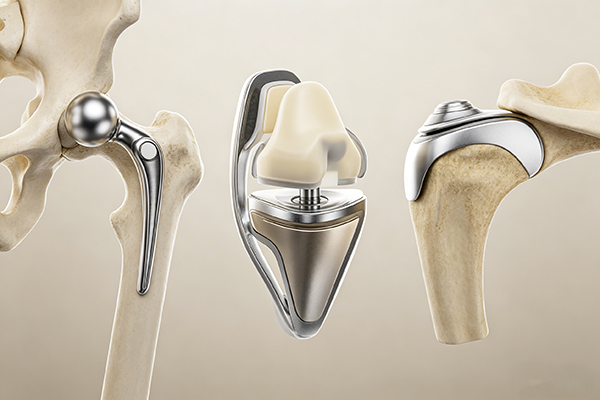
Titanium alloys have been widely used in surgical implants currently. The representative titanium alloy Ti-12Mo-6Zr- 2Fe is a kind of metastable alloy, which is suitable for orthopedic devices due to its high strength and fracture toughness, abrasion resistance, corrosion resistance, and elastic modulus. The mechanical properties, corrosion resistance, and biocompatibility of titanium alloys can be improved by using alloy elements such as zirconium, palladium, niobium, tin, and tantalum, which is the main way to develop the bio-titanium alloy.
Related Reading: Titanium Used in the Medical Industry
Titanium Alloy Used in the Automotive Industry
The lightweight vehicle is one of the most promising markets for titanium. Titanium alloys are mainly used in automotive engine parts, such as connecting rods, springs, crankshafts, fasteners, etc.
Related Reading: Titanium Used in the Automotive Industry
Conclusion
Thank you for reading our article and we hope it can help you to have a better understanding of the titanium used in the aerospace, marine, medical, and automotive industries. If you want to learn more about titanium products, we would like to advise you to visit Stanford Advanced Materials (SAM) for more information.
Stanford Advanced Materials (SAM) is a worldwide supplier of titanium products and has over two decades of experience in the manufacture and sale of medical-grade titanium materials, providing high-quality products to meet our customers' R&D and production needs. As such, we are confident that SAM will be your favorite titanium supplier and business partner.
 Chin Trento