Products
 Bars
Bars
 Beads & Spheres
 Bolts & Nuts
 Crucibles
 Discs
Discs
 Fibers & Fabrics
 Films
Films
 Flake
Flake
 Foams
Foams
 Foil
Foil
 Granules
 Honeycombs
 Ink
Ink
 Laminate
 Lumps
Lumps
 Meshes
 Metallised Film
 Plate
Plate
 Powders
 Rod
Rod
 Single Crystals
 Sputtering Target
 Tubes
Tubes
 Washer
 Wires
Wires
 Converters & Calculators
 Write for Us



What are the Uses of Beryllium Oxide Ceramics?

Beryllium oxide (BeO) is often thought of as toxic, especially among amateurs and professionals alike. However, while pure beryllium oxide is indeed toxic, beryllium oxide ceramics are safe for use in various high-tech applications. Thanks to their unique properties, BeO ceramics have become essential in fields like metallurgy, electronics, and nuclear technology.
Key Properties of Beryllium Oxide Ceramics
Beryllium oxide ceramics stand out for their:
- High thermal conductivity
- Excellent insulation
- Low dielectric constant
- Good chemical and thermal stability
These properties make BeO ceramics ideal for applications that require efficient heat management and high stability.
Applications of Beryllium Oxide Ceramics
1. High-Power Electronics and Integrated Circuits
As high-power electronics demand better heat management, BeO ceramics have become popular for thermal design. With high thermal conductivity and a low dielectric constant, BeO is perfect for dissipating heat in electronic devices, helping prevent overheating and ensuring system reliability.
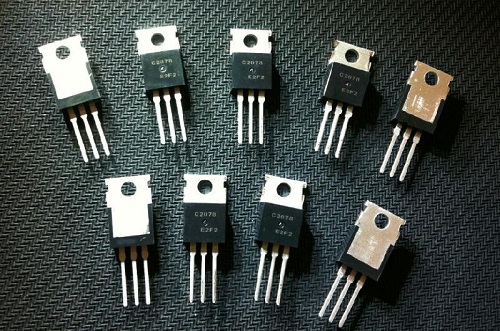
BeO ceramics are now widely used in:
- High-performance microwave packaging
- High-frequency electronic transistor packaging
- Multichip components with high circuit density
2. Nuclear Reactors
Ceramics are crucial in nuclear reactors due to their ability to withstand high temperatures and radiation. Beryllium oxide ceramics, in particular, offer excellent thermal stability, high density, and strength under high temperatures, making them ideal for nuclear applications.
BeO ceramics serve as:
- Neutron reflectors and moderators in reactors
- Control rods in combination with uranium oxide (UO₂) for nuclear fuel
Compared to metal, BeO is more stable under irradiation, has higher heat conductivity, and is cost-effective.
3. Special Metallurgical Crucibles
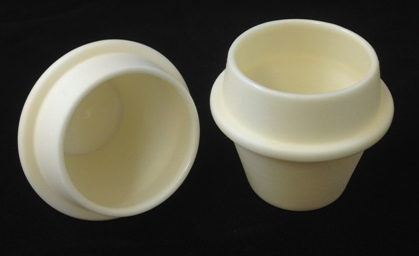
BeO ceramics, being refractory materials, are widely used for melting rare and precious metals. BeO crucibles are ideal for applications that require high-purity metals or alloys and can withstand temperatures up to 2000°C. With a melting point of 2550°C and high chemical stability, these crucibles are especially suited for handling molten glaze and plutonium.
4. Other Notable Applications
- Laser Technology: Due to their high thermal conductivity, BeO ceramics contribute to lasers with high efficiency and output power.
- X-ray Tubes: BeO ceramics can be added to glass to produce X-ray transparent glass, useful for X-ray tubes in medical and structural analysis.
- Electronic Components: The unmatched thermal conductivity and low dielectric loss of BeO ceramics make them irreplaceable in certain electronic applications.
Why BeO Ceramics are Hard to Replace
Beryllium oxide ceramics have unique characteristics that are difficult to replicate with other materials. Their high thermal conductivity and low dielectric loss make them irreplaceable in many fields. However, due to the toxicity of beryllium oxide, strict protective measures are essential in its production, limiting the number of facilities worldwide capable of producing BeO ceramics safely.
Conclusion
Beryllium oxide ceramics play an indispensable role in high-power electronics, nuclear reactors, and specialized metallurgy. With their unique combination of properties, BeO ceramics are essential for high-performance applications across various fields. Stanford Advanced Materials (SAM) provides high-quality BeO ceramics, meeting the demanding needs of these advanced technologies.
 Chin Trento