
 Products
 Bars
Bars
 Beads & Spheres
 Bolts & Nuts
 Crucibles
 Discs
Discs
 Fibers & Fabrics
 Films
Films
 Flake
Flake
 Foams
Foams
 Foil
Foil
 Granules
 Honeycombs
 Ink
Ink
 Laminate
 Lumps
Lumps
 Meshes
 Metallised Film
 Plate
Plate
 Powders
 Rod
Rod
 Single Crystals
 Sputtering Target
 Tubes
Tubes
 Washer
 Wires
Wires
 Converters & Calculators
 Write for Us



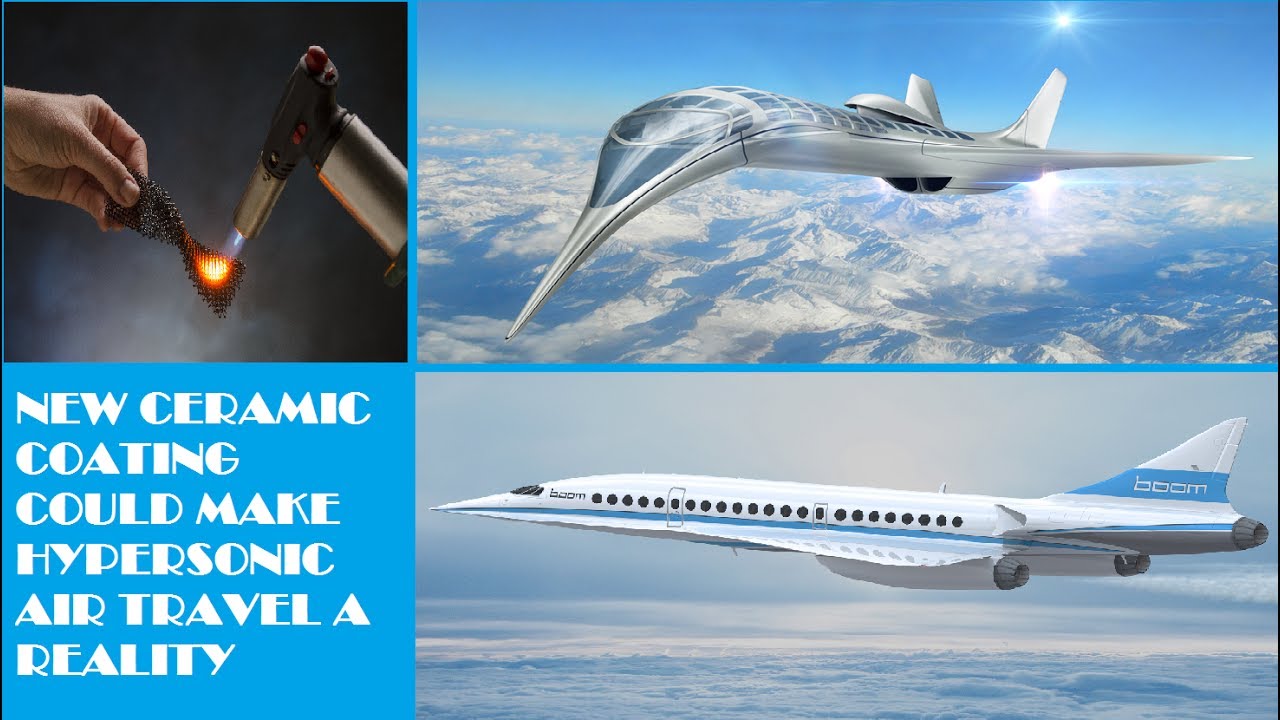
New Carbide Ceramics: the New Favorite of Supersonic Aircraft Coatings

Supersonic Transport (SST) is one that travels faster than the speed of sound. In general, transport with a Mach number of less than 1 is subsonic, a Mach number greater than 1.2 is supersonic, and a Mach number greater than 5 is hypersonic. The supersonic airliner has attracted the attention and interest of many aircraft manufacturers because of its higher speed and efficiency than ordinary civil aircraft, and the research on the new generation of supersonic airliners has never stopped. However, the development of a new generation of economical and reliable supersonic aircraft will encounter many challenges with current aviation technologies.
Research status of supersonic aircraft
* Heat
We know that the vehicle is exposed to high temperatures caused by aerodynamic heating, engine gas, and radiation from the sun in space. For aircraft flying in the air for a long time, some of the speed of flight is up to three times the speed of sound. The high-temperature materials used shall have good high-temperature persistent strength, creep strength, thermal fatigue strength, high oxidation resistance, and thermal corrosion resistance in air and corrosion medium, and shall have long-term structural stability under high temperature. Therefore, the high-temperature environment involved in the field of aviation technology often includes both high temperature and high-speed airflow and particle scour.
For example, we know that there will be a high temperature of 2000 ~ 3000 ℃ on the surface of the aircraft when it flying at a speed of Mach 5, while the coating material of the aircraft is easy to damage in the high-temperature decomposition. The problem of heat accumulation on the surface of an aircraft must be solved to develop a supersonic aircraft. Now scientists have discovered a new carbon-ceramic coating that could help speed up supersonic aircraft.
* Coating material
In order for an aircraft to fly at supersonic speeds, it is necessary to protect its surface components from air damage caused by high pressure and structural components caused by friction. Currently, UHTC is used to cover the surface of the body, since these non-metallic solid materials can remain stable at high temperatures. However, these traditional ceramic coating materials are effective at heat resistance but can easily deteriorate.
Zirconium diboride is widely used in high-temperature coating materials for aircraft because it can resist oxidation at high temperatures and has a low density and low cost. However, there is a fatal downside that the boron in zirconium diboride further promotes dissolution when boron atoms oxidize, with potentially disastrous consequences.
New carbide ceramic powered supersonic aircraft
Studies have shown that any material exposed to sufficiently high temperatures will loosen and fall off its molecular chains, and "ablation" can occur if it is rinsed with particles at high speeds.
As we know, carbide is the most heat-resistant material at present, which is represented by the general formula MxCy. According to the properties of M, carbide is roughly divided into metal carbide and non-metal metal carbide. Carbide ceramics are the most commonly used structure ceramics, such as silicon carbide, zirconium carbide, boron carbide, and tungsten carbide. The above ceramic materials with a high melting point, high hardness, and good chemical stability have been used in many fields in the national economy.
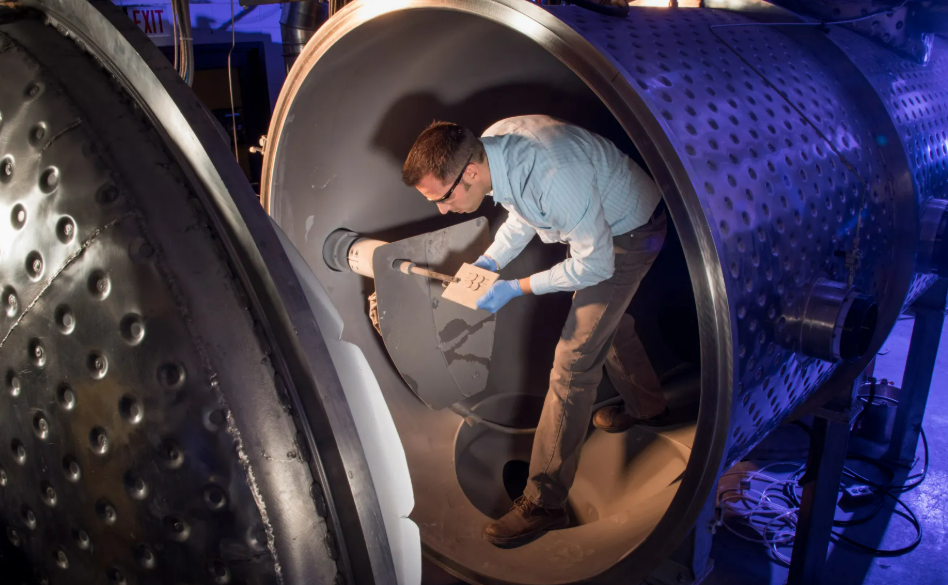
Credit: NASA
The newly developed carbides coating material can endow the coating with a super-strong and oxidation-resistant structure and can resist ablation and oxidation under a high-temperature environment. It has been proved that the introduction of ceramics into carbon fiber reinforced carbon matrix composites may be an effective method to improve the impact resistance.
The new coating, a ternary alloy of zirconium, titanium, carbon, and boron, is deposited into carbon composites by a process known as reactive melt penetration. Although it has similar properties to other carbide ceramics, its relatively low boron concentration makes it less likely to be ablated, and the carbon structure helps prevent the material from tearing apart under the thermal shock. The experimental results show that the carbide coating shows better ablation resistance under 2000 ~ 3000 ℃.
Application prospect of new carbide ceramic coating
At present, the new coating is widely used in aerospace, which is safer than traditional materials because the spacecraft can experience extreme temperature hazards as they pass through the atmosphere.
Boeing CEO Dennis said the new supersonic passenger planes could be in the skies over the next decade, cutting travel time by as much as 700%. Currently, civil aircraft generally fly at subsonic speeds, and once the civil supersonic aircraft is realized, the global travel time will be greatly reduced, making it easier for people to communicate. Although the supersonic airliner has not been widely used in our lives, the discovery of this coating material will undoubtedly help supersonic aircraft to become commercial sooner!
 Chin Trento