
 Products
 Bars
Bars
 Beads & Spheres
 Bolts & Nuts
 Crucibles
 Discs
Discs
 Fibers & Fabrics
 Films
Films
 Flake
Flake
 Foams
Foams
 Foil
Foil
 Granules
 Honeycombs
 Ink
Ink
 Laminate
 Lumps
Lumps
 Meshes
 Metallised Film
 Plate
Plate
 Powders
 Rod
Rod
 Single Crystals
 Sputtering Target
 Tubes
Tubes
 Washer
 Wires
Wires
 Converters & Calculators
 Write for Us



Preparation & Application of TZM Alloy

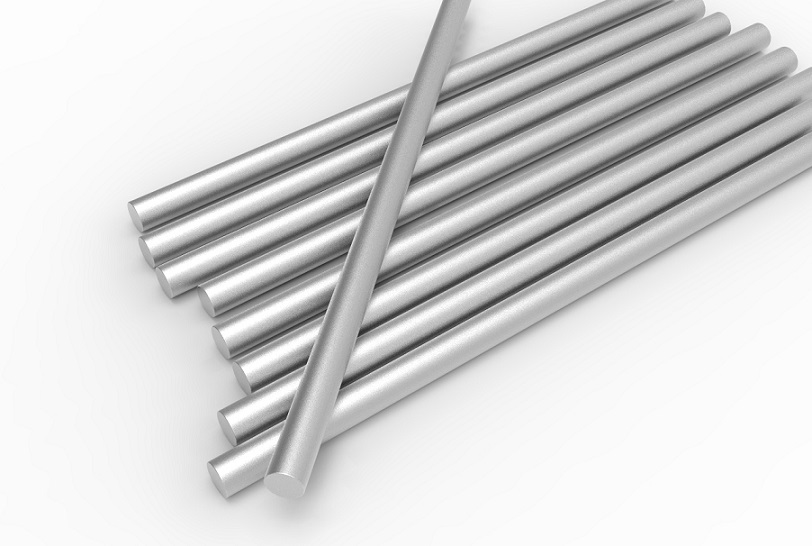
TZM alloy (molybdenum zirconium titanium alloy) is one of the common high-temperature alloys among molybdenum-based alloys. TZM alloy has the characteristics of high melting point, high strength, high elastic modulus, low linear expansion coefficient, low vapor pressure, good electrical and thermal conductivity, strong corrosion resistance, and good high-temperature mechanical properties, and enjoys a wide application in many fields. In this article, let's take a deeper look at the preparation & application of TZM alloy.
Preparation & Application of TZM Alloy
Preparation Methods of TZM Alloy
The common preparation methods of TZM alloy (molybdenum zirconium titanium alloy) are the arc melting-casting method and powder metallurgy technology.
Arc melting-casting method is to use an electric arc to melt pure molybdenum and add a certain amount of alloying elements such as Ti and Zr according to weight percentage, and then obtain TZM alloy (molybdenum zirconium titanium alloy) by conventional casting method.
The products obtained by the powder metallurgy method have a unique chemical composition and mechanical and physical properties, which cannot be obtained by traditional melting and casting methods. It uses high-purity molybdenum powder, TiH2 powder, ZrH2 powder, and graphite powder to be uniformly mixed in proportions, and then formed by cold isostatic pressing, and then sintered at high temperature in a protective atmosphere to obtain TZM blanks. The blanks undergo high-temperature hot rolling (high-temperature forging), high-temperature annealing, medium temperature hot rolling (medium temperature forging), medium temperature annealing to eliminate stress, and then warm rolling (warm forging) to obtain TZM finished materials. The rolling (forging) process of the blanks and the subsequent heat treatment have a great influence on the properties, anisotropy, and texture of the material.
The use of powder metallurgy method can save large-scale equipment such as vacuum consumable electric arc furnaces, large extruders and forging hammers, and corresponding high-temperature heating furnaces, which simplifies the process, shortens the production cycle, reduces energy consumption, and doubles the production capacity and yield, so the cost is greatly reduced.
Application of TZM Alloy
TZM alloy has many advantages and enjoys a wide range of applications.
Its good mechanical properties under high temperature and high pressure make it widely used in military industry, such as the valve body of torpedo engine, rocket nozzle, gas pipeline, nozzle throat lining.
Due to the corrosion resistance of TZM alloy to liquid metal, it is used as the main shaft of the platinum-rhodium-coated stirrer for the glass melting furnace on the color picture tube bulk production line.
TZM alloy has a relatively high melting point, so it can be used as a die-casting mold material for ferrous or non-ferrous metals, as well as used for seamless stainless steel perforated plugs, such as copper rotor molds on engines.
TZM alloy is also widely used in the electronic and electrical industry, such as electron tube cathodes, grids, high-voltage rectifier components, and semiconductor thin film integrated circuits.
In addition, in nuclear energy equipment, TZM alloy is also widely used, such as radiation shields, support frames, heat exchangers, rails, etc.
Conclusion
Thank you for reading our article and we hope it can help you to have a better understanding of the preparation & application of TZM alloy. If you want to learn more about TZM alloy or other types of molybdenum alloys, we would like to advise you to visit Stanford Advanced Materials (SAM) for more information.
As a leading supplier of molybdenum products across the world, SAM enjoys over two decades of experience in the manufacture and sale of molybdenum tube, molybdenum powder, and molybdenum alloys, offering customers high-quality molybdenum products to meet their R&D and production needs. As such, we are confident that SAM will be your favorite molybdenum product supplier and business partner.
 Chin Trento