
 Products
 Bars
Bars
 Beads & Spheres
 Bolts & Nuts
 Crucibles
 Discs
Discs
 Fibers & Fabrics
 Films
Films
 Flake
Flake
 Foams
Foams
 Foil
Foil
 Granules
 Honeycombs
 Ink
Ink
 Laminate
 Lumps
Lumps
 Meshes
 Metallised Film
 Plate
Plate
 Powders
 Rod
Rod
 Single Crystals
 Sputtering Target
 Tubes
Tubes
 Washer
 Wires
Wires
 Converters & Calculators
 Write for Us



Applications of Gadolinium Metal

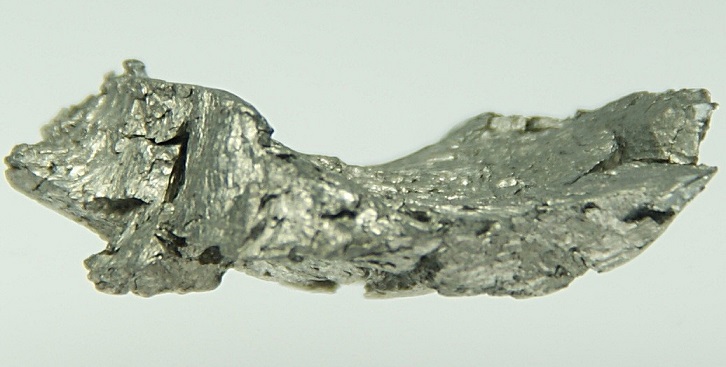
Gadolinium is a silver-white metal with ductility. It has a melting point of 1313°C, a boiling point of 3266°C, and a density of 7.9004 g/cm. Thanks to its excellent physical and chemical properties, gadolinium metal enjoys a wide range of applications in medical, industrial, nuclear energy, and other fields. In this article, let's take a closer look at the applications of gadolinium metal.
Applications of Gadolinium Metal
-
Application of Gadolinium in the Medical Field
In medical applications, the gadolinium-diethylenediamine pentaacetic acid (DTPA) complex can be used as an X-ray contrast agent barium as an adjustment agent for the intensity of MRI (magnetic resonance imaging diagnosis). In other words, the water around gadolinium is affected by the force of the gadolinium nucleus magnetic field, which shows that the nature of the water is different from that of unaffected water. The use of contrast images is conducive to the diagnosis of the disease.
-
Application of Gadolinium in Industry
In the magnetic bubble memory device, gadolinium-potassium-garnet is used as the media material. Magnetic bubble memory is to add a magnetic field in the vertical direction of the substance to turn it into a cylindrical magnetic field. Strengthen the magnetic field, and the disappearance of the magnetic field will soon occur. The magnetic bubble memory device can store information, which is generally used for information collection.
Other uses of gadolinium are the same as terbium and dysprosium for optical fibers and optical discs. The magneto-optical recording is the use of light to replace the magnetized and unmagnetized parts of magnetic reading. It has the characteristics of high density and can be rewritten and recorded.
-
Application of Gadolinium in Nuclear Energy
In the atomic energy industry, the large neutron absorption cross-section of the isotopes of europium and gadolinium can be used as control rods and neutron absorbers for light water reactors and fast breeder reactors.
Among all the elements, gadolinium reacts strongly to thermal neutrons. Taking advantage of this feature, gadolinium can also absorb invisible neutrons and make them emit light, which can be used as a fluorescent agent for photosensitive X-ray film.
Specific Uses of Gadolinium
- Its water-soluble paramagnetic complex can improve the human body's nuclear magnetic resonance (NMR) imaging signal in medical treatment.
- Its sulfur oxide can be used as the matrix grid of a special brightness oscilloscope and X-ray phosphor screen.
- The gadolinium in the gadolinium gallium garnet is an ideal single substrate for bubble memory.
- When there is no Carnot cycle limitation, it can be used as a solid magnetic refrigeration medium.
- It can be used as an inhibitor to control the chain reaction level of nuclear power plants to ensure the safety of nuclear reactions.
- It can also be used as an additive for samarium cobalt magnets to ensure that the performance does not change with temperature.
- In addition, the use of gadolinium oxide together with lanthanum contributes to changes in the vitrification zone and improves the thermal stability of the glass. Gadolinium oxide can also be used to make capacitors and X-ray intensifying screens.
- The world is now working hard to develop the application of gadolinium and its alloys in magnetic refrigeration, and breakthroughs have been made. Magnetic refrigerators that use superconducting magnets, metal gadolinium, or their alloys as refrigeration media at room temperature have come out.
Conclusion
Thank you for reading our article and we hope it can help you to have a better understanding of the applications of gadolinium metal. If you want to learn more about gadolinium metal and its alloys, we would like to advise you to visit Stanford Advanced Materials (SAM) for more information.
Stanford Advanced Materials (SAM) is a worldwide supplier of gadolinium products and has over two decades of experience in the manufacture and sale of gadolinium & its alloys, providing high-quality gadolinium products to meet our customers' R&D and production needs. As such, we are confident that SAM will be your favorite gadolinium product supplier and business partner.
 Chin Trento