Products
 Bars
Bars
 Beads & Spheres
 Bolts & Nuts
 Crucibles
 Discs
Discs
 Fibers & Fabrics
 Films
Films
 Flake
Flake
 Foams
Foams
 Foil
Foil
 Granules
 Honeycombs
 Ink
Ink
 Laminate
 Lumps
Lumps
 Meshes
 Metallised Film
 Plate
Plate
 Powders
 Rod
Rod
 Single Crystals
 Sputtering Target
 Tubes
Tubes
 Washer
 Wires
Wires
 Converters & Calculators
 Write for Us



Characteristics and Types of Fiberglass Mesh Filters

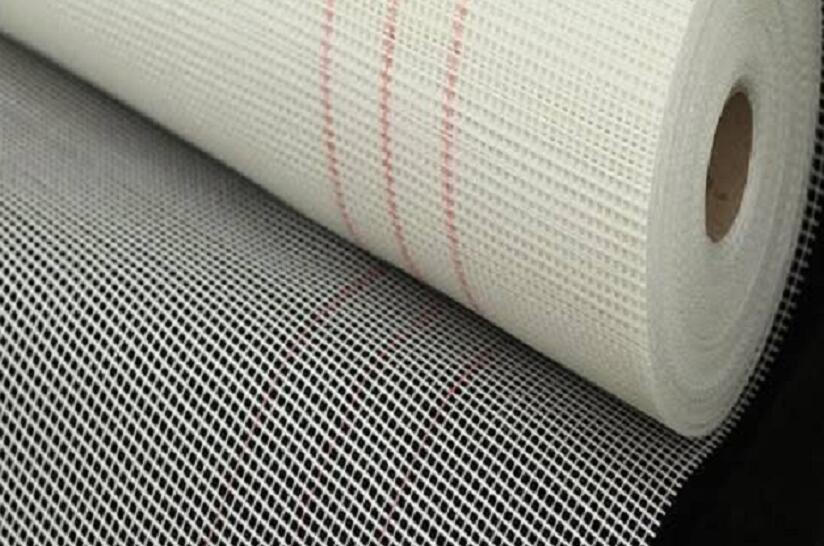
The fiberglass mesh filter is an inorganic non-metallic material with excellent performance. It has a wide variety of advantages. The advantages are good insulation, strong heat resistance, good corrosion resistance, and high mechanical strength, but its disadvantages are brittleness and poor wear resistance. It is made of glass balls or waste glass as raw materials through high-temperature melting, drawing, winding, weaving, and other processes. In this article, we will take a closer look at the characteristics and types of fiberglass mesh filters.
Characteristics and Types of Fiberglass Mesh Filters
Characteristics of Fiberglass Mesh Filters
- The filter has high tensile strength and low elongation (3%).
- The filter has a high elastic coefficient and good rigidity.
- The filter has large elongation within the elastic limit and high tensile strength, so it can absorb impact energy.
- The filter is made of inorganic fiber, which is non-flammable and has good chemical resistance.
- Its water absorption is small.
- High-temperature resistance.
- High filtration efficiency.
Types of Fiberglass Mesh Filters
-
ULPA(Ultra Low Penetration Air) Filter
ULPA (Ultra Low Penetration Air) filter has a filtration efficiency of more than 99.999% for 0.1~0.2μm particles, smoke and microbes, and other dust particles.
ULPA filter characteristics: Its filter element is made of ultra-fine glass fiber filter material by gluing and folding. The outer frame can be made of laminated wood, galvanized copper, stainless steel, and aluminum alloy, and it is tightly bonded by polyurethane glue. It has the characteristics of lightweight, large air permeability, dust collection rate as high as 99.95-99.999%, and alkali resistance, and high-temperature resistance.
ULPA filter applications: It is suitable for class 10000-100 clean systems, air conditioning systems, so the product has been widely used in electronics, microelectronics, semiconductors, optical devices, biological and medical circuits, cameras, and optical instruments, precision machinery, and other fields.
-
High-Temperature Air Filter
The high-temperature air filter still has a partition structure. It is assembled with high-temperature resistant glass fiber or ultra-fine glass fiber filter paper, aluminum foil partition, stainless steel frame, and special high-temperature resistant sealant.
High-temperature air filters are mainly used in ultra-clean ovens that require drying in the production process of food, pharmaceuticals, etc., or high-temperature air purification equipment and systems. The maximum working temperature is 350 degrees.
-
High Humidity Resistant Air Filter
The high-humidity air filter has a partition structure, using special moisture-proof ultra-fine glass fiber filter paper, special rubber sheet or aluminum foil partition, galvanized sheet, or aluminum alloy profile frame. It is suitable for high humidity under normal temperature and pressure, especially in high humidity environments such as infusion production in the pharmaceutical industry. The maximum working humidity is 100%.
The Disadvantage of Fiberglass Mesh Filters
Due to the poor ductility of glass fiber, the glass fiber filter is easily damaged, so be careful when installing it.
Conclusion
Thank you for reading our article and we hope it can help you to have a better understanding of the characteristics and types of fiberglass mesh filters. If you want to learn more about fiberglass mesh filters, we would like to advise you to visit Stanford Advanced Materials (SAM) for more information.
As a leading supplier of fiberglass mesh filters across the world, SAM enjoys over two decades of experience in the manufacture and sale of fiberglass mesh filters, offering customers high-quality fiberglass mesh filters to meet their R&D and production needs. As such, we are confident that SAM will be your favorite fiberglass mesh filter supplier and business partner.
 Chin Trento