Products
 Bars
Bars
 Beads & Spheres
 Bolts & Nuts
 Crucibles
 Discs
Discs
 Fibers & Fabrics
 Films
Films
 Flake
Flake
 Foams
Foams
 Foil
Foil
 Granules
 Honeycombs
 Ink
Ink
 Laminate
 Lumps
Lumps
 Meshes
 Metallised Film
 Plate
Plate
 Powders
 Rod
Rod
 Single Crystals
 Sputtering Target
 Tubes
Tubes
 Washer
 Wires
Wires
 Converters & Calculators
 Write for Us



Uses of Molybdenum Alloys in the Aerospace and Steel Industry

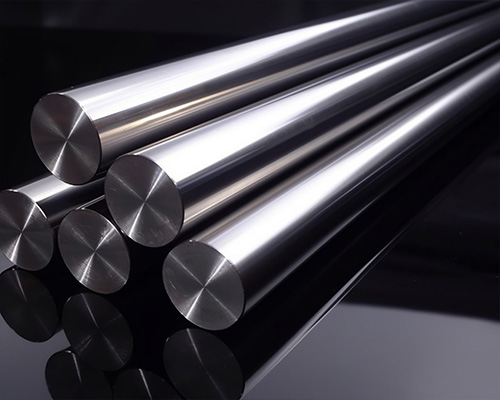
Molybdenum alloys are used for high-heating elements, extrusion abrasive tools, glass melting furnace electrodes, spray coatings, metal processing tools, spacecraft parts, etc. because of their good strength, mechanical stability, and high ductility. In this article, we will take a closer look at the uses of molybdenum alloys in the aerospace and steel industry.
Uses of Molybdenum Alloys in the Aerospace and Steel Industry
Uses of Molybdenum Alloys in the Aerospace Industry
Molybdenum-copper alloys are used in the aerospace industry to form non-ferrous alloys with molybdenum as the matrix and other elements (such as titanium, zirconium, hafnium, tungsten, and rare earth elements). These alloying elements not only play the role of solid solution strengthening and maintaining low-temperature plasticity for the molybdenum alloy but also can form a stable and dispersed carbide phase to improve the strength and recrystallization temperature of the alloy.
Uses of Molybdenum Alloys in the Steel Industry
Molybdenum has the largest consumption in the steel industry. It is mainly used for the production of alloy steel (approximately 43% of the total consumption of molybdenum in steel), stainless steel (approximately 23%), tool steel and high-speed steel (approximately 8%), cast iron, and rolls (approximately 6%). Most of the molybdenum is directly used for steelmaking or cast iron after industrial molybdenum oxide briquette, and a small part is first smelted into ferromolybdenum and then used for steelmaking.
Molybdenum as an alloying element of steel has the following advantages:
- Improve the strength and toughness of steel;
- Improve the corrosion resistance of steel in acid-base solutions and liquid metals;
- Improve the wear resistance of steel;
- Improve the hardenability, weldability, and heat resistance of steel.
For example, stainless steel with a molybdenum content of 4%-5% is often used in places with serious erosion and corrosion such as marine equipment and chemical equipment.
Conclusion
Thank you for reading our article and we hope it can help you to have a better understanding of the uses of molybdenum alloys in the aerospace and steel industry. If you want to learn more about molybdenum alloys and other refractory metals and alloys, we would like to advise you to visit Stanford Advanced Materials (SAM) for more information.
As a leading supplier of molybdenum products across the world, SAM enjoys over two decades of experience in the manufacture and sale of molybdenum alloys, molybdenum tubes, and molybdenum powder, offering customers high-quality molybdenum products to meet their R&D and production needs. As such, we are confident that SAM will be your favorite molybdenum product supplier and business partner.
 Chin Trento