Products
 Bars
Bars
 Beads & Spheres
 Bolts & Nuts
 Crucibles
 Discs
Discs
 Fibers & Fabrics
 Films
Films
 Flake
Flake
 Foams
Foams
 Foil
Foil
 Granules
 Honeycombs
 Ink
Ink
 Laminate
 Lumps
Lumps
 Meshes
 Metallised Film
 Plate
Plate
 Powders
 Rod
Rod
 Single Crystals
 Sputtering Target
 Tubes
Tubes
 Washer
 Wires
Wires
 Converters & Calculators
 Write for Us



The Heart of the Lithium-ion Battery: Cathode Materials

Introduction
In recent years, power batteries have developed rapidly as the core component of new energy vehicles. The lithium-ion battery is the most commonly used power battery in new-energy automobiles, which mainly consists of anode material, cathode material, diaphragm, and electrolyte. Cathode materials account for more than 40% of the total cost of lithium batteries, and their performance directly affects the performance indicators of lithium batteries. Therefore, cathode materials play a central role in lithium batteries.

Key Cathode Materials
Lithium Cobalt Oxide (LiCoO2)
Lithium cobalt oxide is an inorganic compound and one of the most widely used cathode materials for lithium-ion batteries. It has a two-dimensional layered structure suitable for the declination of lithium ions. Its theoretical capacity is 274mAh/g, but the actual specific capacity is about 140mAh/g due to structural stability limitations. Lithium cobalt oxide is easy to prepare and has many advantages, such as high electrochemical performance, good circulation performance, and good charging and discharging performance. Despite its benefits, its high cost and environmental concerns over cobalt mining have driven research towards alternative materials.
Lithium Nickel Oxide (LiNiO2)
Lithium nickel oxide has a cubic rock salt structure similar to lithium cobalt oxide but is cheaper. It offers high-temperature stability, a low self-discharge rate, no over-charge and over-discharge limitations, and no pollution. However, it is difficult to prepare due to high process condition control requirements and the propensity to produce non-stoichiometric compounds, limiting its use as a cathode material. Its potential for higher energy density makes it an attractive candidate for future battery technologies, despite the preparation challenges.
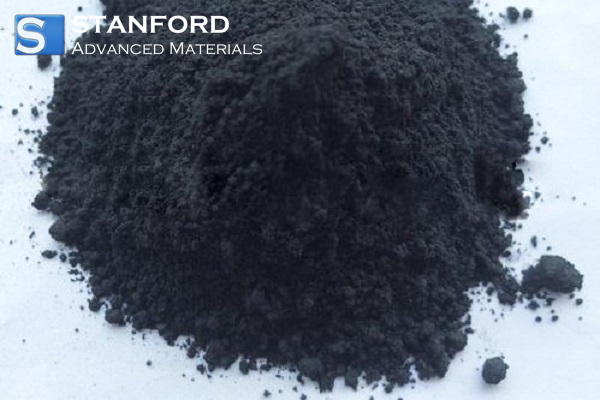
Lithium Iron Phosphate (LiFePO4)
Lithium iron phosphate is an olivine structure and belongs to the orthogonal crystal system. Its theoretical specific capacity is 170mAh/g, and the theoretical voltage is 3.5 V. It has minimal structural change before and after charging and discharging, offering good circulation performance and high-temperature stability. However, it is highly polarizable at high power rates, leading to a rapid drop in reversible capacity, making it unsuitable for high-current charging and discharging. Its excellent safety profile and long cycle life make it ideal for applications where safety and durability are prioritized over energy density.
Lithium Nickel Manganese Cobalt Oxide (NMC)
The composite oxides of lithium-nickel-manganese-cobalt have a synergistic effect due to the addition of Ni, Co and Mn , integrating the advantages of LiCoO2, LiNiO2, and LiMnO2. The addition of Ni increases material capacity, Co stabilizes the layered structure, and Mn reduces material costs and improves safety. NMC materials are becoming increasingly popular due to their balanced performance characteristics. Their versatility allows for tuning of the ratios of nickel, manganese, and cobalt to optimize performance for specific applications, such as electric vehicles or grid storage.
Conclusion
Cathode materials are crucial in determining the performance, cost, and safety of lithium-ion batteries. The development of advanced cathode materials is essential for the advancement of high-energy, long-life, and cost-effective lithium-ion batteries for new energy vehicles. Continued research and innovation in this field promise to drive further improvements in battery technology, supporting the growing demand for sustainable energy solutions.
 Chin Trento