Products
 Bars
Bars
 Beads & Spheres
 Bolts & Nuts
 Crucibles
 Discs
Discs
 Fibers & Fabrics
 Films
Films
 Flake
Flake
 Foams
Foams
 Foil
Foil
 Granules
 Honeycombs
 Ink
Ink
 Laminate
 Lumps
Lumps
 Meshes
 Metallised Film
 Plate
Plate
 Powders
 Rod
Rod
 Single Crystals
 Sputtering Target
 Tubes
Tubes
 Washer
 Wires
Wires
 Converters & Calculators
 Write for Us



How to Obtain Pure Chromium?

Introduction
Chromium, a pivotal element discovered in 1798 by French chemist Nicholas Louis Vauquelin, has significantly influenced various industrial applications owing to its exceptional properties. This article delves into the historical journey of chromium, from its discovery to modern methods of obtaining pure chromium.
Discovery and Properties
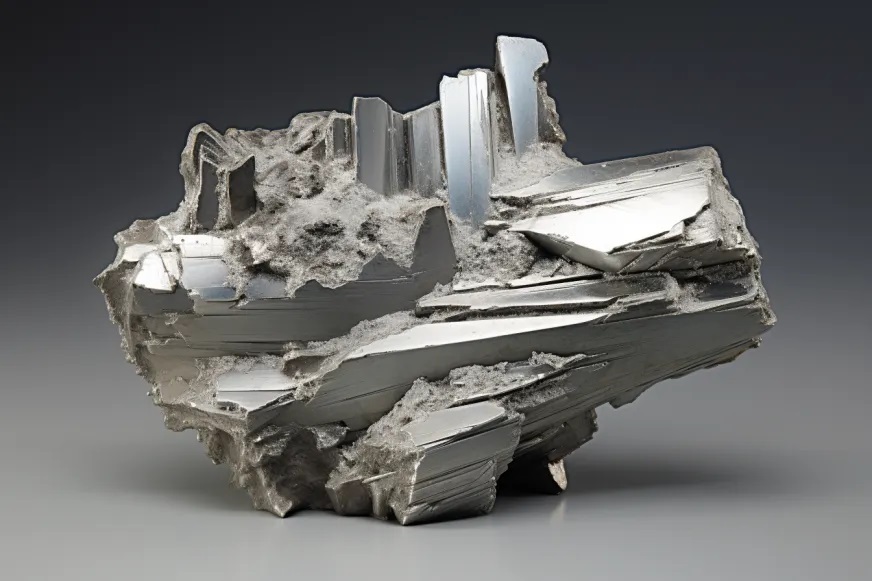
Vauquelin's fascination with a vivid red mineral found in a Siberian gold mine, known as Siberian red lead, led to the discovery of chromium. Confirming its identity as a lead mineral, Vauquelin isolated chromium by dissolving it in acid, precipitating the lead, and focusing on the remaining liquor. The name "chromium" is derived from the Greek word "chroma," meaning color, reflecting its ability to produce a spectrum of colors in solution. Further exploration unveiled chromium's contribution to the green coloration of emeralds.
The lightweight blue-silvery white color of chromium, coupled with its high corrosion resistance, positions it as a sought-after material for protective coatings.
Industrial Applications
Protective Coatings
Chromium's corrosion resistance makes it a cornerstone in protective coatings for various applications. It is employed in combustion equipment, acting as a wear-resistant coating that extends the lifespan of specific components. In high-temperature fuel cells, chromium exhibits noteworthy performance, highlighting its versatility.

Decorative Coatings
Beyond industrial applications, chromium excels as a brilliant decorative coating. It adds sheen to operating elements on appliances and jewelry, offering a blend of aesthetics and functionality. The use of chromium nitride coatings on moving parts provides reliable protection against wear and abrasion.
Industrial Processes
Chromium plays a pivotal role in numerous industrial processes as a coating material. Its application as a chromium nitride hard material coating ensures durability and protection in various manufacturing processes.
Production Methods
Aluminothermal Process
The predominant method of chromium production involves the aluminothermal process. This method revolves around reducing chromium oxide with aluminum. The mixture of chromium oxide and aluminum powder ignites, and the reduction process proceeds as an exothermal reaction. The resulting chromium content can reach up to 99.8%, contingent on the initial powder's purity. Impurities such as aluminum, iron, silicon, and sulfur are crucial considerations.
Electrolytic Process
For exceptionally pure chromium, the electrolytic process is employed. This method achieves purities of up to 99.995%, involving dissolving CrO3 Cr(VI) in sulfuric acid. Chromium flakes are obtained through a galvanic deposition process. However, environmental concerns limit the widespread use of this process.
Conclusion
In conclusion, the journey of chromium, from Vauquelin's discovery to contemporary production methods, underscores its significance in diverse industrial applications. Whether safeguarding components with protective coatings or enhancing aesthetics through decorative applications, chromium remains a critical element in materials science. As the industry progresses, the pursuit of obtaining pure chromium remains intertwined with technological advancements and environmental considerations.
 Chin Trento