Products
 Bars
Bars
 Beads & Spheres
 Bolts & Nuts
 Crucibles
 Discs
Discs
 Fibers & Fabrics
 Films
Films
 Flake
Flake
 Foams
Foams
 Foil
Foil
 Granules
 Honeycombs
 Ink
Ink
 Laminate
 Lumps
Lumps
 Meshes
 Metallised Film
 Plate
Plate
 Powders
 Rod
Rod
 Single Crystals
 Sputtering Target
 Tubes
Tubes
 Washer
 Wires
Wires
 Converters & Calculators
 Write for Us



Why is Hafnium Smaller Than Zirconium

The geochemical properties of Hf and Zr are very similar since the ionic radius of Hf is almost identical to that of Zr. All Zr minerals contain Hf and pure Hf minerals are not commonly known.
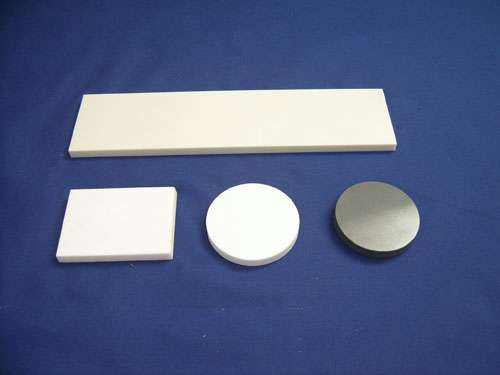
The concentration of Hf in minerals rarely exceeds Zr with the exception of certain types of thortveitite. Zircon, SiO4, and baddeleyite ZrO2, are the most important sources of Hf and usually contain up to 2%. However, some Norwegian zircon minerals have been found to contain 20% Hf. Hafnium is predominantly lithophile in its behaviour, occurring in oxides and silicates as the Hf ion.
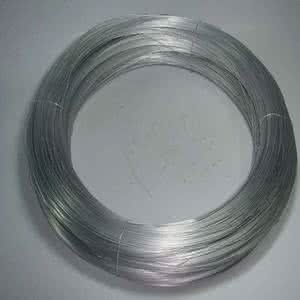
Hafnium may be used as a pathfinder for Zr mineralisation. Elevated Hf values indicate the presence of felsic rocks, especially intrusive masses. The resistate nature of Hf minerals limits the concentration of Hf in natural water. Complexes with sulphates, fluorides and chlorides may be poorly soluble in aqueous solution, but complexation with natural organic materials may increase the concentrations of Hf in natural freshwater. Hafnium is generally present in natural water at concentrations less than 0.1 µg l-1.
Sewage is the main anthropogenic source of Hf. Hafnium is used in the production of electric light bulb filaments, X-ray cathode tubes, reactor control rods, as alloys with Ti, Nb, Ta, and Fe, and in the ceramics industry. Several investigations during the 1960s and 70s demonstrated that Hf concentrations were not elevated in areas of industrial activity, and it appears that geological sources of Hf are more important than anthropogenic ones.
Hafnium has no known biological function. Very little information is available concerning its toxicity, but it is generally regarded as being of low toxicity. No negative environmental effects have been reported. However, because insufficient data are available on the effect of Hf on human health, it should be regarded as potentially toxic.
Hafnium oxide (hafnia) has been studied extensively in the last decades as a high-dielectric being used as replacement of the standard gate dielectric SiO2 in order to produce high-density logic and memory devices.
 Chin Trento