Products
 Bars
Bars
 Beads & Spheres
 Bolts & Nuts
 Crucibles
 Discs
Discs
 Fibers & Fabrics
 Films
Films
 Flake
Flake
 Foams
Foams
 Foil
Foil
 Granules
 Honeycombs
 Ink
Ink
 Laminate
 Lumps
Lumps
 Meshes
 Metallised Film
 Plate
Plate
 Powders
 Rod
Rod
 Single Crystals
 Sputtering Target
 Tubes
Tubes
 Washer
 Wires
Wires
 Converters & Calculators
 Write for Us



Catalysis Redefined: Advantages of Palladium on Carbon

Introduction
Catalysis is a fundamental process that has revolutionized various fields of chemistry, enabling the efficient transformation of molecules into valuable products. Among the plethora of catalysts available, palladium on carbon (Pd/C) stands out for its exceptional performance and versatility. This catalytic system, consisting of palladium nanoparticles supported on a carbon substrate, has redefined catalysis and offers distinct benefits that make it highly valuable in a range of applications. In this article, we will explore the advantages of palladium on carbon and how it has redefined the landscape of catalysis.
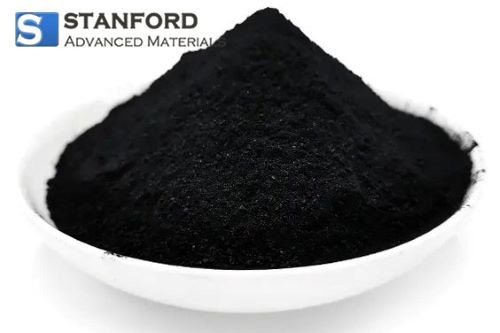
Figure 1. Palladium on Carbon
What Are the Advantages of Palladium on Carbon?
1. High Catalytic Activity
First, palladium on carbon has exceptional catalytic activity because palladium nanoparticles supported on carbon provide a large surface area for catalytic reactions, allowing for a greater number of active sites. Therefore, the Pd/C catalyst demonstrates remarkable efficiency, faster reaction rates, higher yields, and improved selectivity in a wide range of transformations, including hydrogenation, cross-coupling, and carbonylation reactions.
2. Versatility in Reaction Conditions
Second, palladium on carbon exhibits versatility in reaction conditions. They can operate under mild reaction conditions, such as ambient temperature and atmospheric pressure. This versatility allows for the synthesis of complex molecules without the need for harsh reaction conditions, resulting in more environmentally friendly processes.
Also, palladium on carbon is renowned for its versatility in organic transformations. They find extensive applications in various reactions, such as oxidation, and carbon-carbon bond formation. Such versatility makes palladium on carbon catalysts invaluable tools in organic synthesis and pharmaceutical research.
3. Broad Substrate Compatibility
Another notable advantage of Pd/C catalysts is their ability to catalyze diverse reactions with a broad range of substrates. Whether it is the hydrogenation of alkenes, the cross-coupling of aryl halides, or the carbonylation of organic compounds, Pd/C catalysts show excellent substrate compatibility. This compatibility enables the synthesis of a wide variety of compounds, including pharmaceutical intermediates, agrochemicals, and specialty chemicals.
4. Selectivity Control
Selectivity control is of paramount importance in catalytic reactions to obtain the desired product while minimizing the formation of unwanted by-products. Palladium on carbon catalysts provides excellent selectivity control, allowing chemists to achieve high yields of the desired products with minimal side reactions. The choice of ligands and reaction conditions can further enhance selectivity, enabling chemists to fine-tune the catalytic system for specific transformations.
5. Catalyst Stability
Catalyst stability is crucial for long-term reactions and recyclability. Palladium on carbon catalysts could maintain their catalytic activity over multiple reaction cycles thanks to their stability. And the carbon support provides structural integrity and prevents agglomeration of palladium nanoparticles, ensuring the longevity of the catalyst, catalyst reuse, reduced cost, and less waste generation.
6. Sustainable and Green Chemistry
In recent years, the focus on sustainable and green chemistry has grown significantly. Palladium on carbon catalysts contributes to these principles by enabling greener reactions. Their high catalytic efficiency allows for shorter reaction times and lower energy consumption. Furthermore, selectivity control minimizes waste formation, resulting in cleaner processes with reduced environmental impact.
Additionally, the recyclability of catalysts is an essential aspect of sustainable synthesis. Pd/C catalysts can be easily separated from the reaction mixture for reuse, so the process becomes more environmentally friendly and economically viable.
Conclusion
In a word, palladium on carbon catalysts has redefined catalysis by offering a range of benefits, including high catalytic activity, versatility in reaction conditions, broad substrate compatibility, selectivity control, catalyst stability, and sustainability. These advantages have made Pd/C catalysts indispensable in synthetic chemistry, enabling efficient and sustainable transformations across various industries. As research continues to expand our understanding of catalysis, palladium on carbon catalysts will continue to play a pivotal role in driving innovation and redefining the possibilities in the field of catalysis.
Stanford Advanced Materials (SAM) offers quality Platinum on Carbon Catalysts. Other precious metal catalysts are also available. Send us an inquiry if you are interested.
 Chin Trento