Products
 Bars
Bars
 Beads & Spheres
 Bolts & Nuts
 Crucibles
 Discs
Discs
 Fibers & Fabrics
 Films
Films
 Flake
Flake
 Foams
Foams
 Foil
Foil
 Granules
 Honeycombs
 Ink
Ink
 Laminate
 Lumps
Lumps
 Meshes
 Metallised Film
 Plate
Plate
 Powders
 Rod
Rod
 Single Crystals
 Sputtering Target
 Tubes
Tubes
 Washer
 Wires
Wires
 Converters & Calculators
 Write for Us



ASTM B348 Standard Specification for Titanium and Titanium Alloy Bars and Billets

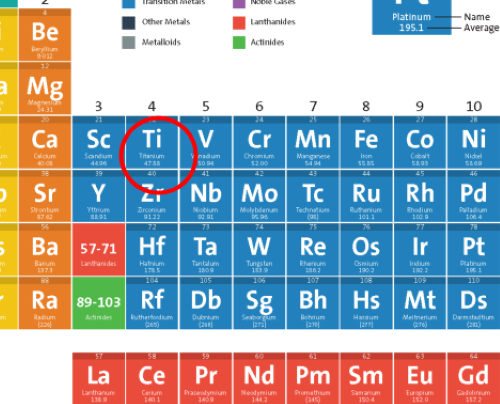
ASTM B348 Standard Specification for Titanium and Titanium Alloy Bars and Billets: Chemical Compositions
|
Products |
Compositions |
|
UNS R50250 |
Unalloyed titanium |
|
UNS R50400 |
Unalloyed titanium |
|
UNS R50550 |
Unalloyed titanium |
|
UNS R50700 |
Unalloyed titanium |
|
UNS R56400 |
6 % aluminum, 4 % vanadium |
|
UNS R54520 |
5 % aluminum, 2.5 % tin |
|
UNS R52400 |
0.12 to 0.25 % palladium |
|
UNS R56320 |
3 % aluminum, 2.5 % vanadium |
|
UNS R52250 |
0.12 to 0.25 % palladium |
|
UNS R53400 |
0.3 % molybdenum, 0.8 % nickel |
|
UNS R53413 |
0.5 % nickel, 0.05 % ruthenium |
|
UNS R53414 |
0.5 % nickel, 0.05 % ruthenium |
|
UNS R53415 |
0.5 % nickel, 0.05 % ruthenium |
|
UNS R52402 |
0.04 to 0.08 % palladium |
|
UNS R52252 |
0.04 to 0.08 % palladium |
|
UNS R56322 |
Titanium alloy in./3 % aluminum, 2.5 % vanadium, and 0.04 to 0.08 % palladium |
|
UNS R58640 |
3 % aluminum, 8 % vanadium, 6 % chromium, 4 % zirconium, 4 % molybdenum |
|
UNS R58645 |
3 % aluminum, 8 % vanadium, 6 % chromium, 4 % zirconium, 4 % molybdenum, and 0.04 %–0.08 % palladium |
|
UNS R58210 |
15 % molybdenum, 3 % aluminum, 2.7 % niobium, and 0.25 % silicon |
|
UNS R56407 |
6 % aluminum, 4 % vanadium with extra low interstitial elements, ELI |
|
UNS R56405 |
6 % aluminum, 4 % vanadium, and 0.04 % to 0.08 % palladium |
|
UNS R56403 |
6 % aluminum, 4 % vanadium, 0.3 % to 0.8 % nickel, and 0.04 % to 0.08 % palladium |
|
UNS R52404 |
0.08 to 0.14 % ruthenium |
|
UNS R52254 |
0.08 to 0.14 % ruthenium |
|
UNS R56323 |
3 % aluminum, 2.5 % vanadium, and 0.08–0.14 % ruthenium |
|
UNS R56404 |
6 % aluminum, 4 % vanadium, extra low interstitial, ELI, and 0.08 to 0.14 % ruthenium |
|
UNS R53530 |
0.3 % cobalt, 0.05 % palladium |
|
UNS R53532 |
0.3 % cobalt, 0.05 % palladium |
|
UNS R55111 |
5 % aluminum, 1 % tin, 1 % zirconium, 1 % vanadium, and 0.8 % molybdenum |
|
UNS R53442 |
0.4 % nickel, 0.015 % palladium, 0.025 % ruthenium, and 0.15 % chromium |
|
UNS R53445 |
0.4 % nickel, 0.015 % palladium, 0.025 % ruthenium, and 0.15 % chromium |
|
UNS R56340 |
4.5 % aluminum, 2 % molybdenum, 1.6 % vanadium, 0.5 % iron, and 0.3 % silicon |
|
UNS R58450 |
45 % niobium |
|
UNS R52815 |
1.5 % aluminum |
|
UNS R54250 |
4 % aluminum, 2.5 % vanadium, and 1.5 % iron |
|
UNS R56461 |
6 % aluminum, 1 % iron |
ASTM B348 Standard Specification for Titanium and Titanium Alloy Bars and Billets: Dimensions Tolerance
—Hot-Worked Rounds and Squares
|
Specified Size |
Size Variations |
Out-of-RoundA or Out-of-Square,B |
|
1⁄4 to 5⁄16 in./ 6.35 to 7.94mm, incl |
±0.005 in./0.13mm |
0.008 in./0.20mm |
|
Over 5⁄16 to 7⁄16 in./ 7.94 to 11.11mm, incl |
±0.006 in./0.15mm |
0.009 in./0.23mm |
|
Over 7⁄16 to 5⁄8 in./ 11.11 to 15.88mm, incl |
±0.007 in./0.18mm |
0.010 in./0.25mm |
|
Over 5⁄8 to 7⁄8 in./ 15.88 to 22.22mm, incl |
±0.008 in./0.20mm |
0.012 in./0.30mm |
|
Over 7⁄8 to 1 in./ 22.22 to 25.40mm, incl |
±0.009 in./0.23mm |
0.013 in./0.33mm |
|
Over 1 to 11⁄8 in./ 25.40 to 28.58mm, incl |
±0.010 in./0.25mm |
0.015 in./0.38mm |
|
Over 11⁄8 to 11⁄4 in./ 28.58 to 31.75mm, incl |
±0.011 in./0.28mm |
0.016 in./0.41mm |
|
Over 11⁄4 to 13⁄8 in./ 31.75 to 34.92mm, incl |
±0.012 in./0.30mm |
0.018 in./0.46mm |
|
Over 13⁄8 to 11⁄2 in./ 34.92 to 38.10mm, incl |
±0.014 in./0.36mm |
0.021 in./0.53mm |
|
Over 11⁄2 to 2 in./ 38.10 to 50.80mm, incl |
±1⁄64 in./0.40mm |
0.023 in./0.58mm |
|
Over 2 to 21⁄2 in./ 50.80 to 63.50mm, incl |
+1⁄32, −0 in./0.79mm |
0.023 in./0.58mm |
|
Over 21⁄2 to 31⁄2 in./ 63.50 to 88.90mm, incl |
+3⁄64, −0 in./1.19mm |
0.035 in./0.89mm |
|
Over 31⁄2 to 41⁄2 in./ 88.90 to 114.30mm, incl |
+1⁄16, −0 in./1.59mm |
0.046 in./1.17mm |
—Hot-Worked Hexagons and Octagons
|
Specified Sizes Between Opposite Sides |
Size Variation |
Maximum Difference, 3 Measurements |
|
1⁄4 to 1⁄2 in./ 6.35 to 12.70mm, incl |
±0.007 in./0.18mm |
0.011 in./0.28mm |
|
Over 1⁄2 to 1 in./ 12.70 to 25.40mm, incl |
±0.010 in./0.25mm |
0.015 in./0.38mm |
|
Over 1 to 11⁄2 in./ 25.40 to 38.10mm, incl |
±0.021 in./0.53mm |
0.025 in./0.64mm |
|
Over 11⁄2 to 2 in./ 38.10 to 50.80mm, incl |
±1⁄32 in./0.79mm |
1⁄32 in./0.79mm |
|
Over 2 to 21⁄2 in./ 50.80 to 63.50mm, incl |
±3⁄64 in./1.19mm |
3⁄64 in./1.19mm |
|
Over 21⁄2 to 31⁄2 in./ 63.50 to 88.90mm, incl |
±1⁄16 in./1.59mm |
1⁄16 in./1.59mm |
—Hot-Worked Flats
|
|
Thickness Variation from Specified Thickness, in. in./mmmm |
|||
|
Specified Widths |
1⁄8 to 1⁄2 3.18 to 12.70 incl |
Over 1⁄2 to 1 12.70 to 25.40 incl |
Over 1 to 2 25.40 to 50.80 incl |
Width Variation |
|
To 1 in./ 25.40mm, incl |
±0.008 in./0.20mm |
±0.010 in./0.25mm |
... |
+1⁄64, −1⁄64 in./ +0.40, −0.40mm |
|
Over 1 to 2 in./ 25.40 to 50.80mm, incl |
±0.012 in./0.30mm |
±0.015 in./0.38mm |
±1⁄32 in./0.79mm |
+1⁄32, −1⁄32 in./ +0.79, −0.79mm |
|
Over 2 to 4 in./ 50.80 to 101.60mm, incl |
±0.015 in./0.38mm |
±0.020 in./0.51mm |
±1⁄32 in./0.79mm |
+1⁄16, −1⁄32 in./ +1.59, −0.79mm |
|
Over 4 to 6 in./ 101.60 to 152.40mm, incl |
±0.015 in./0.38mm |
±0.020 in./0.51mm |
±1⁄32 in./0.79mm |
+3⁄32, −1⁄16 in./ +2.38, −1.59mm |
|
Over 6 to 8 in./ 152.40 to 203.20mm, incl |
±0.016 in./0.41mm |
±0.025 in./0.64mm |
±1⁄32 in./0.79mm |
+1⁄8, −5⁄32 in./ +3.18, −3.97mm |
|
Over 8 to 10 in./ 203.20 to 254.0mm, incl |
±0.021 in./0.53mm |
±0.031 in./0.79mm |
±1⁄32 in./0.79mm |
+5⁄32, −3⁄16 in./ +3.97,−4.76mm |
—Cold-Finished Rounds
|
Specified Size |
Size Variation,A |
|
Over 1⁄2 to 1 in./12.70 to 25.40mm, excl |
±0.002 in./0.05mm |
|
1 to 11⁄2 in./25.40 to 38.10mm, excl |
±0.0025 in./0.06mm |
|
11⁄2 to 4 in./38.10 to 101.60mm, incl |
±0.003 in./0.08mm |
—Cold-Finished Hexagons, Octagons, and Squares
|
Specified Size, in. in./mmmm |
Size Variation,A in. in./mmmm |
|
Over 1⁄2 to 1 in./12.70 to 25.40mm, incl |
+ 0, − 0.004 in./−0.10mm |
|
Over 1 to 2 in./25.40 to 50.80mm, incl |
+ 0, − 0.006 in./−0.16mm |
|
Over 2 to 3 in./50.80 to 76.20mm, incl |
+ 0, − 0.008 in./−0.20mm |
|
Over 3 in./76.20mm |
+ 0, − 0.010 in./−0.25mm |
ASTM B348 Standard Specification for Titanium and Titanium Alloy Bars and Billets: FAQs
1. What is ASTM B348?
ASTM B348 is a standard specification developed by ASTM International (formerly known as the American Society for Testing and Materials). It outlines the requirements for hot-worked or cold-worked bars and billets made from titanium and titanium alloys. This includes requirements for chemical composition, mechanical properties, dimensions, and surface finish.
2. What materials are covered under ASTM B348?
ASTM B348 covers a range of titanium and titanium alloys, including pure grades of titanium (Grades 1 through 4) and various alloyed grades (such as Grade 5, which is Ti 6Al-4V, and Grade 23, which is Ti 6Al-4V ELI). Each grade has specific chemical and mechanical properties suited for different applications.
3. Who uses ASTM B348?
Industries that commonly use materials conforming to ASTM B348 include aerospace, medical, chemical processing, marine, and automotive. Engineers, designers, and procurement specialists in these industries rely on the standard to ensure materials meet required performance and quality levels.
4. How are materials tested for compliance with ASTM B348?
Materials are tested using various methods to ensure they meet the specified requirements of ASTM B348. These tests include chemical analysis to verify alloy composition, tensile testing to measure mechanical properties like strength and elongation, and if required, other specific tests such as bend testing or fracture toughness testing.
5. Can ASTM B348 materials be used for medical implants?
Yes, certain grades covered by ASTM B348, such as Grade 23 (Ti 6Al-4V ELI), are specifically designed for surgical implant applications. These materials are chosen for their biocompatibility, mechanical properties, and corrosion resistance.
6. How does ASTM B348 relate to other titanium standards?
ASTM B348 is one of several standards that cover titanium materials. Others include ASTM B265 (for titanium and titanium alloy sheet, strip, and plate) and ASTM F136 (for wrought titanium-6aluminum-4vanadium ELI (extra low interstitial) alloy for surgical implant applications). ASTM B348 specifically deals with bar and billet forms, while each standard addresses different product forms or applications.
7. Are there any special considerations for machining ASTM B348 materials?
Yes, titanium and its alloys have unique properties that require special considerations during machining, such as low thermal conductivity and a tendency to gall or weld to cutting tools. Proper machining techniques, tooling material, and coolants are essential to successfully machine ASTM B348 materials and maintain their mechanical properties.
 Chin Trento