Products
 Bars
Bars
 Beads & Spheres
 Bolts & Nuts
 Crucibles
 Discs
Discs
 Fibers & Fabrics
 Films
Films
 Flake
Flake
 Foams
Foams
 Foil
Foil
 Granules
 Honeycombs
 Ink
Ink
 Laminate
 Lumps
Lumps
 Meshes
 Metallised Film
 Plate
Plate
 Powders
 Rod
Rod
 Single Crystals
 Sputtering Target
 Tubes
Tubes
 Washer
 Wires
Wires
 Converters & Calculators
 Write for Us



Shape Memory Alloys in Biomedical Applications

1 Introduction
1.1 Background Information
Shape memory alloys (SMAs) are materials composed of two or more metallic elements that exhibit shape memory effects (SMEs) through thermoelasticity and martensitic phase transformations and their reversals. Shape memory alloys are the materials with the best shape memory performance among shape memory materials. To date, more than 50 types of alloys with shape memory effects have been discovered.
Shape memory alloys exhibit shape memory effects. For example, when a spring made from shape memory alloy is placed in hot water, its length immediately elongates. When placed in cold water, it immediately returns to its original shape. Shape memory alloy springs can be used to control water temperature in bathroom plumbing: when water temperature becomes too high, the "memory" function regulates or shuts off the water supply to prevent scalding. They can also be used to create fire alarm devices and safety mechanisms for electrical equipment. In the event of a fire, the shape memory alloy spring deforms, triggering the fire alarm system to achieve the purpose of alerting. Additionally, springs made from shape memory alloys can be placed inside heating valves to maintain room temperature, automatically opening or closing the valves when the temperature becomes too low or too high. The shape memory effect of shape memory alloys is also widely applied in various temperature sensor triggers.
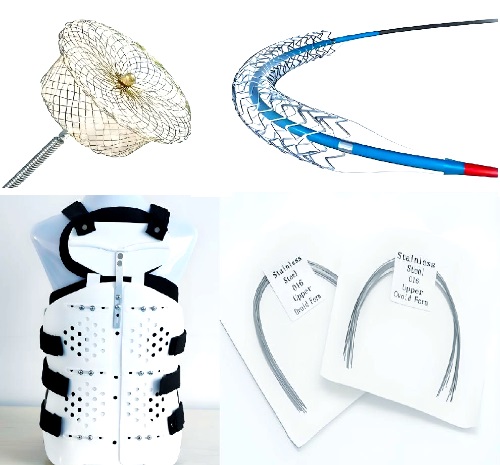
Fig. 1 Nitinol Medical Applications
Another important property of shape memory alloys is pseudoelasticity (also known as superelasticity), which manifests as a significantly greater deformation recovery capability than ordinary metals under external force. That is, the large strain generated during loading will recover upon unloading. This property has found widespread application in medicine, building vibration reduction, and daily life. For example, the previously mentioned artificial bones, bone fixation pressure devices, and dental orthodontic appliances. Eyeglass frames made from shape memory alloys can withstand deformation much greater than ordinary materials without breaking (this is not due to the shape memory effect, where deformation is followed by heating to restore the shape).
Shape memory alloys (SMAs) have extensive applications in the clinical medical field, such as artificial bones, bone fixation pressure devices, dental orthodontic appliances, various endovascular stents, embolization devices, cardiac repair devices, thrombus filters, interventional guidewires, and surgical sutures. Shape-memory alloys play an irreplaceable role in modern medicine. Shape memory alloys are also closely related to our daily lives.
The development of shape memory alloys (SMAs) originated from Arne Ölander's 1932 discovery of the "memory" effect in gold-cadmium alloys. In 1963, Buehler's team at the U.S. Naval Ordnance Laboratory confirmed this phenomenon in nickel-titanium alloys: plastically deformed materials below their transition temperature spontaneously regain original shapes when heated above a critical threshold (e.g., >40°C), driven by thermally activated martensitic inverse transformation. Industrial breakthroughs emerged in 1969 with leak-proof NiTi pipeline couplings in aircraft hydraulics, and a pre-deformed NiTi lunar antenna that self-expanded upon solar heating during the Apollo 11 mission, overcoming payload constraints. Subsequent research developed multicomponent NiTi systems (e.g., TiNiCu, TiNiFe) alongside copper- and iron-based SMAs, enabling transformative applications in biomedicine, energy, and automation.
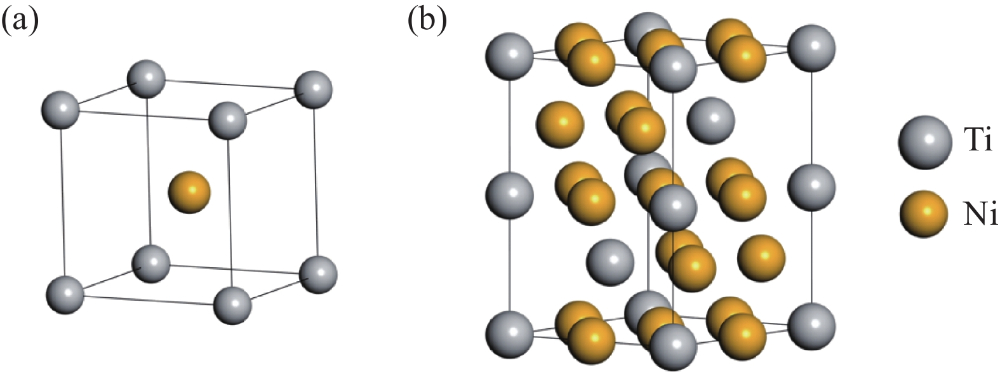
Fig. 2 Nitinol Crystal Structure
Ti-Ni-based shape memory alloy is the most useful of all kinds of shape memory alloys. The unique properties of nickel-titanium alloys stem from the reversible phase transformation between the austenitic phase (high temperature/unloaded state, cubic structure stable) and the martensitic phase (low temperature/loaded state, hexagonal structure easily deformable). Core characteristics include: shape memory effect (martensite deformation followed by heating to the critical temperature restores the parent phase shape), nonlinear superelasticity (stress-induced martensite phase transformation enables 8% recoverable strain, breaking the limitations of Hooke's law), oral temperature sensitivity (orthodontic force increases with rising temperature, accelerating tooth movement but making precise control difficult), excellent biocompatibility (surface titanium oxide inhibits nickel ion release), and gentle vibration-damping orthodontic force (unloading curve platform is flat, with vibration amplitude only 50% that of stainless steel wire). Based on phase transformation regulation, orthodontic archwires have evolved through five generations: from traditional metal wires (1940s) → martensite-stabilized alloys (1960s, low stiffness, no memory) → austenitic activated alloys (1980s, constant force superelasticity) → martensitic activated alloys (1990s, body temperature-triggered shape memory and superelasticity, achieving "room-temperature shaping-intraoral activation") → thermodynamically optimized alloys (2000s, activated above 40°C, providing extremely weak continuous force for periodontal disease patients).
1.2 The Appeal of SMA in the Medical Field
The appeal of shape memory alloys (SMAs) in the medical field lies in the unique synergy between their material properties and clinical requirements.
Medical-grade SMAs, represented by Nitinol (NiTi), feature a near-equiatomic composition (50 at.% nickel, 50 at.% titanium). Precise compositional adjustments enable controlled superelasticity and shape memory effects. Superelastic Nitinol undergoes stress-induced martensitic transformation, delivering recoverable strains up to 8.0% (Fig. 1). Its stress-strain curve exhibits a distinct plateau, outperforming conventional medical 316 stainless steel.
Key clinical advantages encompass three dimensions:
1. Functional Innovation: Superelasticity enables miniaturization and self-expansion in minimally invasive devices (e.g., vascular stents, filters);
2. Biocompatibility: Surface-optimized Nitinol meets biological safety standards for implants.
3. Surgical Advancement: SMA-powered devices (e.g., orthodontic archwires, cardio/neurovascular occluders) enhance procedural precision while reducing tissue trauma.
Particularly in interventional radiology, Nitinol's superelasticity addresses critical challenges in device flexibility, kink resistance, and dynamic in vivo adaptation, driving transformative progress in minimally invasive therapies. This paper further examines SMA's medical application potential and risk management strategies for Nitinol implants.
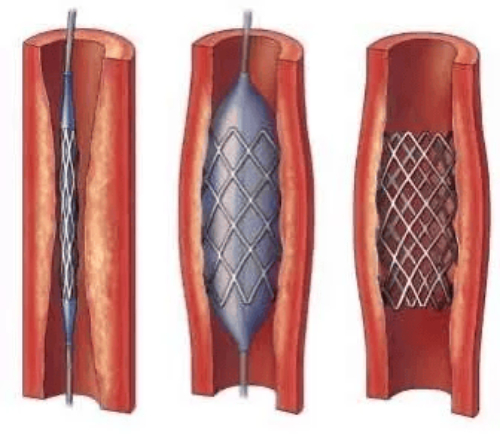
Fig. 3 Nitinol Stent Deployment
2 Fundamentals of Biomedical Shape Memory Alloys
2.1 Main Types and Components
Nickel-titanium-based alloys, particularly binary Nitinol (NiTi) with near-equiatomic composition (50 at.% Ni-Ti), constitute the cornerstone of medical SMAs due to their intrinsic superelasticity (∼8% recovery strain) and thermally activated shape memory. Ternary alloy systems are engineered to address clinical limitations: NiTiNb extends transformation hysteresis (ΔT≈30-100°C) to enhance dimensional stability in bone fixation devices, resisting thermal fluctuations; NiTiCu narrows hysteresis (ΔT≈2-10°C) for precise mechanical response control, enabling millimeter-scale radial force adjustment in vascular stents; NiTiCr elevates pitting potential (+0.2V) and strengthens passivation layers to suppress nickel ion release, mitigating allergy risks. In contrast, copper-based alloys (e.g., Cu-Al-Ni, Cu-Zn-Al) offer cost efficiency and tunable transition temperatures but suffer from intergranular brittleness (fatigue life <10^4 cycles) and cytotoxic copper ion release, precluding implant use. Iron-based systems (e.g., Fe-Mn-Si) exhibit high strength and affordability; however, their low recovery strain (<2%) and absence of reversible superelasticity restrict their applications to exploratory, non-load-bearing devices, with no significant clinical translation to date.
Table 1 Comparison of The Properties of Shape Memory Alloys Made from Different Materials
|
Classification |
Typical Alloys |
Core Characteristics Optimization Direction |
Medical Value and Limitations |
|
Nickel-titanium-based alloy (NiTi-based) |
Binary NiTi |
Superelasticity (~8% recovery strain) Shape memory effect (Af temperature trigger) |
Mainstream clinical material with good biocompatibility (surface TiOx barrier prevents nickel release) |
|
Copper-based alloy (Cu-based) |
NiTiNb |
Widening the phase transition lag temperature (ΔT≈30-100℃) |
Enhancing the dimensional stability of implants (such as anti-loosening of orthopedic screws) |
|
NiTiCu |
Reduce lag effect (ΔT≈2-10℃) |
Improved mechanical response accuracy (controlled radial force of vascular stents) |
|
|
NiTiCr |
Enhanced corrosion resistance (pitting potential ↑0.2V) Inhibits nickel ion precipitation |
Reduce the risk of long-term implant toxicity (especially for patients allergic to nickel) |
|
|
Cu-Al-Ni |
Low cost High phase change temperature (>100℃) |
Limitations: Crystal boundary brittleness → low fatigue life (<10^4 cycles) Copper ion toxicity → tissue inflammation (clinically prohibited) |
|
|
Cu-Zn-Al |
Excellent processing performance Adjustable phase transition temperature (-50~100℃) |
||
|
Iron-based alloy |
Fe-Mn-Si |
High strength (>500MPa) Low cost |
Limitations: Low recovery strain (<2%) → functional failure Phase transition is irreversible → no superelasticity (limited to single-use devices) |
2.2 Core Features and Mechanisms
Martensitic phase transformation is a non-diffusive phase transformation, also known as a displacement-type phase transformation. Strictly speaking, in a displacement-type phase transformation, only when atomic displacement occurs via shear deformation, and the interface between the two phases is maintained through macroscopic elastic deformation to ensure continuity and congruence, and the strain energy is sufficient to alter the phase transformation kinetics and the morphology of the phase transformation products, does it qualify as a martensitic phase transformation. Based on the definitions of martensitic phase transformation proposed by numerous scholars in the past, Xu Zuyao proposed the following simple definition: a phase transformation in which atoms are replaced without diffusion (i.e., the composition remains unchanged, and the relationships between neighboring atoms remain unchanged) and shear (i.e., the parent phase and martensite are in a positional relationship), thereby altering their shape. Here, phase transformation refers to first-order phase transformations (characterized by sudden changes in heat and volume, such as exothermic reactions and expansion) that involve nucleation and growth.
Martensite was first discovered in steel: when steel is heated to a certain temperature and then rapidly cooled, it forms a quenched structure that hardens and strengthens the steel. In 1895, the Frenchman Osmont named this structure martensite in honor of the German metallurgist Martens. Initially, only the phase transformation from austenite to martensite in steel was referred to as martensitic transformation. Since the 20th century, extensive knowledge has been accumulated regarding the characteristics of martensitic phase transformations in steel. Subsequently, it was discovered that certain pure metals and alloys also exhibit martensitic phase transformations, such as: Ce, Co, Hf, Hg, La, Li, Ti, Tl, Pu, V, Zr, and Ag-Cd, Ag-Zn, Au-Cd, Au-Mn, Cu-Al, Cu-Sn, Cu-Zn, In-Tl, Ti-Ni, etc. The products of phase transformations with basic characteristics resembling martensitic phase transformations are collectively referred to as martensite.
Martensitic phase transformations exhibit thermal and volumetric effects, with the transformation process involving the formation and growth of nuclei. However, there is no complete model to explain how these nuclei form and grow. The growth rate of martensite is generally high, with some reaching up to 10 cm·s. It is speculated that the configuration of crystal defects (such as dislocations) in the parent phase influences martensite nucleation. However, experimental techniques currently cannot observe the configuration of dislocations at the phase interface, so the entire process of martensitic phase transformation remains unclear. Its characteristics can be summarized as follows:
Martensitic phase transformation is one of the non-diffusive phase transformations. During the transformation, there is no random walking or ordered hopping of atoms across the interface. Therefore, the new phase (martensite) inherits the chemical composition, atomic order, and crystal defects of the parent phase. During the martensitic phase transformation, atoms undergo ordered displacement while maintaining their relative positions with neighboring atoms. This displacement is shear-type. The result of atomic displacement is lattice strain (or deformation). This shear displacement not only alters the lattice structure of the parent phase but also causes macroscopic shape changes. If a straight line is first drawn on the surface of a polished specimen, such as PQRS in Figure 3a, and part of the specimen (A1B1C1D1-A2B2C2D2) undergoes a martensitic phase transformation (forming martensite), then the PQRS straight line is folded into three connected straight lines: PQ, QR', and R'S'. The planes A1B1C1D1 and A2B2C2D2 at the two-phase interface remain strain-free and non-rotated, referred to as the habitual (precipitation) plane. This shape change is called constant plane strain (Figure 3). The shape change causes protrusions to form on the surface of the specimen, which has been polished beforehand. The surface protrusions of martensite in high-carbon steel can be observed when martensite forms, with tilting occurring on the surface intersecting with the martensite. Under an interference microscope, the height of the protrusions and their sharp edges can be seen.
The shape memory effect refers to the phenomenon where, after deformation of an alloy that undergoes martensitic phase transformation, when heated to the austenitic phase transformation completion temperature (Af), the low-temperature martensite reverses to the high-temperature parent phase and returns to its original shape before deformation, or during subsequent cooling, it returns to the martensite shape through the release of internal elastic energy. It is a solid material with a certain shape that, after undergoing plastic deformation under certain conditions, completely returns to its original shape before deformation when heated to a certain temperature. That is, it can remember the shape of the parent phase.
The martensitic transformation constitutes the physical foundation of the shape memory effect through a thermoelastic reversible crystal reconstruction mechanism. Upon cooling below the martensite start temperature (Ms), the high-temperature austenite phase (cubic lattice) undergoes diffusionless shear to form metastable martensite (monoclinic/hexagonal lattice), generating self-accommodating twins without macroscopic shape change. External stress below Mf induces twin boundary migration and variant reorientation, yielding pseudo-plastic strains up to 8%. Subsequent heating above the austenite start temperature (As) triggers atomic cooperative displacement for inverse transformation, where crystal structure recovery drives macroscopic shape restoration—the essence of the shape memory effect. This process relies on three critical attributes:
① Reversibility (near-zero lattice distortion energy ΔG ensures path uniqueness);
② Narrow hysteresis (10-30°C in NiTi alloys enables precise body-temperature activation);
③ Non-destructive deformation (twinning replaces dislocation slip to prevent permanent damage). Medically, this mechanism enables self-expanding stents to recover predefined configurations at body temperature, while martensitic twin rearrangement absorbs physiological load vibrations (e.g., 50% higher damping in orthodontic wires). Its cyclic stability (>10^7 cycles) further ensures long-term reliability in implants like cardiac valves.
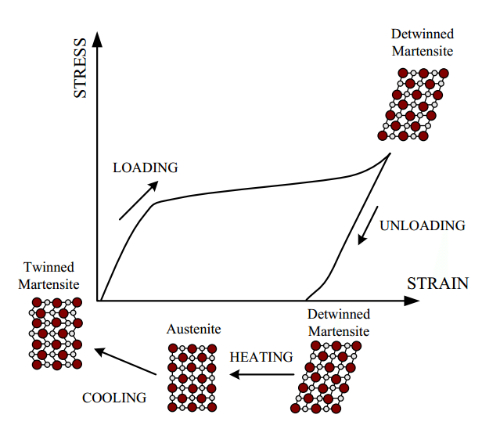
Fig. 4 Shape Memory Effect
2.3 Key Performance Parameters
The clinical viability of medical NiTi alloys hinges on the synergy of biocompatibility, mechanical properties, manufacturing processes, and sterilization compatibility. Per ISO 10993, biocompatibility focuses on suppressing nickel ion release (surface TiO2 passivation reduces leaching to <0.1 μg/cm^2/week), validated by cytotoxicity (>90% cell viability), sensitization (≥95% negative patch tests), and hemolysis (<5%). Mechanical properties must align with implantation demands: cardiovascular stents require ultrahigh rotary bending fatigue life (>4×10^8 cycles @37°C), while joint implants demand wear resistance (<0.1 mm3/Mc wear rate); superelastic stiffness (0.5-3 GPa) must precisely match host tissue mechanics. Manufacturing employs vacuum arc remelting (VAR) to enhance purity (inclusion size ≤5 μm), cold drawing + aging to tune transformation temperatures (Af±2°C), and laser cutting/electropolishing to achieve micron-scale features (stent struts 80-150 μm) with low roughness (Ra<0.05 μm). Terminal sterilization (ethylene oxide/gamma irradiation) must limit phase transition drift to <1°C without functional compromise.
3 Applications in Biomedical Fields
3.1 Orthopedics
Currently, orthopedic surgery primarily uses fixed steel plates made of titanium alloy. However, titanium alloy lacks self-adaptive and superelastic properties, and its fit with bones is suboptimal. In contrast, 4D-printed nickel-titanium shape memory alloys, with their self-adaptive capabilities, can achieve a relatively perfect fit with bones while providing both support and repair functions.
These shape memory alloy orthopedic repair materials are not merely flat plates; their surfaces are densely perforated with tiny holes, facilitating nutrient exchange and promoting bone growth and repair. Multiple 4D-printed nickel-titanium adaptive components have been clinically implanted in volunteer patients with bone tumors, yielding promising clinical outcomes.
In bone defect repair, graded porous structure NiTi scaffolds are used, with a tensile strength of 625.6 MPa, an elongation rate of 14.67%, and a deformation recovery rate of 99.51%. Fine-grain strengthening (grain size ~20.5 μm) synergizes with dislocation density to achieve energy absorption under high strain. Joint replacement and repair: acetabular cup fixation devices, artificial joint components (under exploration, focusing on wear and fatigue), and bone defect fillers (porous SMA).
In the field of spinal surgery, shape memory alloys (SMAs), especially nickel-titanium (NiTi) alloys, have driven innovations in dynamic orthopedics and minimally invasive fusion techniques. NiTi orthopedic rods achieve precise correction through a dual-stage shape memory effect: at low temperatures in the martensitic phase, the rods undergo plastic deformation to accommodate surgical procedures; once implanted in the body, body temperature triggers an austenitic phase transformation, restoring the pre-set curvature and continuously applying axial corrective force (e.g., a 6mm-diameter rod generates approximately 200N of force at 40°C, while a 9mm rod reaches 500N). Animal experiments (goat models) showed that pre-bent NiTi rods could reduce scoliosis angles from 41° to 11° without causing nerve damage; human cadaver studies further confirmed their ability to simultaneously correct coronal, sagittal, and rotational deformities. In terms of clinical innovation design, rectangular/square rods enhance anti-rotational capability, correcting the Cobb angle from 57.8° to 17.8° with no recurrence observed over a 4-year follow-up period; the body temperature-triggered system uses radio frequency pulses (450 Hz) to induce local heating, avoiding the risks associated with traditional thermal damage.
The development of intervertebral fusion devices focuses on minimally invasive implantation and long-term stability. Utilizing the phase transformation properties of NiTi, the fusion device can undergo compression deformation in a low-temperature martensitic state (e.g., in an ice-water environment) and automatically restore its original height after implantation into the intervertebral space through body temperature-triggered austenitic phase transformation. In terms of porous structure optimization, diamond-shaped lattices (porosity 70–72%, unit lattice 1.5 mm) produced using selective laser melting (SLM) technology significantly promote vascular ingrowth. The contact zone is designed with a martensitic phase (low elastic modulus) to effectively reduce endplate stress shielding. Additionally, the "locking teeth" structure at the edges of the fusion device embeds into the endplates during shape recovery, achieving an anti-displacement strength of 1800 N, eliminating the need for auxiliary screws or rods for fixation and further simplifying the surgical procedure.
In the field of fracture treatment, shape memory alloys (SMAs) have significantly improved fixation outcomes and patient prognosis through dynamic compression, minimally invasive implantation, and biomechanical adaptation technology. Continuous compression-type intramedullary nails utilize the dual-stage shape memory effect of NiTi alloy. After being pre-deformed in the low-temperature martensitic state, they are implanted into the medullary cavity. Upon rewarming to body temperature, they return to their original shape and generate axial compressive stress (0.5–1 MPa), thereby accelerating bone callus formation. Clinical comparative studies show that compared to traditional steel plates, the NiTi intramedullary nail group reduces fracture healing time by 25% and the nonunion rate to 0.9%. Its minimally invasive characteristics (e.g., implantation through a 2 cm incision for pediatric limb fractures, with a diameter selected at 2/5 of the narrowest point of the medullary cavity) further improve postoperative joint range of motion by 30%.
Self-compressing bone screws and bone grafts achieve active fixation through a phase-change mechanism. The bone screw is screwed into the bone in the martensitic state, and after rewarming, it radially expands, increasing interface stress by 40% and significantly enhancing holding force; when the TiNi ring fixator is used for sternal fixation, the postoperative VAS pain score decreases to 5.17 ± 1.14 (7.65 ± 1.08 in the traditional group). The hospital stay is shortened by 6 days. Additionally, biodegradable magnesium alloy bone fixators (with an elastic modulus of 45 GPa, similar to cortical bone) align with the bone healing cycle (100% healing rate at 6-month follow-up), eliminating the need for secondary removal surgery, and providing a new direction for the practical application of biodegradable materials in fracture fixation.
NiTi-optimized locking compression plates (LCP) addressed fixation challenges in osteoporotic patients through a biomechanically adapted design. NiTi-coated plates enabled single cortical locking (two screws on each side of the fracture ends), reducing screw density by 50%, and bridged comminuted zones via the "internal fixation scaffold" effect; Combined with minimally invasive implant technology (MIPPO), pre-bent LCP plates are inserted submuscularly and locked with percutaneous screws, reducing blood supply disruption by 70%, particularly suitable for fractures in areas with poor blood supply such as the distal tibia.
Shape memory alloys (SMAs) have achieved breakthrough progress in orthopedics from dynamic correction to biocompatibility due to their unique shape memory effect and superelasticity. In spinal correction, NiTi alloys achieve precise treatment through a dual-stage shape memory effect: correction rods with plastic deformation in the low-temperature martensitic state are implanted through subcutaneous tunnels, and body temperature triggers an austenitic phase transformation to restore the pre-set curvature, generating 200–500 N of axial corrective force (diameter 6–9 mm). Combined with rectangular/ square design to enhance anti-rotation capability (e.g., the Wang system reduces the Cobb angle from 57.8° to 17.8°), simultaneously correcting coronal, sagittal, and rotational deformities; radiofrequency pulse heating technology (450 Hz) further minimizes the risk of thermal injury. Intervertebral fusion devices utilize phase transformation properties for minimally invasive implantation: after low-temperature compression, volume reduces by 40%, and after implantation into the intervertebral space, height automatically restores; The diamond-shaped porous structure (porosity 70-72%) prepared by laser selective melting promotes vascular ingrowth, the martensitic contact zone reduces endplate stress shielding, and the edge “locking teeth” provide 1800 N of anti-displacement strength without the need for auxiliary fixation.
In the field of fracture fixation, SMAs significantly optimize therapeutic efficacy through dynamic compression and biomechanical adaptation. Pre-deformed NiTi intramedullary nails return to their original state at body temperature, generating 0.5–1 MPa axial compressive stress, accelerating callus formation (healing time reduced by 25%, nonunion rate 0.9%); elastic intramedullary nails implanted via a 2 cm incision in pediatric limb fractures improve joint range of motion by 30% postoperatively. Self-compression bone screws utilize martensite-austenite phase transformation to achieve radial expansion (interface stress increased by 40%); TiNi ring fixators reduce VAS scores to 5.17 ± 1.14 post-sternal fixation surgery (traditional group: 7.65 ± 1.08), with a 6-day reduction in hospital stay; Biodegradable magnesium alloy bone fixators (elastic modulus 45 GPa) are completely absorbed within 6 months, achieving a 100% healing rate and avoiding the need for secondary surgery. NiTi-optimized locking compression plates reduce screw density by 50% through single cortical locking (for osteoporotic patients) and, combined with MIPPO technology, reduce blood supply disruption by 70%, making them suitable for complex fractures such as distal tibial fractures.
Core advantages lie in the deep integration of material properties and clinical needs: minimally invasive implantation (spinal correction rods via subcutaneous tunnels, fusion devices with 40% reduced volume) reduces the risk of nerve injury; dynamic compressive stress (BMP-2 expression increased by 2 times) and superelastic damping (vibration amplitude 50% of stainless steel) optimize the bone healing microenvironment; porous NiTi fusion devices (elastic modulus 25–90 GPa) and biodegradable magnesium alloys (100% load transfer to new bone) significantly reduce stress shielding. These innovations achieve a leap from passive fixation to active regulation and from rigid support to biocompatibility through phase-change mechanisms, structural optimization, and biodegradable technology, providing safer and more efficient solutions for the treatment of complex skeletal diseases.
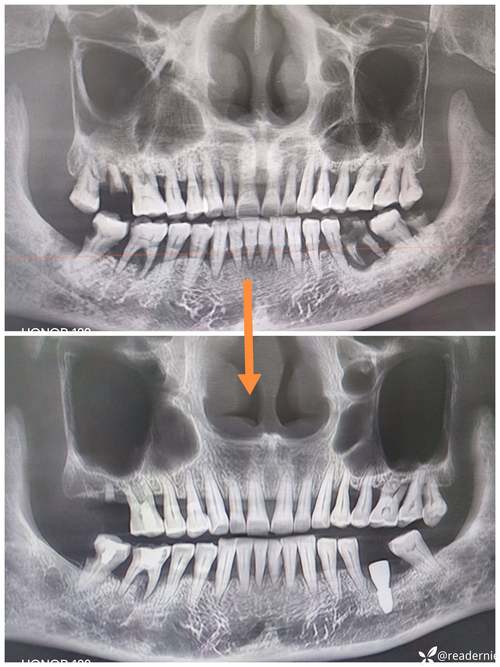
Fig. 5 Nitinol Spinal Rod Scoliosis X-Ray
3.2 Cardiovascular Interventions
In the field of cardiovascular intervention, shape memory alloys (SMAs) have driven technological innovations in vascular stents, occluders, and filters by leveraging their superelasticity and shape memory effects. Self-expanding vascular stents, a typical application of superelasticity, leverage the phase transformation properties of NiTi alloys to enable minimally invasive treatment: the stent is compressed into the delivery system (diameter 1–2 mm) in its low-temperature martensitic state, then delivered via a catheter to the affected site. Body temperature triggers the austenitic phase transformation, causing the stent to automatically restore its pre-set diameter (e.g., radial support force of 0.35 N/mm for coronary stents), eliminating the need for high-pressure balloon expansion. Its flexibility is optimized through laser cutting or weaving processes, with bending stiffness as low as 0.3–0.5 N·m^2, enabling adaptation to complex anatomical structures such as the aortic arch. Additionally, the fatigue resistance of NiTi alloys (e.g., the Eduratec stent withstands 100 million pulsatile cycles) ensures long-term stability, making it suitable for various locations, including peripheral vessels, coronary arteries, cerebral vessels, and the aorta.
The occluder utilizes the dual-phase shape memory effect of SMA to achieve precise treatment: Atrial septal defect, patent foramen ovale, or patent ductus arteriosus occluders are in a straight linear shape in the low-temperature martensitic state. After being delivered to the heart cavity via a catheter, body temperature triggers their restoration to a disc-waist-disc structure, with the waist embedded in the defect site and the dual discs anchoring the left and right atria/arterial sides, achieving minimally invasive occlusion. Clinical data show that NiTi occluders can reduce postoperative VAS pain scores in patients with patent ductus arteriosus to 2.1 ± 0.8 (compared to 5.3 ± 1.2 with traditional surgery) and shorten hospital stays to 3 days. Their superelastic design (with a strain recovery rate of 99.2%) can adapt to the dynamic deformation of cardiac contraction and relaxation, reducing the risk of residual shunting.
The inferior vena cava filter optimizes venous thromboembolism treatment through the NiTi alloy's resistance to bending and thrombus capture capability: the filter remains compressed within the delivery sheath and, upon release, relies on its superelasticity to restore its umbrella-shaped structure. The filter mesh aperture design (typically 1–2 mm) can intercept over 95% of thrombi while allowing normal blood flow. The fatigue life of NiTi alloy (e.g., filter fracture rate <1% at 5-year follow-up) ensures long-term safety, while its low elastic modulus (40–60 GPa) reduces vascular wall irritation and lowers the incidence of phlebitis.
These devices achieve a transition from passive support to active adaptation and from open surgery to minimally invasive intervention through the phase-change mechanism and structural optimization of SMA. Their core advantages include: a balance between flexibility and radial support force provided by superelasticity (e.g., coronary stent bending stiffness of 0.4 N·m^2, radial force of 0.35 N/mm), precise positioning and deployment achieved through shape memory effects (e.g., occluder positioning error <1 mm), and long-term stability enabled by biomechanical adaptation (e.g., filter patency rate of 98% after 5 years). These innovations offer safer and more efficient treatment options for cardiovascular diseases.
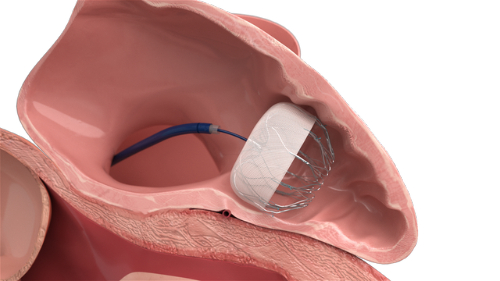
Fig. 6 Cardiac Occluder
3.3 Dentistry
In the field of oral medicine, shape memory alloys (SMAs) have driven technological innovations in orthodontics, endodontics, prosthodontics, and maxillofacial surgery due to their superelasticity and biocompatibility. Orthodontic archwires, one of the most established applications, utilize the superelasticity of NiTi alloys to provide continuous, gentle corrective forces (0.5–1.5 N), significantly reducing the frequency of follow-up visits (clinical data shows that follow-up intervals can be extended to 8–12 weeks, a 40% improvement over traditional stainless steel wires) while enhancing patient comfort (Visual Analogue Scale [VAS] scores reduced to 2.3 ± 0.6, compared to 4.8 ± 1.1 for traditional wires). Wires with different phase transition temperatures can be adapted to different treatment stages: low-temperature martensitic phase (Af < 25°C) wires are suitable for the initial alignment stage, utilizing low stiffness (elastic modulus of 28 GPa) to reduce periodontal ligament damage; austenitic phase (Af > 35°C) wires provide stable orthodontic force in later stages, ensuring treatment efficacy through a strain recovery rate of 99.3%.
NiTi root canal files optimize treatment safety through superelasticity: Traditional stainless steel files, due to their high rigidity, are prone to root canal deviation (incidence rate 12–18%) and needle breakage (risk 3–5%). In contrast, the martensitic phase transformation properties of NiTi files enhance flexibility by threefold in curved root canals, enabling adaptation to canals with curvatures exceeding 30°, significantly reducing deviation rates (<2%) and needle breakage rates (<0.5%). Clinical studies show that the success rate of single-visit root canal treatment using NiTi files reaches 92%, a 25% improvement over stainless steel files, particularly suitable for calcified or narrow root canals.
NiTi clasps and connectors in denture restoration achieve a balance between retention force and comfort through superelasticity: The clasp is easy to adjust in the low-temperature martensitic state and returns to its pre-set shape after reheating via the austenitic phase transformation, increasing retention force to 3–5 N (compared to 1–2 N for traditional cobalt-chromium alloys). Additionally, the low elastic modulus (40–60 GPa) reduces pressure on the gums (more uniform pressure distribution, with a 60% reduction in mucosal irritation index). The connector features a woven structure design with excellent fatigue resistance (no fractures after 10^5 cycles), making it suitable for precision attachment systems in removable partial dentures.
In maxillofacial surgery, fracture fixation splints and traction devices utilize SMA's shape memory effect for minimally invasive treatment: the splint is shaped at low temperatures to conform to the bone surface, and upon rewarming, phase transformation generates a fixation force of 50-100 N, avoiding soft tissue damage caused by traditional wire ligation; The traction device achieves progressive bone segment adjustment through periodic temperature control (e.g., activation at 40°C and relaxation at 20°C). Clinical cases show that mandibular fracture healing time is reduced to 6 weeks (8–10 weeks with traditional methods), and no secondary surgery is required to remove internal fixation devices.
The above applications achieve a leap from passive adaptation to active regulation and from rigid devices to flexible adaptation through the deep integration of SMA's phase transition mechanism with clinical needs. Its core advantages include: mild, sustained force provided by superelasticity (orthodontic correction force error <0.2N), precise shape recovery achieved through shape memory effects (ring positioning error <0.5mm), and enhanced treatment safety through biomechanical adaptation (root canal treatment needle breakage rate <0.5%). These innovations offer more efficient and comfortable solutions for the treatment of oral diseases.
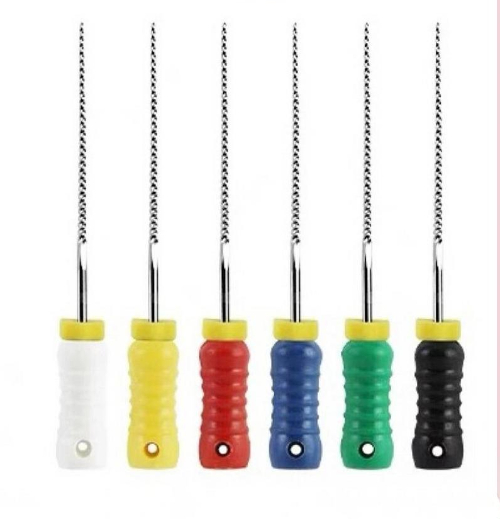
Fig. 7 Nitinol Endodontic File
3.4 Interventional Radiology & Minimally Invasive Surgery
In minimally invasive interventional procedures and surgical operations, shape memory alloys (SMAs) significantly enhance the maneuverability and adaptability of medical devices through their superelasticity and shape memory effects. Superelastic guidewires and catheters, leveraging the phase transformation properties of NiTi alloys, demonstrate exceptional performance in complex anatomical structures: guidewires exhibit high flexibility (bending radius <1 mm) in the low-temperature martensitic state, enabling adaptation to the 360° spiral course of coronary arteries; after rewarming, the austenitic phase transformation confers high fracture toughness (fracture strain >8%), combined with the "J"-shaped design at the distal end of the guidewire, enabling precise torque control (torque transmission efficiency up to 95%). The catheter optimizes tip flexibility through laser cutting technology, enabling a 5F catheter to smoothly traverse the tortuous segment of the carotid artery (curvature radius 2 mm). The super-elastic scaffold provides sufficient support (axial strength 12 N) to prevent vascular damage caused by the "fish mouth effect."
Grasping and stone retrieval instruments, such as stone baskets and foreign body forceps, utilize the dual-stage shape memory effect of SMA for minimally invasive procedures: The instruments maintain a straight linear shape in the low-temperature martensitic state. After being delivered to the target site via the endoscopic channel, body temperature triggers their restoration to the pre-set basket structure (e.g., four-claw design), enabling the retrieval of stones or foreign bodies with diameters ranging from 2 to 10 mm. The strain recovery rate reaches 99.5%, ensuring a single retrieval success rate exceeding 90%. Clinical data show that ureteroscopic lithotripsy (URSL) using NiTi stone baskets reduces procedure time to 25 minutes (compared to 40 minutes with traditional methods), with a post-operative residual stone rate <5%.
Aneurysm embolization coils optimize packing efficacy through partial shape memory effects: The coils are compressed within the microcatheter (diameter 0.015-0.021 inches) and, upon release, adapt to the aneurysm cavity's morphology via superelasticity (packing density >30%). Additionally, the restoring force generated by the martensitic phase transformation reduces the risk of coil displacement (recurrence rate <2% at 1-year follow-up). For wide-neck aneurysms, NiTi coils with a three-dimensional woven structure can form a stable "basket," combined with stent-assisted technology, to increase embolization density to 95%.
Deformable endoscopes and self-expanding retractors simplify the surgical process through the active deformation capability of SMA: The endoscope insertion section uses a NiTi alloy spiral tube structure that automatically returns to a pre-set bending angle (e.g., 90°) at body temperature, reducing the need for manual bending adjustments by the surgeon; the self-expanding retractor is compressed and loaded at low temperatures, and upon release, it rapidly expands the surgical field using superelasticity (expansion time <5 seconds), avoiding the continuous tissue compression caused by traditional retractors (with a 40% improvement in pressure distribution uniformity). These designs increase the operational space by 30% in laparoscopic cholecystectomy (LC) and other surgeries, reducing surgery time to 35 minutes (50 minutes with traditional methods).
The aforementioned instruments achieve a leap from passive operation to active adaptation and from linear control to three-dimensional regulation through the deep integration of SMA's phase-change mechanism with clinical needs. Their core advantages include: a balanced combination of anti-folding properties and flexibility provided by superelasticity (wire breakage strain of 8% vs. 3% for stainless steel), precise shape recovery achieved through shape memory effects (stone basket positioning error <1 mm), and minimally invasive effects enabled by biomechanical adaptation (endoscope insertion diameter reduced to 2.8 mm). These innovations provide safer and more efficient solutions for complex interventional and surgical procedures.
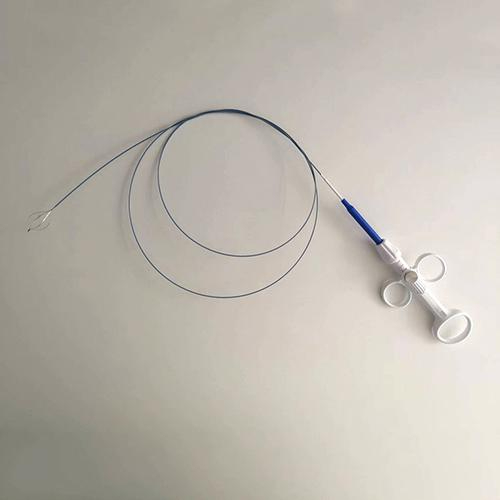
Fig. 8 Nitinol Stone Basket
6 Conclusion
Shape memory alloys (SMAs), particularly nickel-titanium (NiTi) alloys, demonstrate unique and irreplaceable value in the medical field due to their superelasticity and shape memory effect (SME). Their superelasticity provides sustained, gentle corrective forces—for example, orthodontic wires reduce the frequency of follow-up visits—and adapts well to complex anatomical structures, such as optimizing the flexibility of cardiovascular stents. Meanwhile, the shape memory effect enables minimally invasive implantation and active deformation of medical devices. For instance, fracture fixation splints can restore compressive stress at body temperature. These properties directly address clinical pain points, including insufficient rigidity, complex operation procedures, and poor long-term efficacy of traditional devices.
Looking ahead, with technological breakthroughs in biodegradable SMA (such as magnesium alloys) and active devices (such as electrically driven recovery devices), SMA is poised to play a more revolutionary role in smart medical devices, personalized therapy, and minimally invasive surgery—for example, 3D-printed scaffolds customized to a patient's anatomical structure and smart implants that can respond in real-time to physiological signals. These advancements will further drive the transition of medicine from "passive repair" to "active regulation," ultimately achieving safer, more efficient, and personalized disease treatment.
Related Reading:
The Future is now—Shape Memory Alloys
Ni-Ti Shape Memory Alloys and Their Constituents
Superelasticity and Shape Memory of Nitinol
How to finalize your demands for Nitinol
Experiment on Magic Shape Memory Nitinol Wire by SAM
Top 6 Medical Applications of Nitinol
References
[1] Kinji. Sato, Hideaki. Goto, Nobuhisa. Tomita, THE SHAPE MEMORY HEAT TREATMENT AND ENVIRONMENTAL TEMPERATURE FOR IMPROVEMENT OF FORMING LIMIT ON TI-NI BASED SHAPE MEMORY ALLOY, Editor(s): W.B. LEE, Advances in Engineering Plasticity and its Applications, Elsevier, 1993, Pages 1117-1125, ISBN 9780444899910, https://doi.org/10.1016/B978-0-444-89991-0.50153-0.
[2] N.B Morgan, Medical shape memory alloy applications—the market and its products, Materials Science and Engineering: A, Volume 378, Issues 1–2, 2004, Pages 16-23, ISSN 0921-5093, https://doi.org/10.1016/j.msea.2003.10.326.
[3] Tarniţă D, Tarniţă DN, Bîzdoacă N, Mîndrilă I, Vasilescu M. Properties and medical applications of shape memory alloys. Rom J Morphol Embryol. 2009;50(1):15-21. PMID: 19221641.
[4] Ward B, Parry J. Routine intramedullary screw versus plate fixation of lateral malleolus fractures. Eur J Orthop Surg Traumatol. 2025 May 31;35(1):222. doi: 10.1007/s00590-025-04341-1. PMID: 40448862.
[5] Behrang Tavousi Tehrani, Shervin Shameli-Derakhshan, Hossein Jarrahi, An overview on Active Confinement of Concrete column and piers Using SMAs. February 2017, https://www.researchgate.net/publication/310505502_An_overview_on_Active_Confinement_of_Concrete_column_and_piers_Using_SMAs
 Chin Trento