Products
 Bars
Bars
 Beads & Spheres
 Bolts & Nuts
 Crucibles
 Discs
Discs
 Fibers & Fabrics
 Films
Films
 Flake
Flake
 Foams
Foams
 Foil
Foil
 Granules
 Honeycombs
 Ink
Ink
 Laminate
 Lumps
Lumps
 Meshes
 Metallised Film
 Plate
Plate
 Powders
 Rod
Rod
 Single Crystals
 Sputtering Target
 Tubes
Tubes
 Washer
 Wires
Wires
 Converters & Calculators
 Write for Us



Case Study: Elevating Paper Applications with Micro Boron Nitride

Introduction
The paper and pulp industry is undergoing transformational changes driven by the pursuit of higher-quality products and sustainable practices. Micro Boron Nitride, known for its exceptional thermal conductivity, lubrication properties, and electrical insulation, emerges as a potential game-changer. This article investigates its integration into the paper and pulp manufacturing process, shedding light on its profound impact.
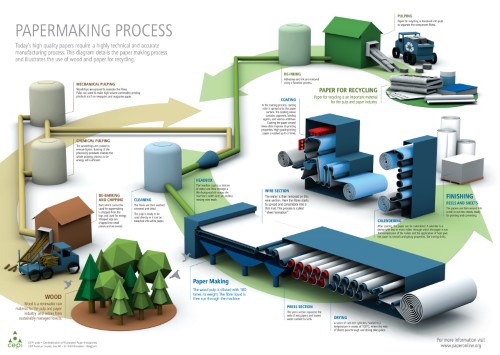 [1]
[1]
Figure 1. Paper Making
What Is Micro Boron Nitride?
Micro BN, consisting of hexagonal boron nitride nanoparticles, possesses a unique combination of attributes. Its high thermal conductivity ensures efficient heat dissipation, while excellent lubrication properties reduce friction and wear. Moreover, its electrical insulation capabilities mitigate static electricity concerns in the production process.
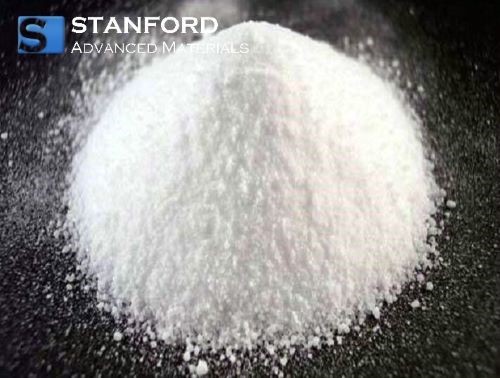
Figure 2. Micro Boron Nitride
How Is Micro Boron Nitride Used in the Paper and Pulp Industry?
With these exceptional properties, Micro BN is making noteworthy inroads into the paper and pulp industry. Here's how it is revolutionizing this sector:
Enhanced Thermal Management: Micro BN's remarkable thermal conductivity lends itself to effective heat dissipation in paper and pulp processing. Thus, manufacturers can prevent thermal degradation and maintain structural integrity during high-temperature processes.
Improved Lubrication: The inherent lubricating properties make it an ideal additive in the production of pulp, paper, and paperboard. The addition of microboron nitride extends the products’ lifespan and minimizes maintenance requirements.
Flame Retardancy: Micro BN's flame-retardant characteristics contribute to enhanced safety in paper and pulp products, thus reducing the risk of combustion and enhancing fire safety.
Enhanced Mechanical Properties: It can improve tensile strength, tear resistance, and dimensional stability.
Barrier Coatings: Barrier coatings made from Micro BN in paper applications can inhibit the penetration of liquids and gases, enhancing the shelf life and quality of packaged goods.
Eco-Friendly Solutions: Micro BN's non-toxic and eco-friendly attributes align with sustainable practices in the paper and pulp industry.
Case Study: Micro Boron Nitride in the Paper and Pulp Industry
--The Challenge
In the pursuit of enhancing paper quality and performance, a customer embarked on the integration of Micro Boron Nitride into paper applications. Their focus was on discerning the essential specifications that would maximize its effectiveness. Acknowledging the critical role of particle size and purity, SAM meticulously considered these factors to ensure the optimal incorporation of Micro Boron Nitride.
--The Solution
Particle Size: Uniformity in particle size is paramount when incorporating BN Powder into paper. Optimal dispersion and compatibility with paper fibers are achieved with fine powder sizes. SAM recommends selecting BN Powders within the 1-10 microns range, a balance that facilitates seamless integration and enhances paper characteristics.
Purity: Purity emerges as a fundamental quality indicator in BN Powder selection. To uphold the integrity of paper products, high-purity BN Powders are advised. SAM endorses BN Powders boasting purity levels exceeding 99%, ensuring minimal interference with paper properties.
--The Results
The strategic infusion of BN Powder optimizes paper quality, promotes process efficiency, and supports environmental sustainability.
Conclusion
In summary, the integration of Micro Boron Nitride (BN) into the paper and pulp industry is ushering in a new era of advanced processing techniques and enhanced material properties. By leveraging its thermal conductivity, lubricating qualities, flame retardancy, and mechanical reinforcement, manufacturers can create high-performance paper and pulp products that meet stringent industry demands while contributing to safety, efficiency, and sustainability. Stanford Advanced Materials (SAM) is a supplier of quality Nano Materials. Send us an inquiry if you are interested.
Reference:
[1] CEPI. About Pulp & Paper. CEPI. https://www.cepi.org/about-cepi/history-of-pulp-paper/
 Chin Trento