
 Products
 Bars
Bars
 Beads & Spheres
 Bolts & Nuts
 Crucibles
 Discs
Discs
 Fibers & Fabrics
 Films
Films
 Flake
Flake
 Foams
Foams
 Foil
Foil
 Granules
 Honeycombs
 Ink
Ink
 Laminate
 Lumps
Lumps
 Meshes
 Metallised Film
 Plate
Plate
 Powders
 Rod
Rod
 Single Crystals
 Sputtering Target
 Tubes
Tubes
 Washer
 Wires
Wires
 Converters & Calculators
 Write for Us



Case Study: Titanium Grade Selection for A Chemical Reactor System

Introduction
Stanford Advanced Materials (SAM), a global supplier of advanced metals and engineered materials, recently partnered with a chemical equipment fabricator in Houston, Texas, USA. The company was building a new reactor system for acetic acid processing and wanted to ensure long-term durability without exceeding budget targets.
The Challenge
From the start, the goal was clear: build a reactor that could handle continuous acetic acid service while fully meeting engineering and safety standards. But a few key issues surfaced during the review.
First, the original plan called for the use of Titanium Grade 5 in the construction of key components. Grade 5 is a strong and popular titanium alloy because of its aluminum and vanadium components. Nevertheless, Grade 5 is also substantially more expensive than other commercially pure titanium alloys. In many chemical processing applications, Grade 5 is often chosen as a safe default option when corrosion resistance is a factor—but this does not necessarily mean that Grade 5 is the best option in a given situation.
Second, the cost of materials was consuming a large portion of the overall project expenditure. Grade 5 is more expensive because of its higher cost of production due to the presence of alloying elements, more stringent mechanical properties, and higher processing complexity. The client wanted to cut costs without sacrificing corrosion resistance or compliance.
Lastly, we examined the specific service conditions of the reactor. The reactor would be handling acetic acid at temperatures not exceeding 120°C, at moderate pressures, and in continuous industrial operation. This presented a critical question: Was Grade 5 necessary for this particular application?
The Technical Review
SAM's engineering team conducted a full material suitability assessment. We looked at corrosion performance in acetic acid, temperature limits, mechanical strength requirements, and fabrication considerations such as weldability.
Corrosion Resistance
Commercially pure Titanium Grade 2 is famous for its superior corrosion resistance in organic acids, such as acetic acid. In environments with temperatures below 120°C, it is comparable to Grade 5.
The explanation for this is the titanium dioxide (TiO₂) passive oxide layer, which is naturally formed on the titanium surface. This thin layer is highly resistant to chemical attack. In the given temperature and process conditions, this layer is maintained and functions very effectively.
After analyzing the data on corrosion resistance and actual experience, we have verified that Grade 2 would offer the same level of corrosion resistance as Grade 5 in this case.
Mechanical Strength
It is true, however, that Grade 5 has a much higher tensile strength than Grade 2. But strength must correlate with design needs, not surpass them unnecessarily.
In the present scenario, the pressure ratings were not extreme, the wall thickness design had already factored in a generous safety margin, and the temperature was nowhere near critical levels. The enhanced strength of Grade 5 simply did not add up to a noticeable benefit.
The Solution and Results
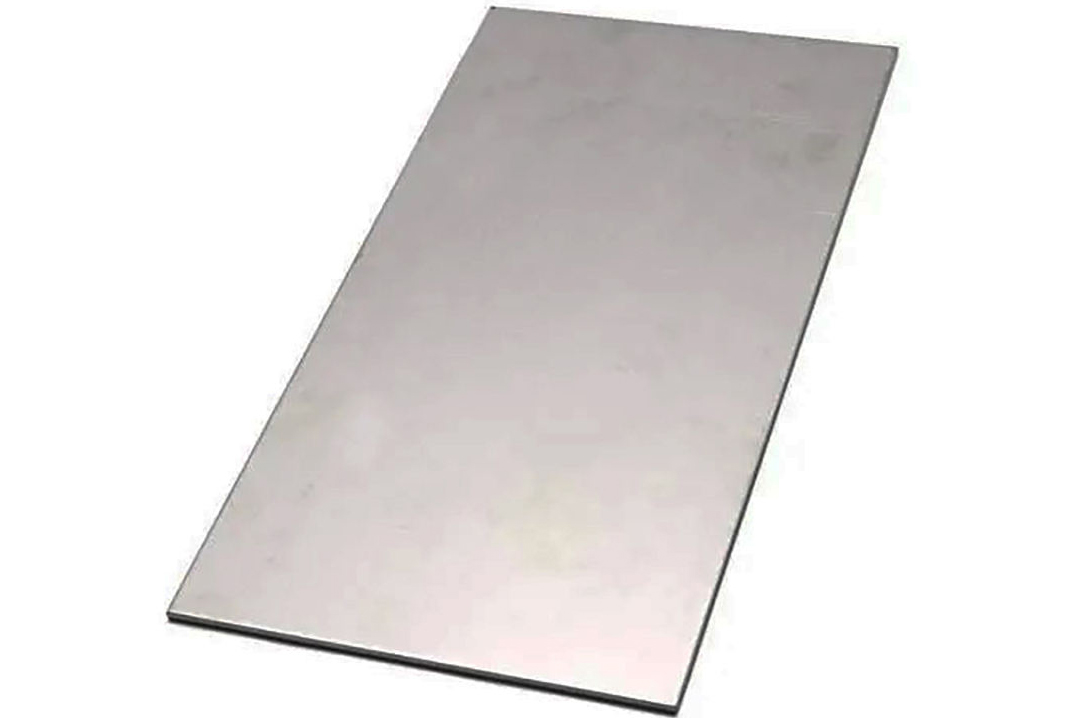
Based on our analysis, SAM recommended switching from Titanium Grade 5 to Titanium Grade 2 for the primary reactor components.
The result? Equivalent corrosion performance at roughly 35% lower raw material cost. The decision was both technically sound and financially strategic.
The impact was significant across several areas:
Material Cost Optimization
By replacing Grade 5 with Grade 2, the client reduced total material costs for the reactor system by more than 25%.
Maintained Corrosion Performance
Corrosion resistance remained fully intact. Grade 2's stable passive oxide layer provided reliable protection in acetic acid service below 120°C.
Compliance and Safety Assurance
The material change was completed under formal engineering review, with updated design documentation, validated welding procedures, and full material certification. There were no compromises in safety or regulatory compliance.
Stronger Project Economics
Lower material costs improved overall project feasibility and strengthened the client's competitiveness in bidding and contract negotiations.
What You Get with SAM's Titanium Products
At Stanford Advanced Materials, we like to think of ourselves as more than a titanium material supplier—we are a technical partner for the long term.
We provide a comprehensive selection of titanium materials, including fittings, flanges, fasteners, wire, rod, sheet, plate, foil, strip, pipe, tube, mesh, powder, and foam. Our materials have a purity of 99% and meet specifications such as ASTM B265 and ASTM F67.
Titanium Grade 1 (UNS R50250) and Grade 2 (UNS R50400) offer reliable mechanical properties, with tensile strength of 240-345 MPa, yield strength of 138-275 MPa, and elongation of 20-24%. Most importantly, they offer excellent corrosion resistance due to the stable passive oxide layer of titanium.
In addition to material supply, we also provide process condition analysis, compatibility analysis for fabrication, and full certification and compliance paperwork.
Conclusion
By carefully evaluating the actual service environment—acetic acid below 120°C—SAM demonstrated that Titanium Grade 2 could safely replace Grade 5. The outcome was a more than 25% reduction in material costs, preserved corrosion resistance, validated fabrication procedures, and full regulatory compliance. For more information, please check Stanford Advanced Materials (SAM).
 Dr. Samuel R. Matthews