
 Products
 Bars
Bars
 Beads & Spheres
 Bolts & Nuts
 Crucibles
 Discs
Discs
 Fibers & Fabrics
 Films
Films
 Flake
Flake
 Foams
Foams
 Foil
Foil
 Granules
 Honeycombs
 Ink
Ink
 Laminate
 Lumps
Lumps
 Meshes
 Metallised Film
 Plate
Plate
 Powders
 Rod
Rod
 Single Crystals
 Sputtering Target
 Tubes
Tubes
 Washer
 Wires
Wires
 Converters & Calculators
 Write for Us



A Guide to Corrosion-Resistant Metals

What are Corrosion-Resistant Metals?
Corrosion-resistant metals are materials that survive in harsh conditions. They slowly form a protecting layer that allows them to withstand rust and degradation. These metals are not immune to damage but resistant to it. However, they last longer in moist conditions, chemicals, or seawater. These metals are applied in most industries due to the reason that they make buildings stable for decades. They are applied in construction, transportation, and even domestic items. Their usability keeps maintenance problems at bay while gaining strength.
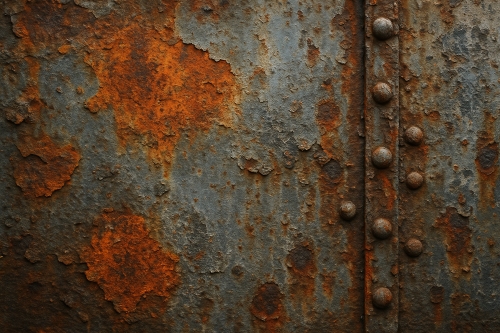
What Makes A Metal Corrosion Resistant?
The secret is that the metal has a tendency to seal itself from the environment. At times, a metal surface will have a thin oxide layer form.
Aluminum, for example, forms an aluminum oxide layer that shields further against corrosion. Stainless steel uses chromium. The chromium releases a protective covering that keeps oxygen and water from permeating to the inner metal. Temperature and humidity are major players. Less reactive metals are able to withstand environmental stress. Alloys are made to combine the desirable properties of metals in pure form. Their formation can be altered to render them more resistant. Engineers prefer such alterations because they lead to metals that endure long-term performance.
Further reading: Overview of the Corrosion Resistance of Common Special Metal Materials
Types of Corrosion-Resistant Metals
Stainless steel, aluminum alloys, nickel alloys, and copper alloys are the most used metals, with iridium remaining the most corrosion-resistant metal found.
--Stainless Steel
Stainless steel is highly valued for having a high percentage of chromium, which provides excellent resistance to rust, staining, and general corrosion. It can be rolled in various grades, shapes, and sizes because it is so versatile and is suitable to a very wide range of applications and situations.
--Aluminum Alloys
Aluminum alloys provide excellent resistance to corrosion, light weight, and ease of fabrication. They can be shaped into intricate forms and heat-treated to increase strength. Their corrosion resistance, however, in environments where there is a high water content, would be restricted and necessitate protection.
--Nickel Alloys
Nickel alloys are renowned for their improved corrosion resistance and mechanical properties, including resistance to wear and tear at high temperatures. Several nickel alloys have chromium or nickel-iron precipitation-hardening components, making them suitable for demanding industrial applications.
--Copper Alloys
Copper alloys combine excellent corrosion resistance with high conductivity and mechanical strength. They have widespread applications in marine equipment, piping systems, valves, pumps, fasteners, and others where conductivity and longevity are required.
Common Applications and Uses
1. Marine Applications
Copper alloys, stainless steel, and nickel alloys have typical applications in ships, offshore platforms, pumps, valves, and piping systems where exposure to saltwater and harsh conditions is common.
2. Food Processing
The preferred metal in food processing equipment, storage tanks, and cookware is stainless steel due to its non-toxic, rust-resistant, and clean characteristics.
3. Aerospace Industry
Aluminum and nickel alloys and titanium are extensively used for aircraft components, engines, and structural fittings to achieve a balance of light weight, strength, and resistance to corrosion required for performance and safety.
Conclusion
Corrosion-resistant metals are still a dependable choice in design and construction. Their corrosion- and rot-resistant qualities give them a big edge, be it industrial machinery or domestic items. The secret lies in the protective coating that comes naturally on these metals. Engineers and designers rely on them to minimize upkeep tasks and make products last longer. With a combination of general metal properties and effective alloying processes, such metals stand the tough tests of weather, chemicals, and heavy use.
Frequently Asked Questions
F: What is a corrosion-resistant metal?
Q: It is a metal that forms a natural barrier to fight rust and decay.
F: Why does stainless steel contain chromium?
Q: Chromium forms a protective barrier that avoids oxygen and water from causing rust.
F: Would these metals be appropriate for outdoor applications?
Q: Yes, they work well on outdoor buildings, bridges, and marine environments.
 Chin Trento