
 Products
 Bars
Bars
 Beads & Spheres
 Bolts & Nuts
 Crucibles
 Discs
Discs
 Fibers & Fabrics
 Films
Films
 Flake
Flake
 Foams
Foams
 Foil
Foil
 Granules
 Honeycombs
 Ink
Ink
 Laminate
 Lumps
Lumps
 Meshes
 Metallised Film
 Plate
Plate
 Powders
 Rod
Rod
 Single Crystals
 Sputtering Target
 Tubes
Tubes
 Washer
 Wires
Wires
 Converters & Calculators
 Write for Us



The Main Functional Bioceramics in Cancer Treatment

In cancer therapy, bioceramics are generally classified based on how they interact with tumors, tissues, and therapeutic agents. Each category plays a distinct role, from passive structural support to active tumor destruction and drug delivery.
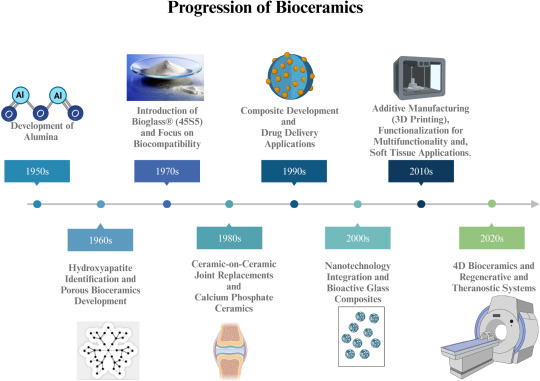
[1]
1. Calcium Phosphate Bioceramics – Structural Support and Local Therapy
Calcium phosphate bioceramics, especially hydroxyapatite (HA) and tricalcium phosphate (TCP), are the most commonly used bioceramics in cancer-related applications. Their close chemical resemblance to the natural mineral of bone makes them highly biocompatible and suitable for the treatment of bone cancers and bone metastases.
In cancer therapy, calcium phosphate ceramics are commonly employed following the surgical removal of the tumor. When a tumor is surgically removed from bone tissue, there can be substantial defects that lead to compromised mechanical integrity. Calcium phosphate bioceramics are used to fill these defects, restore mechanical integrity, and induce new bone growth by osteoconduction.
In addition to their use in restoring mechanical integrity, these materials can be designed for the local delivery of anticancer drugs. The porous nature of these materials enables the incorporation of chemotherapeutic agents into the ceramic matrix. When implanted, the drugs are slowly released at the tumor site, where they target cancer cells while avoiding systemic toxicity. This complementary role of mechanical reconstruction and local chemotherapy makes calcium phosphate bioceramics particularly useful in orthopedic oncology.
2. Bioactive Glasses – Tumor Microenvironment Modulation
Bioactive glasses are the second type of bioceramics that are widely used in cancer treatment. Unlike conventional materials, bioactive glasses have the ability to dynamically interact with the surrounding tissues through the release of biologically active ions like calcium, silicon, sodium, and phosphorus.
In cancer treatment, the ion release profiles may affect the tumor microenvironment. Some ions have been found to influence cell adhesion, angiogenesis, and immune response, which are important parameters in tumor development. Bioactive glasses can be tailored to inhibit tumor microenvironments and promote the regeneration of healthy tissues.
Bioactive glasses are also commonly used as drug carriers. Their high surface area and controllable degradation rates enable the controlled release of drugs. This property makes them useful for the delivery of anticancer drugs, antibiotics, or immunomodulators directly to the target site, especially in bone and soft tissue cancers.
3. Doped Bioceramics – Direct Anticancer Activity
Doped bioceramics are designed through the incorporation of specific therapeutic ions into the bioceramic structure. The doped bioceramic materials contain zinc, copper, strontium, silver, and iron, which are incorporated based on their biological and anticancer potential.
The doped bioceramic materials exert their anticancer potential through the release of therapeutic ions, which affect the metabolic, proliferative, and angiogenic potential of cancer cells. Zinc and copper ions induce oxidative stress in cancer cells, whereas strontium inhibits bone resorption caused by cancer. These therapeutic ions also stimulate the growth of normal tissue, creating a selective environment that supports normal cells over cancerous cells.
Doped bioceramic materials are significant because they represent a new class of "drug-free" therapeutic materials. The bioceramic materials act as the anticancer agents, eliminating the need to use chemotherapeutic agents. The use of doped bioceramic materials eliminates the need to consider chemoresistance and systemic toxicity.
4. Bioceramics for Hyperthermia and Photothermal Therapy
Some bioceramics are developed to actively kill cancer cells through the application of heat. Hyperthermia and photothermal therapy involve the use of bioceramic materials to produce heat in the presence of external stimuli, such as magnetic fields, microwaves, and near-infrared light. The bioceramic composite materials, which contain magnetic and photothermal materials, can be implanted in or around the tumor site. The bioceramic materials, upon exposure to external stimuli, produce heat, which destroys the tumor cells. The use of bioceramic materials in the treatment of cancer is particularly effective in the treatment of tumors that cannot be removed through surgery and chemotherapy. The advantage of using bioceramic materials in the treatment of cancer is the ability of the materials to support the healing of the tissue upon the removal of the implanted material. The bioceramic materials do not produce adverse reactions in the body.
5. Radiotherapy-Enhancing Bioceramics
In addition, bioceramics are also involved in the enhancement of the efficiency of radiotherapy treatments. This is because certain types of bioceramics, especially those containing elements of a higher atomic number, are able to increase the absorption of radiation locally. This ensures that the amount of radiation absorbed by the tumor is maximized, while the overall amount of radiation remains relatively low.
The bioceramics that enhance radiotherapy can be implanted in the areas close to the tumor and can also be included in scaffolds that are part of the radiotherapy process. This ensures that the impact of radiotherapy is maximized in the areas that are in the most need, thus reducing any collateral damage, especially in delicate areas of the body.
6. Bioceramic Scaffolds for Post-Treatment Regeneration
After cancer treatment—whether surgery, radiotherapy, or thermal ablation—tissue regeneration becomes a major clinical concern. Bioceramic scaffolds provide a supportive framework for cell attachment, vascularization, and tissue repair.
In bone cancer treatment, these scaffolds guide new bone formation while maintaining structural integrity. In soft tissue applications, ceramic-based composites can support healing and reduce inflammation. This regenerative function is critical for restoring patient mobility, function, and quality of life following aggressive cancer treatments.
Summary Table: Bioceramics in Cancer Treatment
|
Material Class |
Representative Materials |
Key Function |
Typical Cancer-Related Uses |
|
Calcium Phosphate Ceramics |
Hydroxyapatite (HA), β-Tricalcium Phosphate (β-TCP) |
Structural support, local drug delivery |
Bone defect repair after tumor resection, localized chemotherapy |
|
Bioactive Glasses |
Silicate-based, borate-based glasses |
Bioactivity, controlled ion release |
Bone metastases treatment, drug-eluting implants |
|
Doped Bioceramics |
HA/TCP doped with Zn, Cu, Sr, Ag |
Therapeutic ion release |
Tumor inhibition, infection-resistant implants |
|
Hyperthermia-Enabled Ceramics |
Ceramic–magnetic, ceramic–photothermal composites |
Local heat generation |
Minimally invasive tumor ablation |
|
Radiotherapy-Enhancing Ceramics |
High-density or doped ceramic materials |
Radiation sensitization |
Precision radiotherapy support |
|
Porous Bioceramic Scaffolds |
Porous HA, TCP, glass-ceramic composites |
Tissue regeneration |
Post-treatment bone and tissue regeneration |
Conclusion
Bioceramics work in cancer treatment through a combination of structural support, localized therapy, active tumor suppression, and tissue regeneration. From calcium phosphate scaffolds that repair bone after tumor removal, to doped ceramics that directly inhibit cancer cell growth, these materials offer versatile and highly targeted solutions. For more advanced bioceramics, please check Stanford Advanced Materials (SAM).
Reference:
[1] Lidiya Sonowal, Sanjeev Gautam, Lillian Tsitsi Mambiri, Dilip Depan,
Advancements of bioceramics in biomedical applications,
Next Materials, Volume 9, 2025, 101010,ISSN 2949-8228, https://doi.org/10.1016/j.nxmate.2025.101010.
 Dr. Samuel R. Matthews