Products
 Bars
Bars
 Beads & Spheres
 Bolts & Nuts
 Crucibles
 Discs
Discs
 Fibers & Fabrics
 Films
Films
 Flake
Flake
 Foams
Foams
 Foil
Foil
 Granules
 Honeycombs
 Ink
Ink
 Laminate
 Lumps
Lumps
 Meshes
 Metallised Film
 Plate
Plate
 Powders
 Rod
Rod
 Single Crystals
 Sputtering Target
 Tubes
Tubes
 Washer
 Wires
Wires
 Converters & Calculators
 Write for Us



Perovskite Solar Cells: Comparison with Other Solar Technologies

Introduction
Solar power is an important aspect of our daily lives. I have seen many developments in the industry over the years. Many solar technologies have been discovered. One that has been recently in the news is perovskite solar cell. Today, we will see how these cells are unique compared to other solar technologies.
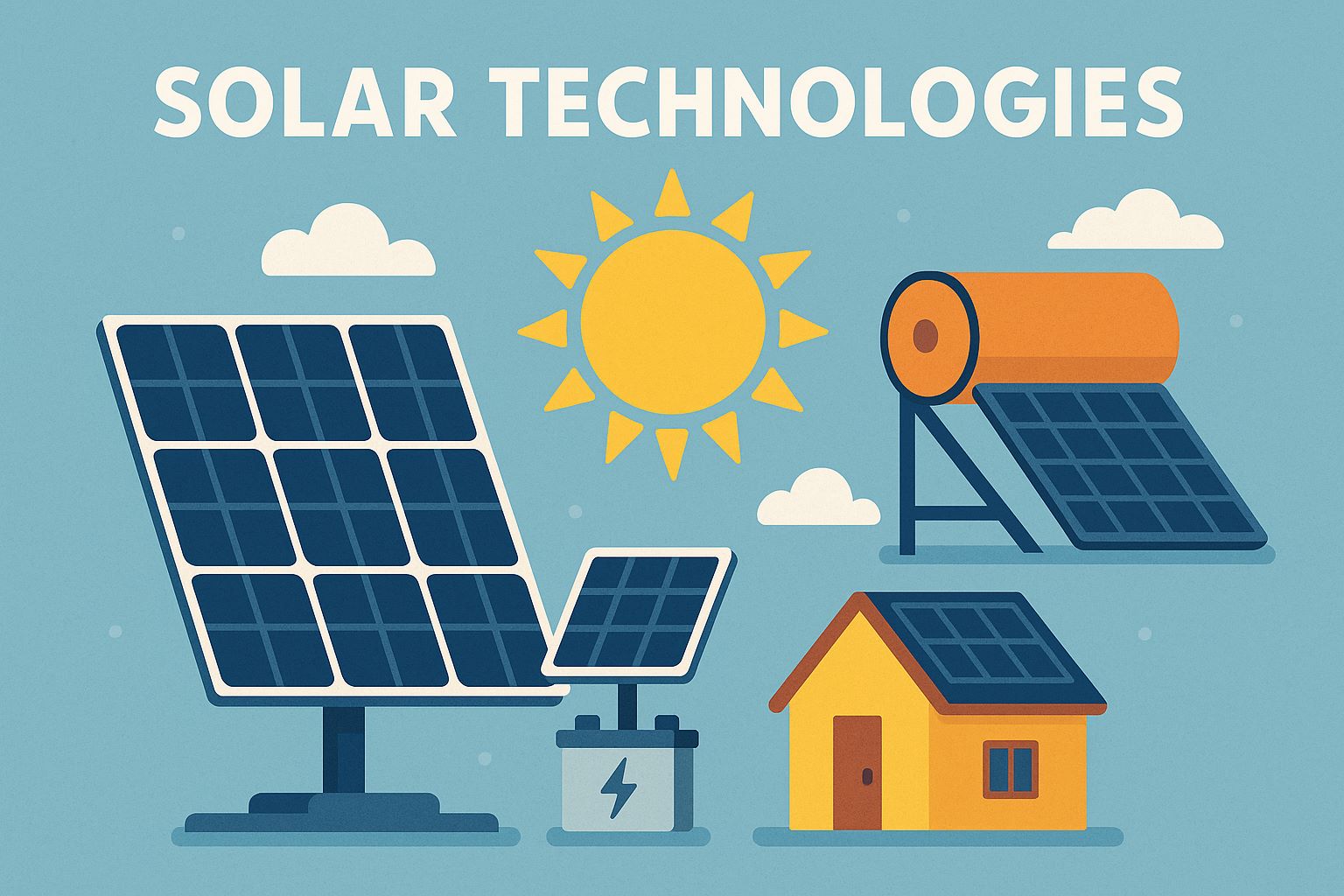
What Are Solar Energy Technologies
Solar energy technologies convert sunlight into power. The most common system is the photovoltaic panel, which transforms sunlight into electric current directly. Others also occur in solar thermal systems using the sun's heat. Solar panels on roofs are used by many homes to lower electricity bills. Bigger systems are used by farmers and businesses to lower bills. They have become more efficient and affordable over time. The technology continues as researchers and engineers create better materials and methods.
What Are Perovskite Solar Cells
Perovskite solar cells are built from material that has a perovskite crystal structure. They have drawn lots of attention because they are simple to make and might develop high efficiency. The early work had efficiencies of about 15 percent. Current studies now quote over 20 percent values. This means that perovskite solar cells can collect a high percentage of sun power. The process of creating perovskite cells uses inexpensive materials. Perovskite cells can be printed on low-temperature substrates. Production in the laboratory scale has already begun in some companies. More and more, there is optimism that perovskite solar cells are about to be utilized in useful products such as building-integrated solar panels and portable energy systems.
Types of Traditional Solar Technologies
A number of solar technology varieties are used. The most common variety is the silicon solar cell. There are two types of silicon cells: monocrystalline and polycrystalline. Monocrystalline cells are more efficient. Polycrystalline cells are less efficient but are cheaper. In addition to silicon, there are thin-film solar cells. Thin-film solar cells use materials like cadmium telluride and copper indium gallium selenide. Thin-film cells are also flexible and can be applied to curved surfaces. A few more recent technologies use organic dyes to collect solar energy. The materials used and manufacturing process vary depending on each type. All have strengths and weaknesses regarding cost, efficiency, and longevity.
Comparison with Other Solar Technologies
Perovskite solar cells have some desirable characteristics. They are made through a low-cost and affordable process. They have increased in efficiency at a very fast pace in recent years. They are different from silicon cells, as they can be made at low temperatures. This can cut costs in manufacturing and reduce energy usage in manufacture.
But perovskite solar cells are not without some challenges. Traditional silicon solar cells have a lengthy history. They are durable and work well in a wide range of weather. Many silicon panels currently in service were installed and have shown lifetimes of more than 25 years. Perovskite materials, however, tend to degrade faster with water and heat. Scientists are still working on stabilizing them better with better processing techniques and overlying layers.
The examples for comparison of the other feature are flexibility and weight. Perovskite cells are possibility to make. This will open up possibilities for applications such as foldable and thin solar panels in cars or mobile phones. Silicon cells are heavier and stiffer. In terms of efficiency, both the technologies are improving. Silicon solar cells broadly offer efficiency in the range of 15 to 22 percent in commercial applications. Perovskite cells are close to performance even at early stages, and scope for improvement exists under laboratory conditions.
Moreover, manufacturing process differs. Silicon cells are high-temperature and energy-consuming purification. Perovskite cells are solution-based synthesis that is less expensive. Despite these strengths, long-term stability in perovskite cells is not as well established. In brief, there is a place for every technology. The choice depends on cost, conditions of installation, and life expectancy expectations.
Conclusion
Simply put, solar power is an economy of plural technologies. Perovskite solar cells are promising and highly efficient as well as being low-cost to produce. They are flexible as well, as opposed to most standard cells. However, their long-term stability remains under study. Standard solar cells like silicon panels have proven effective for decades of service. They remain a safe choice due to their longevity and efficiency. Scientists and engineers are continually attempting to increase the stability of perovskite solar cells. As more research is conducted, they will be able to compete with or exceed the performance of conventional technologies. In the end, both solar cells play important roles in the transition towards sustainable energy. For more information, please check Stanford Advanced Materials (SAM).
Frequently Asked Questions
F: What are perovskite solar cells?
Q: They are solar cells made of materials that have perovskite crystal structure. They promise to be high efficiency and low cost.
F: How do perovskite solar cells compare to silicon solar cells?
Q: Perovskite cells are less expensive to produce and can be flexible. Silicon cells offer proven lifespan and stability.
F: What is the biggest challenge with perovskite solar cells?
Q: Their long-term stability in heat and moisture is the biggest challenge.
 Chin Trento