
 Products
 Bars
Bars
 Beads & Spheres
 Bolts & Nuts
 Crucibles
 Discs
Discs
 Fibers & Fabrics
 Films
Films
 Flake
Flake
 Foams
Foams
 Foil
Foil
 Granules
 Honeycombs
 Ink
Ink
 Laminate
 Lumps
Lumps
 Meshes
 Metallised Film
 Plate
Plate
 Powders
 Rod
Rod
 Single Crystals
 Sputtering Target
 Tubes
Tubes
 Washer
 Wires
Wires
 Converters & Calculators
 Write for Us



What Is the Difference between Electrostriction and Piezoelectricity?

What Is Electrostriction?
Electrostriction refers to the deformation of dielectric materials when subjected to an electric field. Unlike piezoelectricity, which occurs only in specific materials lacking a center of symmetry, electrostriction is a universal phenomenon present in all dielectric substances. The deformation is quadratic with respect to the electric field, meaning the strain is proportional to the square of the applied field strength.
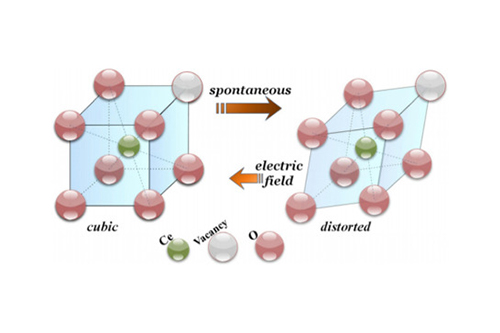
Mechanism of Electrostriction
The electrostrictive effect arises due to the alignment of molecular dipoles within the material when an electric field is applied. This alignment causes a redistribution of charges, leading to a change in the material's dimensions. The process is reversible, and the material returns to its original shape once the electric field is removed.
Applications of Electrostriction
Electrostriction finds applications in various fields, including:
Actuators: Used in precise movement control systems.
Sensors: Employed in devices that detect changes in electric fields.
Energy Harvesting: Utilized in converting mechanical energy into electrical energy.
Medical Devices: Incorporated in imaging and diagnostic equipment.
Advantages and Limitations
Electrostriction offers several benefits:
Universality: Applicable to all dielectric materials.
High Precision: Suitable for applications requiring exact movement control.
Energy Efficiency: Low energy consumption in actuators and sensors.
Despite its advantages, electrostriction has some limitations:
Material Constraints: Performance depends on the dielectric properties of the material.
Response Time: May have slower response compared to piezoelectric materials.
Temperature Sensitivity: Extreme temperatures can affect performance.
What Is Piezoelectricity?
Piezoelectricity is the ability of certain materials to generate an electric charge in response to applied mechanical stress. This effect occurs in materials that lack a center of symmetry, such as quartz and certain ceramics. Unlike electrostriction, piezoelectricity is a linear effect, where the generated charge is directly proportional to the applied stress.
Electrostriction vs Piezoelectricity
While both electrostriction and piezoelectricity involve the interaction between electric fields and mechanical deformation, they differ in their mechanisms and material requirements.
|
Feature |
Electrostriction |
Piezoelectricity |
|
Material Requirement |
All dielectric materials |
Specific non-centrosymmetric materials |
|
Relationship to Field |
Quadratic dependence on electric field |
Linear dependence on mechanical stress |
|
Reversibility |
Reversible deformation |
Reversible charge generation |
|
Applications |
Actuators, sensors, energy harvesting |
Transducers, sensors, actuators |
|
Temperature Dependence |
Less sensitive to temperature changes |
Can be sensitive to temperature variations |
For more information, please check Stanford Advanced Materials (SAM).
Frequently Asked Questions
What materials exhibit electrostriction?
All dielectric materials, including ceramics, polymers, and glass, exhibit electrostrictive properties.
Is electrostriction the same as piezoelectricity?
No, while both involve deformation under electric fields, electrostriction occurs in all dielectric materials and has a quadratic relationship with the electric field, unlike the linear relationship in piezoelectricity.
Can electrostriction be used in energy harvesting?
Yes, electrostriction can be utilized to convert mechanical energy into electrical energy in energy harvesting applications.
What are common applications of piezoelectricity?
Piezoelectricity is commonly used in sensors, actuators, transducers, and various electronic devices requiring precise control and measurement.
How does temperature affect electrostrictive materials?
Extreme temperatures can alter the dielectric properties of electrostrictive materials, potentially affecting their performance and responsiveness.
 Chin Trento