Products
 Bars
Bars
 Beads & Spheres
 Bolts & Nuts
 Crucibles
 Discs
Discs
 Fibers & Fabrics
 Films
Films
 Flake
Flake
 Foams
Foams
 Foil
Foil
 Granules
 Honeycombs
 Ink
Ink
 Laminate
 Lumps
Lumps
 Meshes
 Metallised Film
 Plate
Plate
 Powders
 Rod
Rod
 Single Crystals
 Sputtering Target
 Tubes
Tubes
 Washer
 Wires
Wires
 Converters & Calculators
 Write for Us



The corrosion resistance of tantalum metal against metal melts

What is Tantalum?
Tantalum is a sensible choice whenever high corrosion resistance is required. Even though tantalum is not one of the noble metals, it is comparable to them in terms of chemical resistance. When exposed to air, tantalum forms a very dense oxide layer (Ta2O5) which protects the base material from aggression. This oxide layer, therefore, makes tantalum corrosion-resistant.
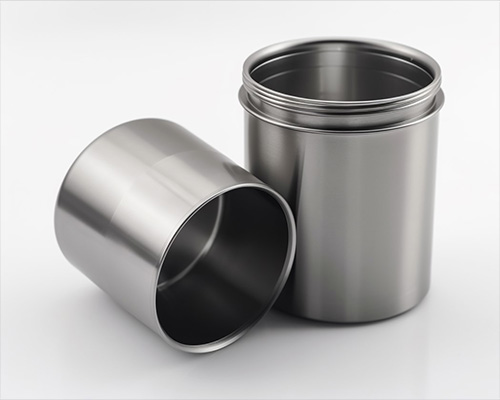
Tantalum metal: Corrosion Resistance Against Metal Melts
Tantalum is resistant to a series of metal melts such as Ag, Bi, Cd, Cs, Cu, Ga, Hg, K, Li, Mg, Na, and Pb, provided that these melts have a low oxygen content. However, the material is affected by Al, Fe, Be, Ni and Co.
|
Tantalum metal: Corrosion resistance against metal melts |
|||
|
Aluminum (AL) |
not resistant |
Lithium (Li) |
resistant at < 1000 °C |
|
Beryllium (Be) |
not resistant |
Magnesium (Mg) |
resistant at < 1 150 °C |
|
Lead (Pb) |
resistant at < 1000 °C |
Sodium (Na) |
resistant at < 1000 °C |
|
Cadmium (Ca) |
resistant at < 500 °C |
Nickel (Ni) |
not resistant |
|
Caesium (Cs) |
resistant at < 980 °C |
Mercury (Hg) |
resistant at < 600 °C |
|
Iron (Fe) |
not resistant |
Silver (Ag) |
resistant at < 1200 °C |
|
Gallium (Ga) |
resistant at < 450 °C |
Bismuth (Bi) |
resistant at < 900 °C |
|
Potassium (K) |
resistant at < 1000 °C |
Zinc (Zn) |
resistant at < 500 °C |
|
Copper (Cu) |
resistant at < 1300 °C |
Tin (Sn) |
resistant at < 260 °C |
|
Cobalt (Co) |
not resistant |
||
Chemical reactions arise very quickly when base materials such as tantalum are brought into contact with noble materials such as platinum. You should therefore take careful account of the behavior of tantalum in contact with other materials present in the system, especially when working at high temperatures.
Conclusion
Thank you for reading our article and we hope it can help you learn how to improve the properties of tantalum metal well. If you want to know more about tantalum metal and other refractory metals, we would like to advise you to visit Stanford Advanced Materials (SAM) for more information.
Stanford Advanced Materials (SAM) is a worldwide supplier of tantalum products and has over two decades of experience in the manufacture and sale of tantalum metal products, offering high-quality tantalum metals to meet customers' R&D and production needs. As such, we are confident that SAM will be your favorite tantalum metal supplier and business partner.
 Chin Trento