Products
 Bars
Bars
 Beads & Spheres
 Bolts & Nuts
 Crucibles
 Discs
Discs
 Fibers & Fabrics
 Films
Films
 Flake
Flake
 Foams
Foams
 Foil
Foil
 Granules
 Honeycombs
 Ink
Ink
 Laminate
 Lumps
Lumps
 Meshes
 Metallised Film
 Plate
Plate
 Powders
 Rod
Rod
 Single Crystals
 Sputtering Target
 Tubes
Tubes
 Washer
 Wires
Wires
 Converters & Calculators
 Write for Us



Potassium Ferrocyanide in Salt: A Safe and Approved Food Additive

Introduction
Potassium Ferrocyanide is a food additive used in the production of salt, which has been the subject of controversy for many years. While it is a common practice in many countries, concerns have been raised about its safety and potential health risks associated with its consumption. This article aims to address these concerns in detail, providing a better understanding of Potassium Ferrocyanide.
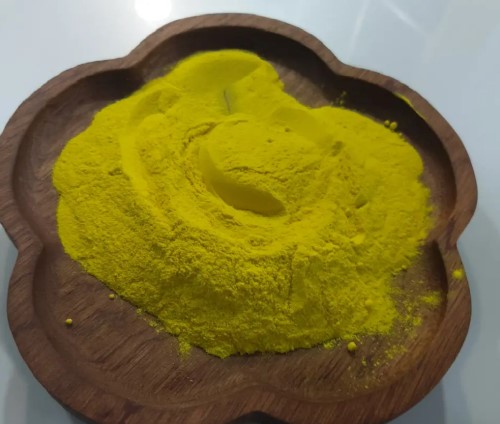
Figure 1. Potassium Ferrocyanide
Understanding Potassium Ferrocyanide
Potassium Ferrocyanide is a chemical compound commonly used as a food additive in salt. It is also known as the yellow prussiate of potash, with the molecular formula K4[Fe(CN)6]. This compound contains cyanide ions (CN-) and is derived from iron and cyanide. It appears as colorless to pale yellow crystals and is highly soluble in water.
Potassium Ferrocyanide is employed in food production to prevent salt particles from clumping together. Reducing the solubility of sodium chloride in water, it effectively inhibits the agglomeration of salt. This prevents recrystallization and caking, preserving the granular texture and usability of the product. As a result, it is widely used in various salt formulations, including table salt and specialty salts like sea salt.
Furthermore, it's important to note that its application in food is meticulously regulated by international food safety authorities. Guidelines are established to ensure its safety organizations, including the European Union and the United States Food and Drug Administration.
Potassium Ferrocyanide: Safety Concerns
Despite its approval, concerns have been raised about the potential release of cyanide, a toxic substance. However, Potassium Ferrocyanide is safe for consumption when used within established regulatory guidelines. Here are the reasons:
Securely Bound Cyanide:
The cyanide in food-grade Potassium Ferrocyanide remains securely bound due to its strong internal bonding. It forms a stable connection with the iron atom, significantly reducing the potential release of free cyanide. Moreover, the rupture of chemical bonds between potassium and ferrocyanide requires highly acidic conditions. It's important to note that the stomach acid in our bodies is relatively mild and incapable of initiating this reaction.
Minimal Release of Cyanide:
When used as intended and within regulatory limits, the amount of Potassium Ferrocyanide in products is minimal and does not pose significant health risks to consumers. Studies have shown that the amount of released cyanide from Potassium Ferrocyanide is minimal and poses no substantial health risks to consumers. [1]
Safety Standards by Regulatory Authorities:
Regulatory authorities like the U.S. Food and Drug Administration (FDA) and the European Food Safety Authority (EFSA) have implemented safety standards and defined acceptable levels for Potassium Ferrocyanide in food products. The World Health Organization (WHO) confirms that Potassium Ferrocyanide is safe for consumption when used at approved levels. This global endorsement reinforces the safety of Potassium Ferrocyanide as a food additive.
Potassium Ferrocyanide: Allergic Reactions
Another concern is the potential for allergic reactions to Potassium Ferrocyanide. While some people may have allergic reactions, these are rare and typically mild. Symptoms are usually limited to skin rashes or itching and are not life-threatening.
It is also worth noting that Potassium Ferrocyanide is not added to all salt products. In many cases, it is only added to certain types of salt, such as table salt or kosher salt, and not to others like sea salt. Consumers concerned about its use in salt can choose products without this additive.
In addition to its use in salt production, Potassium Ferrocyanide has applications in photography and as a laboratory reagent. However, in these applications, the compound is not intended for human consumption, and different safety standards apply.
Conclusion
In conclusion, Potassium Ferrocyanide is a safe and approved food additive used in salt production for many years. Despite concerns, scientific studies and regulatory authorities confirm that the compound does not pose significant health risks when used within approved levels. For more information, please visit samaterials.com.
Reference:
[1] European Food Safety Authority (2018). Re-evaluation of sodium ferrocyanide (E 535), potassium ferrocyanide (E 536) and calcium ferrocyanide (E 538) as food additive. ESFA Journal. https://doi.org/10.2903/j.efsa.2018.5374
 Chin Trento