
 Products
 Bars
Bars
 Beads & Spheres
 Bolts & Nuts
 Crucibles
 Discs
Discs
 Fibers & Fabrics
 Films
Films
 Flake
Flake
 Foams
Foams
 Foil
Foil
 Granules
 Honeycombs
 Ink
Ink
 Laminate
 Lumps
Lumps
 Meshes
 Metallised Film
 Plate
Plate
 Powders
 Rod
Rod
 Single Crystals
 Sputtering Target
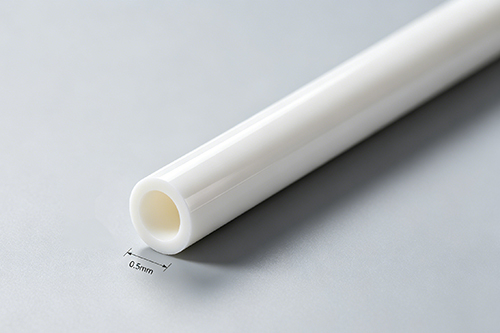
 Tubes
Tubes
 Washer
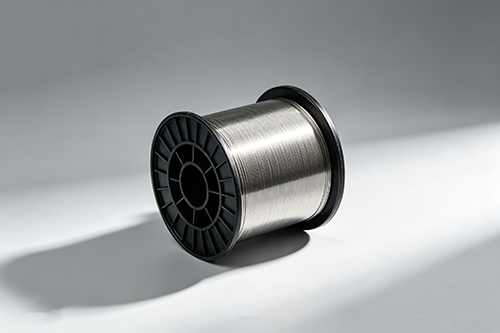
 Wires
Wires
 Converters & Calculators
 Write for Us



Stanford Advanced Materials Launches Graphene for Water Filtration.

Stanford Advanced Materials (SAM), the leading manufacture of materials announced today the release of graphene - a new two-dimensional wonder material, which has paved the way for possibilities, such as water filtration. Considering the strains on the current water resources, this is a triumph.
According to world aid, 748 million people live without access to safe water. This is roughly one in ten of the world’s population. Among the most affected are children, where water related deaths amount to 500,000 a year - more than 1,400 children per day. These statics are disturbing. Researchers have been relentlessly trying to find a sustainable solution to improve access to fresh water- a basic human right. As the world’s population is set to increase, further strains on the already limited water resources are set to worsen. Graphene commonly dubbed the “wonder material” could make water filtration and desalination applications a reality.
Danny Burns, expert from Stanford Advanced Materials (SAM) said, “We have started to manufacture graphene because we truly believe it is the most remarkable material of the 21st century. Membranes made from graphene oxide could act as flawless molecular filter when deep in water, obstructing all molecules or ions including impurities such as salt. Essentially the graphene-oxide sheets can be layered to make a tremendously thin but mechanically robust membrane. Tests have shown that this material is impermeable to everything but water.” He adds, “Given that the earth has 97 per cent of untapped sea water resources, the invention of such a device will end the international water crisis. Although purification of sea water is quite common now, graphene will provide a more robust device and could replace activated carbon- which is the technique currently used. Although extensive research is still needed, this is an impressive and promising start.”
About Stanford Advanced Materials
Established in 1994, Stanford Advanced Materials (SAM) is a global supplier of a series of pure metals, alloys, ceramics and minerals. SAM specializes in both high-purity chemicals for research institutes and technical grade materials for advanced industries. They frequently offer the latest available materials at competitive prices to a range of industries including pharmacy, capacitor, metallurgy, semiconductor and aviation.
 Chin Trento