Products
 Bars
Bars
 Beads & Spheres
 Bolts & Nuts
 Crucibles
 Discs
Discs
 Fibers & Fabrics
 Films
Films
 Flake
Flake
 Foams
Foams
 Foil
Foil
 Granules
 Honeycombs
 Ink
Ink
 Laminate
 Lumps
Lumps
 Meshes
 Metallised Film
 Plate
Plate
 Powders
 Rod
Rod
 Single Crystals
 Sputtering Target
 Tubes
Tubes
 Washer
 Wires
Wires
 Converters & Calculators
 Write for Us



Case Study: Lithium Iron Phosphate Powder for Energy Storage and Batteries

Introduction
Lithium Iron Phosphate Powder (LiFePO4 or LFP) has emerged as a transformative material in the realm of energy storage and batteries. With its exceptional properties, LiFePO4 has propelled advancements in renewable energy integration, electric vehicles, and portable electronic devices. This article is going to talk about these uses and hope it will give you a better understanding of the features and applications of LiFePO4 Powder.
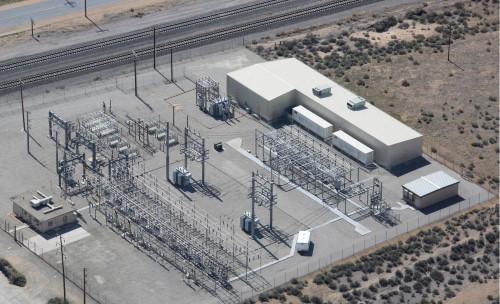
Figure 1. Energy Storage Project
What Is Lithium Iron Phosphate Powder?
Lithium Iron Phosphate (LFP) is an inorganic compound with the chemical formula LiFePO4. It presents as a gray, reddish-grey, brown, or black solid and is insoluble in water. This material has garnered attention as a crucial component for effective Lithium Iron Phosphate Batteries. This battery chemistry is applied to electric vehicles, solar energy systems, and large-scale grid-scale energy storage.
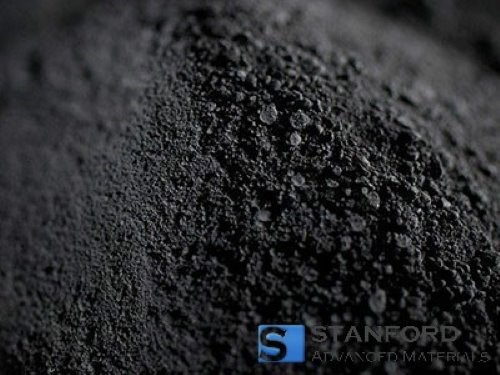
Figure 2. Lithium Iron Phosphate Powder
How Is Lithium Iron Phosphate Powder Used for Energy Storage and Batteries?
With its remarkable and distinctive properties, Lithium Iron Phosphate Powder has become a preferred choice across a spectrum of applications, especially energy storage and batteries. Here's a comprehensive look at how LiFePO4 Powder is harnessed within these sectors:
Renewable Energy Storage: LiFePO4 Batteries are increasingly employed for storing energy generated from renewable sources to deliver consistent and reliable power, such as solar and wind.
Electric Vehicles (EVs): The automotive industry has embraced LiFePO4 Batteries for electric vehicles with a combination of safety, durability, and performance.
Portable Electronic Devices: LiFePO4's stable chemistry and extended cycle life make it an attractive option for powering portable electronic devices, such as laptops, smartphones, and power banks.
Case Study: Lithium Iron Phosphate Powder for Energy Storage and Batteries
--The Challenge
A customer was considering the purchase of Lithium Iron Phosphate Powder for lithium electronic batteries. SAM, as a reliable partner, extended the following strategic recommendations that encompass pivotal factors to optimize battery efficiency and overall performance:
--The Solution
Particle Size: It is recommended to choose a finer Lithium Iron Phosphate Powder, usually between 1-10 microns in diameter. Such finer particles can improve the reaction speed and charge/discharge efficiency of the battery.
Crystal Type: LiFePO4 can have different crystal types, such as orthogonal crystal type (OLP), monoclinic crystal type (MLP), and so on. Therefore, please consider the crystal type suitable for the customer's application according to the performance requirements and the preparation process.
Ultrafine Meter-Grade Powder: Ultrafine meter-grade LiFePO4 Powder has a higher specific surface area, can provide more reactive active sites, and improves the energy density and cycle life of the battery.
Composition Uniformity: LiFePO4 Powder with uniform composition and minimal impurity content is preferred. The high purity of the powder ensures improved battery performance.
--The Results
By considering factors such as particle size, crystal type, ultrafine meter-grade options, and composition uniformity, customer can tailor their choices to create lithium electronic batteries that excel in efficiency, energy density, and overall cycle life.
Conclusion
In short, Lithium Iron Phosphate Powder stands as a formidable contender in the arena of energy storage and batteries. Its safety, stability, and long cycle life have positioned it as a key enabler for renewable energy utilization, electric vehicles, and various portable and stationary applications. As the energy landscape continues to evolve, LiFePO4's role in powering the future remains significant and promising.
Stanford Advanced Materials (SAM) supplies Lithium Iron Phosphate Powder in various sizes and purities. Customization is also welcome. Send us an inquiry if you are interested.
 Chin Trento