Products
 Bars
Bars
 Beads & Spheres
 Bolts & Nuts
 Crucibles
 Discs
Discs
 Fibers & Fabrics
 Films
Films
 Flake
Flake
 Foams
Foams
 Foil
Foil
 Granules
 Honeycombs
 Ink
Ink
 Laminate
 Lumps
Lumps
 Meshes
 Metallised Film
 Plate
Plate
 Powders
 Rod
Rod
 Single Crystals
 Sputtering Target
 Tubes
Tubes
 Washer
 Wires
Wires
 Converters & Calculators
 Write for Us



Case Study: Customized NdFeB Disc Magnets and Their Pioneering Role in Electronics

Introduction
In today's electronics landscape, where miniaturization and precision are paramount, custom-designed components often prove to be the linchpin of innovation. This case study explores the groundbreaking applications of Customized NdFeB (Neodymium Iron Boron) Disc Magnets and their transformative impact on electronic devices and technology.
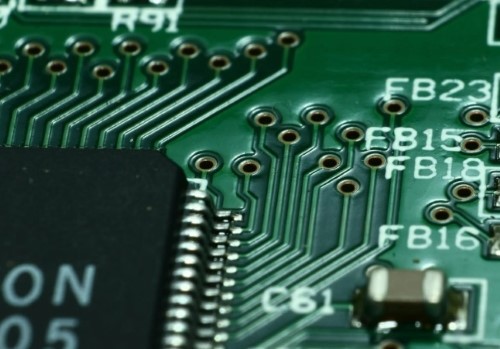
Figure 1. Electronic Components
Understanding Customized NdFeB Disc Magnets
Custom Neodymium Disc Magnets are exceptional permanent magnets characterized by their round, coin-shaped design and available in various dimensions. Their remarkable magnetic strength surpassing many other magnets of similar size, makes them indispensable across a wide spectrum of applications. Additionally, these magnets, renowned for their small size, wide temperature range, corrosion resistance, and sustainability, align perfectly with the evolving needs of modern engineering and design.
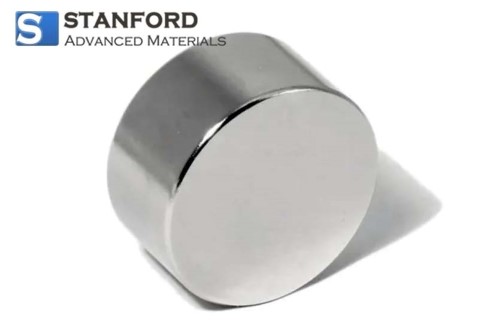
Figure 2. A Custom NdFeB Disc Magnet
The SMDN1001 Custom NdFeB Disc Magnet, with its precise measurements of 0.320 inches in diameter and 0.090 inches in thickness, stands as a testament to the versatility and excellence of NdFeB Disc Magnets. It serves as a specialized magnetic component tailored for electronic applications, seamlessly aligning with the exceptional properties exhibited by its NdFeB counterparts while catering to specific requirements. As a result, it contributes significantly to the advancement and efficiency of electronic devices and systems, underscoring the pivotal role of Neodymium Disc Magnets in contemporary engineering and design.
Applications of Customized NdFeB Disc Magnets in Electronics
These Customized NdFeB Disc Magnets, exemplified by the SMDN1001, serve critical functions within the electronics industry:
1. Sensor Assemblies: Small yet powerful magnets are commonly used in sensor assemblies, aiding in detecting the position or movement of objects in proximity. They find value in devices like proximity sensors, reed switches, and Hall Effect sensors.
2. Speaker Systems: In miniaturized speakers and audio devices, Custom-sized NdFeB Disc Magnets like the SMDN1001 enable the creation of compact, high-performance speaker systems. They contribute to clear sound reproduction due to their strong magnetic fields.
3. Magnetic Latches and Closures: These magnets can be integrated into electronic enclosures, doors, or access panels to create secure magnetic latches and closures. Their small size makes them ideal for compact electronic devices.
4. Vibration Motors: In haptic feedback systems or vibration motors used in smartphones and other handheld devices, NdFeB magnets play a role in generating controlled vibrations or feedback sensations.
5. Magnetic Couplings: In certain electronic applications, such as pumps and meters, magnetic couplings transmit torque or movement without direct mechanical contact. NdFeB magnets facilitate this magnetic coupling.
6. Magnetic Levitation (Maglev): In specialized electronic applications like magnetic levitation systems, these magnets are used to create levitating platforms or objects by providing the necessary magnetic forces.
Conclusion
In summary, these Custom NdFeB Disc Magnets are indispensable in the diverse landscape of electronic applications, offering versatile solutions that enhance functionality and design while upholding the high-performance standards of the industry.
Stanford Magnets has been a reliable supplier of NdFeB Disc Magnets for decades, offering Neodymium magnets in various grades and shapes on our website. If you are interested, please don't hesitate to send us an inquiry.
 Chin Trento